
Series: History of Chamba, Himachal Pradesh, India
Phase 1: Ancient Roots — Part 5 of 30
This article is part of a broader historical series exploring the earliest layers of human presence in the western Himalayas. Beginning with landscape, belief, and early patterns of movement and settlement, the series traces how communities adapted to mountainous environments long before formal states or written records emerged. These foundational centuries shaped cultural memory, local traditions, and relationships with the land that would endure through later periods of change.
Before the Kingdoms: Dusk Over the Ravi Valley
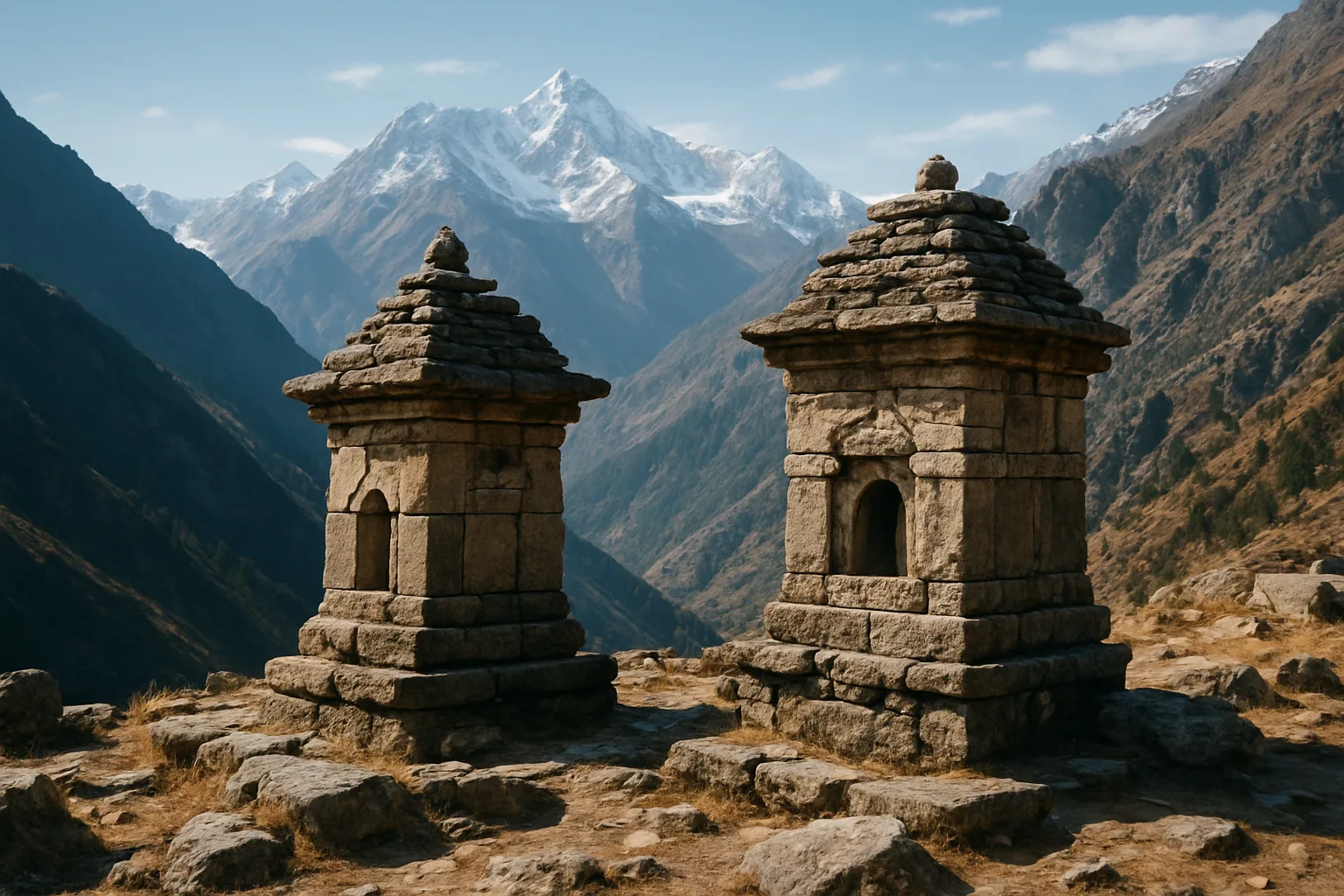
The last rays of the sun flicker across the rugged ridges above the Ravi River, painting the stones of the valley golden. Here, in the shadow of the Dhaula Dhar, long before palaces, temples, or royal courts, small clusters of people gathered around fires. The scent of resinous pine drifted through the air, mingling with smoke and the murmur of ancient stories—stories that shaped the world for these early inhabitants of what we now call Chamba.
Chamba’s Early Footprints: Land, People, and Memory
Modern Chamba sits ensconced in the northwestern Himalayas, where rivers Ravi, Saal, and Tundah carve deep valleys. Archaeological evidence hints at human settlement dating back to the Neolithic era, possibly as early as 2000 BCE. Stone tools and pottery fragments unearthed near Bharmour and Sarol speak of a people attuned to the rhythms of the land, living in scattered hamlets, hunting, gathering, and tending to small plots of grain.
At this time, political boundaries were unknown. The sense of community was defined less by rule than by kinship, ritual, and shared memory. The earliest chronicles—such as the Chamba State Gazetteer and oral traditions passed down through the centuries—describe a land where dense forests, swift rivers, and snow-capped peaks were more than scenery: they were sacred presences, woven into daily life and belief.
Myth, Oral Tradition, and the Sacred Landscape
Much of what we know about early Chamba comes not from written records, but from oral traditions preserved by bards, priests, and villagers. These stories speak of primordial beings—spirits of the forest, gods of the river, and guardians of the sky. Hill communities would gather at night to recount tales of serpentine nagas dwelling in springs, or the wrath and favor of local deotas (deities) who controlled weather, fertility, and fortune.
While these myths cannot be mapped onto a strict historical timeline, they reflect the deep relationship between people and place. The mountains were not merely obstacles or resources, but living entities. Rituals marked the changing of seasons: bonfires to ward off winter’s darkness, offerings to ensure good harvests, and dances that echoed the movement of animals and clouds.
Belief Systems: Animism, Ancestors, and Early Deities
Before the spread of organized Hinduism and Buddhism, the religious fabric of Chamba was woven from animistic and ancestor-worship traditions. Every grove, stream, and boulder might harbor a spirit—some benevolent, some capricious. Communities erected simple stone altars, decorated with flowers or ochre, at sites considered to be the abodes of local gods (gram devtas).
The worship of ancestors was equally profound. Elders were revered as intermediaries between the living and the unseen world. Annual rituals ensured the continued favor of departed kin, and elaborate funerary practices reflected a belief in the cyclical nature of life and death. These traditions, passed down through generations, would later become intertwined with the region’s dominant faiths.
Trade Routes and Cultural Crossroads
Even in these early times, Chamba was not isolated. Its valleys formed part of ancient trade routes connecting Kashmir, Ladakh, and the plains of Punjab. Traders, pilgrims, and shepherds brought with them new goods and ideas: beads from distant lands, stories of other gods, and unfamiliar rituals. The presence of early Buddhist and Shaivite motifs in later centuries suggests that the seeds of religious change were sown long before the rise of formal kingdoms.
These interactions gradually layered local animism with elements of Vedic worship and, eventually, the great religious traditions that would sweep across the northwestern Himalayas. Yet, beneath these later influences, the foundational reverence for landscape, ancestors, and local spirits persisted.
Emergence of Hill Communities and Proto-States
By the early centuries CE, larger and more organized settlements began to appear, especially around present-day Bharmour. Archaeological traces and early textual references indicate the rise of clan-based societies—groups such as the Gaddis and Gujjars—who managed grazing lands and controlled mountain passes. These proto-states, while not yet kingdoms in the formal sense, started to assert influence over valleys and trade routes, and their chieftains played a role in codifying religious practices.
It was during this time that the first shrines—rudimentary, built of wood and stone—began to appear on hilltops and riverbanks. Some of these early sanctuaries, dedicated to deities like Mani Mahesh and Chatrari, would evolve into major pilgrimage sites, their legends woven into the very identity of the land.
From Ancient Roots to Living Legacy
Centuries before the royal dynasties inscribed their names in stone, the beliefs and rituals of Chamba’s earliest people shaped its identity. The echoes of those rituals still linger in village festivals, the whispered prayers to local deities, and the careful preservation of sacred groves. Modern Chamba’s spiritual landscape—its famed temples, processions, and unique hill traditions—traces a direct line to this pre-kingdom era, where reverence for land and lineage bound communities together.
As the series continues, we will step forward into the dawn of the first organized states in Chamba, exploring how these ancient beliefs were transformed—and sometimes challenged—by the arrival of kings, new faiths, and the shaping of a distinct Himalayan polity.
Previous: Geography and Isolation in Ancient Chamba
Next: Foundation of the Chamba Kingdom