
Series: History of Chamba, Himachal Pradesh, India
Phase 1: Ancient Roots — Part 4 of 30
This article is part of a broader historical series exploring the earliest layers of human presence in the western Himalayas. Beginning with landscape, belief, and early patterns of movement and settlement, the series traces how communities adapted to mountainous environments long before formal states or written records emerged. These foundational centuries shaped cultural memory, local traditions, and relationships with the land that would endure through later periods of change.
Mist over the Ravi: Chamba’s Ancient Landscape
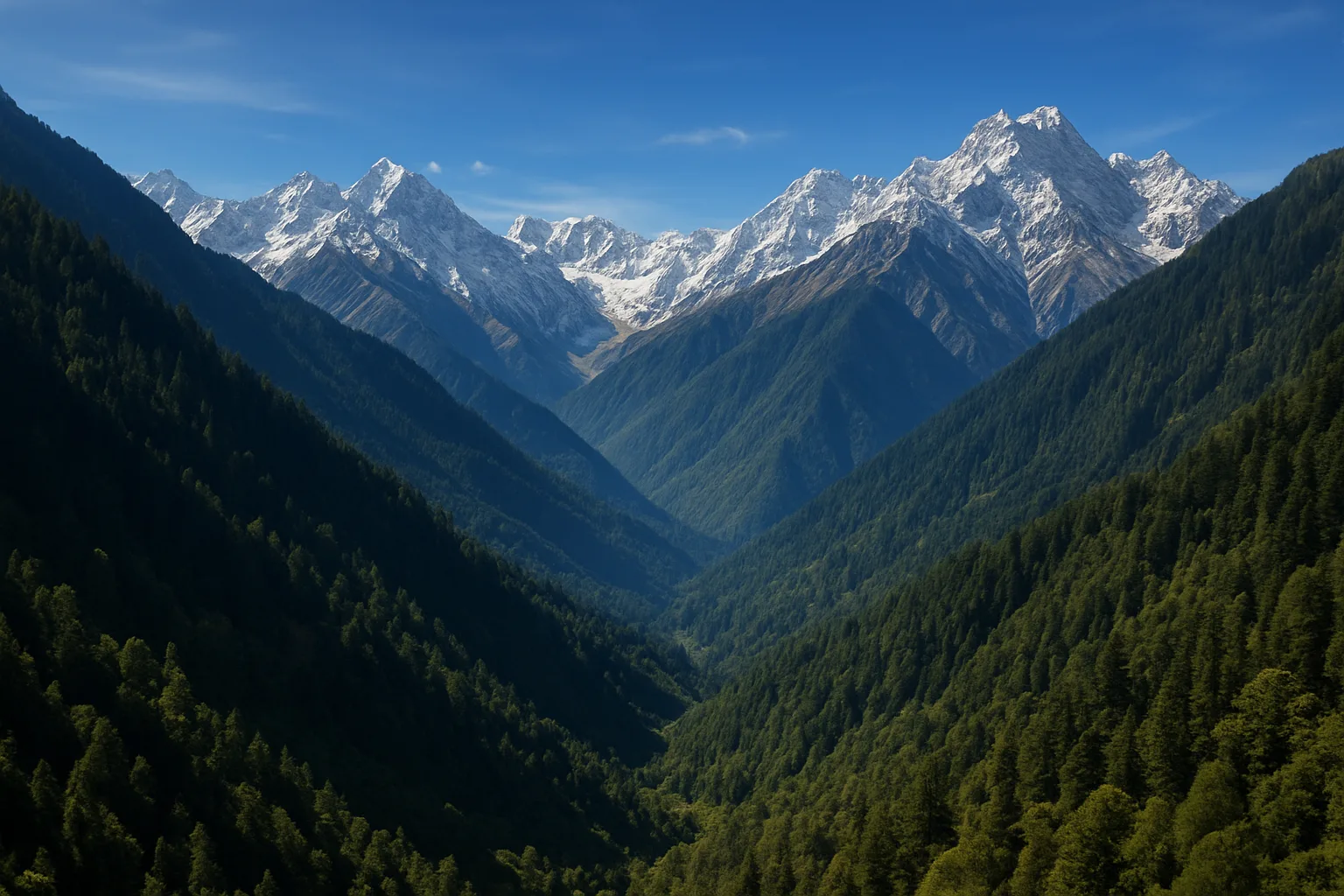
Before sunrise, pale mist gathers in the valleys carved deep by the Ravi River, muffling the clatter of distant water and lending the mountains an air of secrecy. For centuries—perhaps millennia—these ridges and shadowed hollows have defined Chamba’s existence. Geography did more than shape the land; it shaped the very soul of those who called this corner of the Himalayas home.
Long before written chronicles or the carved temples of later dynasties, Chamba’s remoteness set it apart. Hemmed in by the Dhauladhar and Pir Panjal ranges, the region lay cocooned, both protected and isolated. The sweep of great armies, the tides of empires—so often relentless in the Indian subcontinent—broke and dissipated against these granite barriers. Here, history took a different course, as the world outside passed by on distant plains.
Ancient Anchors: Early Settlement in the Chamba Valley
Archaeological traces in Himachal Pradesh suggest human presence dating back to the Neolithic period, but the earliest chapters of Chamba are written largely in the language of legend and landscape. Local oral traditions speak of wandering tribes and forest-dwelling peoples—nomads who traced the river’s winding path, their existence echoing faintly in place names and seasonal rites.
Yet, even as myth and memory blur, the land itself offers clues. The valleys of Chamba, with their terraced slopes and fertile alluvial fans, invited the earliest agriculturalists to settle. Small hamlets clustered near streams, their inhabitants relying on mixed farming, herding, and foraging. Over generations, these scattered communities gradually developed distinct identities, often defined by clan, dialect, and the demands of the mountains themselves.
Mountain Myths and Oral Memory
Unlike the plains, where monumental inscriptions and ancient texts abound, Chamba’s earliest history survives through a tapestry of oral traditions. Local bards and priests—known as gharwalis—kept alive tales of primordial ancestors and forest spirits. The story of the sage Chamba, for whom the region is named, is one such legend: a holy man meditated by the river’s banks, bringing blessings to the valley and its people. Other stories speak of supernatural beings inhabiting sacred groves and mountain lakes, guardians of the land whose approval was sought through ritual and song.
These myths, while not historical records, reflect the close relationship between people and place. The mountains were not merely obstacles or borders—they were alive, shaping lives and beliefs in ways that would resonate through centuries.
Isolation and Identity: Geography as Destiny
Chamba’s isolation was never absolute. Hunters and herders traversed high passes, exchanging salt, wool, and stories with distant neighbors. Yet, the formidable geography meant that outside influences arrived slowly, filtered through the sieve of the hills. This created a world apart—a place where local customs and languages flourished, relatively untouched by the homogenizing trends of larger kingdoms.
Geographers and British chroniclers of the colonial era—such as those who compiled the Imperial Gazetteer of India—noted the marked differences between Chamba and the regions beyond its mountains. The local dialect of Chambeali, early forms of temple architecture, and the persistence of indigenous belief systems all pointed to a society shaped more by its environment than by imperial decree.
Emerging Communities and Belief Systems
By the first centuries CE, a mosaic of communities populated the Chamba valley. The earliest identifiable groups included the Gaddis, semi-nomadic pastoralists who migrated with their sheep and goats across alpine meadows. The Koli and Kanet communities, tied to agriculture and forest work, formed the backbone of settled life. Each group brought its own rituals, festivals, and oral histories, often centered on local deities—many of whom were believed to reside in specific stones, trees, or mountain peaks.
Religious practice blended animism and ancestor worship, with occasional influences from neighboring Buddhist and Hindu traditions. Archaeological surveys have uncovered traces of ancient shrines, their origins obscured by later reconstructions, but their presence a testament to the enduring sanctity attached to the land itself.
Trade, Passes, and the Wider World
Despite its seclusion, Chamba was never entirely cut off. Ancient trade routes threaded through the passes of Sach, Kugti, and Rohtang, linking the valley to Lahaul, Kashmir, and further afield. Traders brought salt, wool, and turquoise from Central Asia; in return, Chamba offered forest products and later, intricately woven textiles. These exchanges—often small in scale—introduced new ideas, artifacts, and even religious influences, but rarely overwhelmed local traditions. Geography limited the volume of contact, allowing Chamba to absorb rather than be subsumed by outside cultures.
Early chronicles, such as the Rajatarangini of Kashmir, occasionally mention the hill states to the south and east, hinting at a loose network of alliances and rivalries that ebbed and flowed with the seasons and the ambitions of local chieftains.
Proto-States and the Dawn of Political History
By the early medieval period, the seeds of political organization began to take root. Small principalities—often centered on fortified hilltops or river confluences—emerged from the patchwork of clan territories. Oral traditions credit legendary founders with uniting the valleys, sometimes through conquest, more often through marriage and diplomacy. Over time, these proto-states laid the groundwork for the later Chamba kingdom, whose documented history will unfold in the next part of this series.
Yet, even as dynasties rose and fell, the mountains remained a constant presence: shaping boundaries, limiting ambitions, and nurturing the distinctive culture that still sets Chamba apart from its neighbors.
The Enduring Echo of Ancient Roots
Today, the valleys of Chamba carry whispers of their ancient past. The rhythms of life—seasonal migration, village festivals, reverence for the land—reflect patterns set long before the arrival of kings or chroniclers. The mountains, once barriers and sanctuaries, continue to both connect and separate Chamba from the wider world. In every stone temple, every folk song and festival, the imprint of geography and isolation endures.
In the next part of our journey, we will trace how these early foundations gave rise to Chamba’s first historical rulers—and how the valley’s unique heritage shaped the beginnings of its recorded political history.
Previous: Early Tribal Communities of Chamba Region
Next: Religious Beliefs Before Kingdoms in Chamba