
Series: History of Chamba, Himachal Pradesh, India
Phase 2: Medieval Kingdom — Part 6 of 30
This article forms part of a continuing series that follows the gradual emergence of organised power in the western Himalayas. As small communities gave way to clans, chieftainships, and hill states, patterns of rule, alliance, and conflict began to take shape. This phase examines how authority was negotiated through land, ritual, and warfare, laying the groundwork for regional kingdoms that would dominate the medieval landscape.
Into the Mist of the Ravi: Chamba’s Ancient Dawn
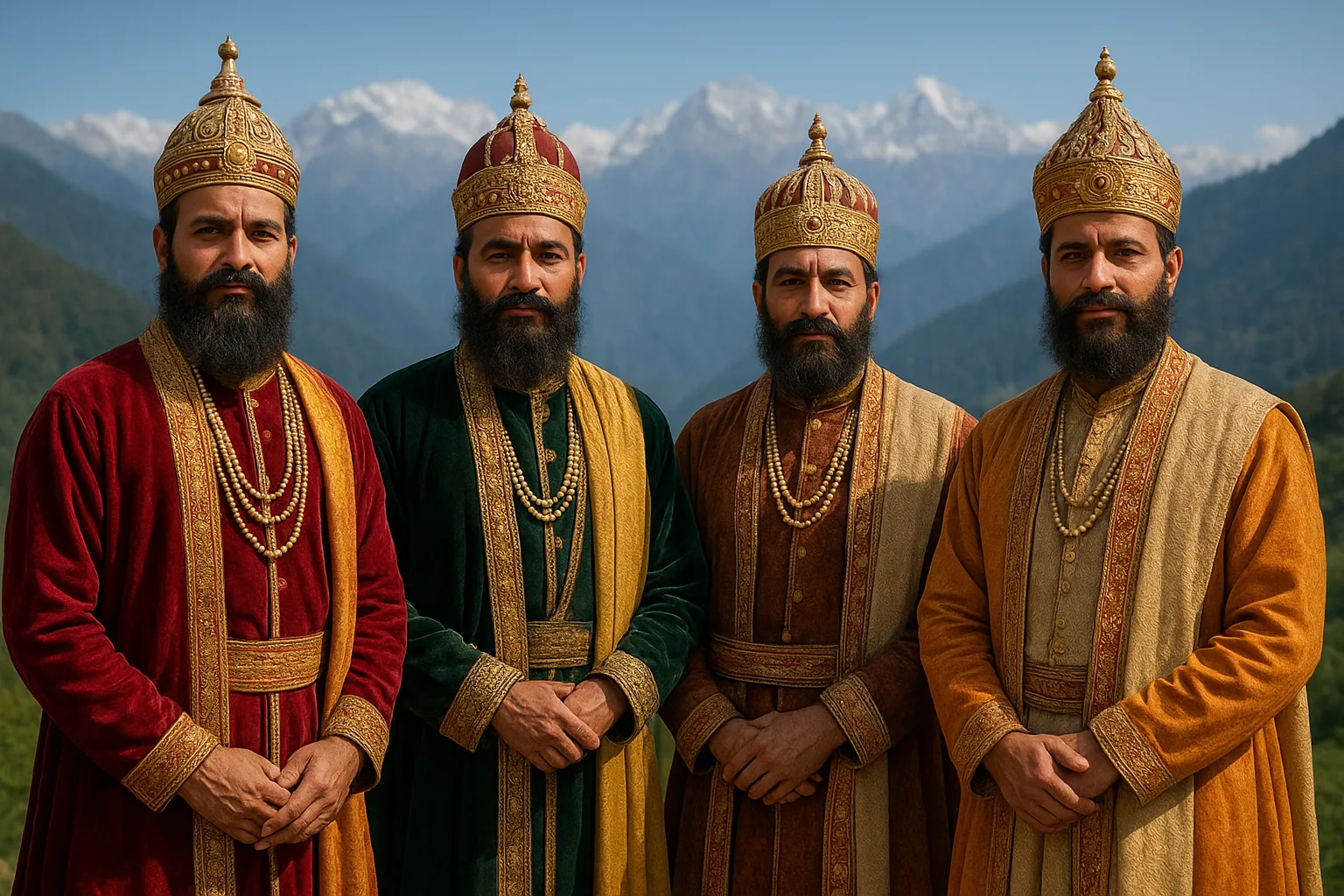
The first rays of sunlight catch on the snow-capped Dhaula Dhar range, casting a pale gold over the deep, winding valleys below. Mist rises from the Ravi river, its currents carving through pine forests and fertile terraces. In this highland labyrinth—now the heart of Himachal Pradesh—Chamba’s story begins, shaped by the interplay of myth, migration, and the slow pulse of history.
Before the Kingdom: Ancient Footprints in the Valley
Well before the name “Chamba” echoed across the Himalayan foothills, these valleys were home to diverse peoples drawn by fertile soils, freshwater, and strategic passes. Archaeological finds hint at human presence as early as the Neolithic age, with flint tools and pottery fragments surfacing near present-day Bharmour and Chamba town. Oral traditions among Gaddi shepherds and Gujjar communities still recall ancestors who roamed these ridges long before palaces or temples rose from the earth.
By the early centuries CE, the region found itself at a crossroads—an intersection for traders, pilgrims, and migrants moving between the Indian plains, Kashmir, and Tibet. The Ravi valley’s thick forests and rolling meadows became a meeting ground where cultures blended and identities took root.
Hill States and the Weave of Myth
The idea of a Chamba “kingdom” emerges from a tapestry of mythology and early chronicles. Local lore, preserved in the Rajatarangini and echoed in family genealogies, tells of a time when the valley was ruled by petty chieftains—some said to be descendants of the Khasas, an ancient Indo-Aryan tribe, others tracing their line to the Rajputs pushed northwards by shifting fortunes on the plains.
Yet, the most enduring legend is that of Raja Sahil Varman, a figure whose story is woven from both memory and myth. According to tradition, in the late 9th or early 10th century, Sahil Varman journeyed from the plains of Kalpagram (often identified with the region near present-day Jammu) into the upper Ravi valley, seeking a new homeland amidst political upheavals to the south. Early gazetteers and bardic tales agree: his arrival marked a turning point, a passage from scattered hill chiefdoms to the dawn of a centralized polity.
Documented Beginnings: Sahil Varman and the Move to Chamba
Historical inference and surviving records converge around the turn of the first millennium CE. The earliest inscriptions—etched on copper plates and temple stones—refer to Sahil Varman and his successors as rulers of Brahmapura (now Bharmour), a town nestled deep in the upper Ravi valley. The foundation of the Chamba dynasty is often dated to around 920 CE. Here, Sahil Varman is credited with consolidating local clans, establishing formal rule, and building shrines that still stand as silent witnesses to the era’s ambitions.
But the seat of power would soon shift. According to the Chamba Vamsavali (dynastic chronicle), Sahil Varman’s daughter, Champavati, played a pivotal role. Following a series of omens and prophecies, the royal seat moved downstream to a new settlement on a river terrace—named Chamba in her honor. This relocation, likely completed by the early 11th century, was both strategic and symbolic: Chamba offered better access to trade and communication, a more defensible position, and ample space for the temples and palaces that would define its medieval skyline.
Communities and Belief Systems: Mosaic of the Early Kingdom
By the time Chamba emerged as a distinct hill state, its population was a mosaic of ethnicities and faiths. The indigenous Gaddis—nomadic shepherds—shared the valleys with settled agrarian castes, Brahmins, and artisan groups. Over time, Rajput clans became the elite, tracing their right to rule through both martial prowess and divine sanction.
Religion, too, reflected the region’s crossroads identity. Shaivism flourished amid the mountain shrines of Bharmour, while Vaishnavism and local goddess cults found favor in Chamba’s temples. Buddhism, carried along Himalayan trade routes, left its imprint in art and custom, especially in the upper reaches near Lahaul and Ladakh. This syncretism would become a hallmark of Chamba’s spiritual landscape—its wooden temples, stone lingams, and intricate miniature paintings all bearing witness to a legacy of tolerance and exchange.
Trade Routes and the Tides of Power
Chamba’s fortunes were tied not just to local rivalries, but to the wider currents of Himalayan trade. The Ravi valley lay astride ancient routes that linked the fertile Kangra valley in the west to the markets of Tibet and Central Asia. Salt, wool, spices, and precious stones flowed through Chamba’s towns, enriching its rulers and attracting artisans from distant lands.
The emergence of other hill states—such as Kangra, Mandi, and Kullu—brought both competition and opportunity. Dynastic marriages, shifting alliances, and the threat of invasions from larger neighbors (notably the kingdoms of Kashmir and Jammu) forced Chamba’s rulers to hone both their swords and their diplomacy. Through it all, the kingdom’s mountainous terrain, strong fortresses, and deep-rooted local loyalties allowed it to endure where others fell.
Legacy of the Early Chamba Kings
By the 12th century, the Chamba kingdom had secured its place as a stable, culturally vibrant regional power. The foundations laid by Sahil Varman and his descendants—both literal and figurative—still underpin the life of the valley today. The temples of Chamba and Bharmour, their wooden eaves darkened by centuries of incense, remain at the heart of community and ritual. The dynastic legends, still recounted at village fairs and family gatherings, continue to shape local identity, linking present generations to a storied past.
From Roots to Resonance: Chamba Then and Now
Chamba’s foundation story is etched into its rivers, hills, and the collective memory of its people. The blend of myth, migration, and political acumen that forged the kingdom endures in its architecture, customs, and sense of place. As the series continues, we will journey deeper into the medieval era—exploring how Chamba weathered external threats, managed its alliances, and developed a distinctive cultural identity that still resonates in the Himalayan highlands.
Previous: Religious Beliefs Before Kingdoms in Chamba
Next: Rajput Dynasties That Ruled Chamba