
Series: History of Chamba, Himachal Pradesh, India
Phase 2: Medieval Kingdom — Part 7 of 30
This article forms part of a continuing series that follows the gradual emergence of organised power in the western Himalayas. As small communities gave way to clans, chieftainships, and hill states, patterns of rule, alliance, and conflict began to take shape. This phase examines how authority was negotiated through land, ritual, and warfare, laying the groundwork for regional kingdoms that would dominate the medieval landscape.
The Dawn Over Chamba’s Valleys
In the crisp Himalayan morning, as mist curled over the Ravi River, the stone paths of ancient Chamba echoed with the quiet footsteps of a new era. Nestled between snow-capped peaks and deep forests, Chamba’s story is one of enduring presence—a kingdom shaped by both myth and the measured hand of history. Today, the town’s temples and forts hint at its layered past, but centuries ago, these valleys were a crossroads for migration, belief, and power.
Between Legend and Chronicle: Chamba’s Earliest Roots
Chamba’s earliest tales are woven from both oral tradition and surviving chronicles. Local lore, cherished and retold for generations, speaks of the legendary Raja Sahil Varman, credited with founding the town of Chamba in the late 10th century CE. The story, still recited in village squares, tells how Sahil Varman named the town after his beloved daughter Champavati. Yet, as with many Himalayan dynasties, the boundary between legend and historical record is delicate.
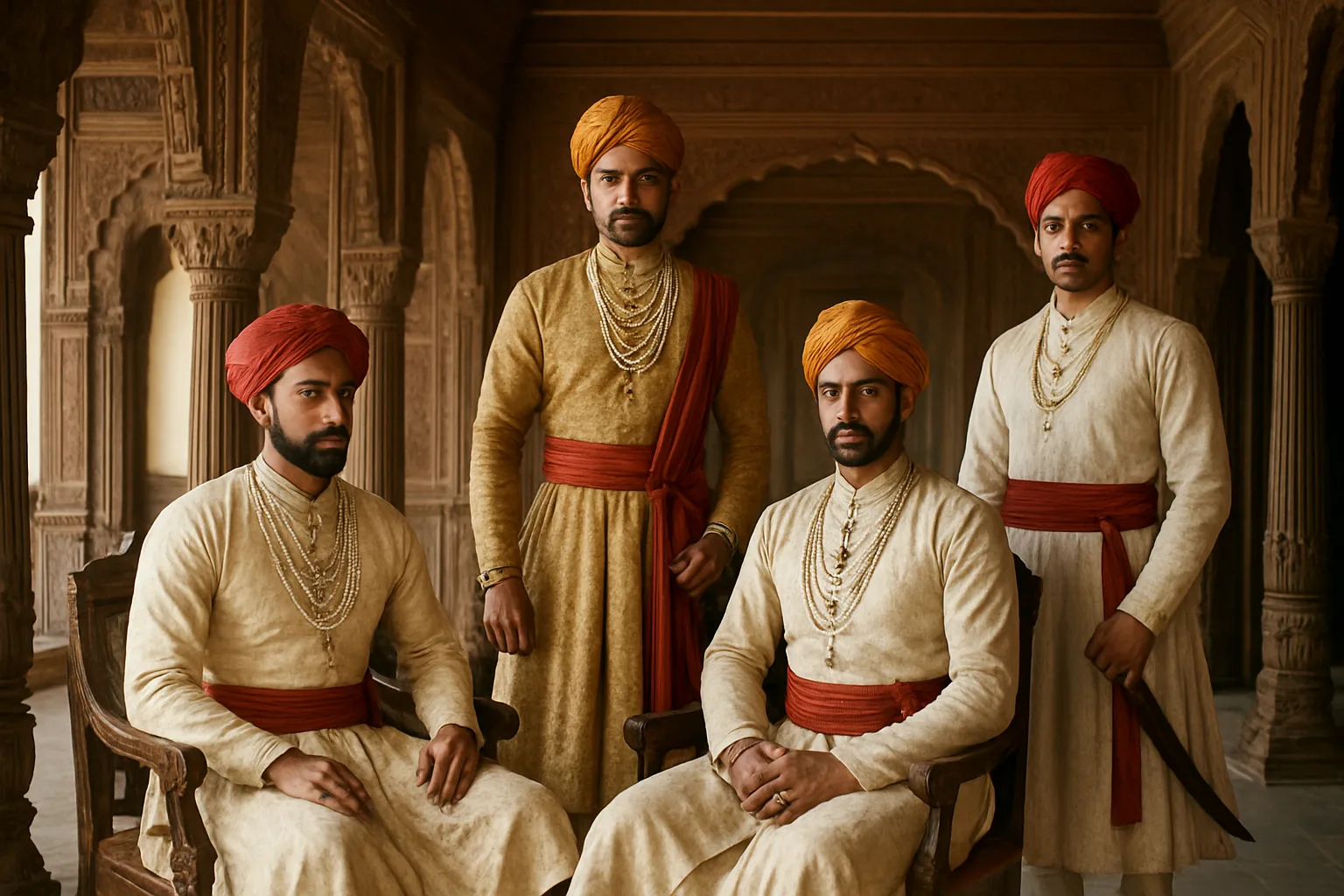
Beyond these stories, regional gazetteers and early British officers like A.H. Bingley, writing in the late 19th century, traced Chamba’s ruling family to Rajput origins—specifically, the Solar or Suryavanshi line, connecting them to the illustrious houses of northern India. This thread, part oral tradition and part political narrative, gave Chamba’s rulers a sense of legitimacy and continuity in an age where ancestry was power.
Hill States and the Rise of Rajput Houses
By the 7th century CE, as the plains of northern India saw the decline of Gupta influence, the western Himalayas grew more autonomous. The Chamba region, shielded by geography but open to trade and migration, became fertile ground for the emergence of small hill states. Communities of shepherds, cultivators, and traders clustered along the Ravi and its tributaries, their settlements growing into market towns and temple complexes.
It was in this landscape that the earliest Rajput clans began to assert themselves. The Katoch dynasty of Kangra, to the south, and the rulers of Jammu to the west cast long shadows. Chamba’s own Varman dynasty, emerging around the 10th century, aligned itself with these traditions—claiming descent from legendary forebears, yet forging a distinctly local identity. The hills, once dominated by tribal chieftains, were now shaped by the codes of Rajput honor, kinship, and patronage.
Dynastic Foundations: The Varmans of Chamba
The Varman dynasty’s arrival marked a pivotal shift in Chamba’s political landscape. According to local chronicles, Sahil Varman migrated from the plains—possibly in the wake of regional upheaval—and established his rule at Brahmpura (modern-day Chamba) around 920–940 CE. His reign, described as both expansionist and deeply pious, set the tone for future rulers. The founding of the Champavati temple, still standing in the heart of the town, served not only as a religious center but as a declaration of dynastic intent.
Successive Varman rulers consolidated their hold by marrying into neighboring houses and forging strategic alliances. They patronized the arts, encouraged trade, and built networks of temples and forts across the valleys. Despite periodic conflict with neighboring states—Kangra, Kullu, and Jammu among them—the Chamba Rajputs maintained their autonomy, relying on the difficult terrain as both shield and advantage. This was an age when the fortunes of a kingdom could turn with a landslide, a marriage, or a single battle.
Faith, Trade, and the Shape of a Kingdom
Chamba’s rulers understood the importance of both faith and commerce. The town’s temples—dedicated to Shiva, Vishnu, and local deities—became centers of pilgrimage, drawing devotees from distant valleys. The Varmans patronized Buddhist monasteries as well, reflecting the layered beliefs of the region. Trade routes threaded through Chamba, linking it to Kashmir, Ladakh, and the Punjab plains. Caravans carried wool, salt, metalwork, and precious stones, enriching the kingdom and introducing new ideas.
Rajput administration, recorded in later documents and still evident in Chamba’s social structure, blended local custom with imported codes of law. The rulers balanced the authority of their court with the influence of Brahmin priests, merchant guilds, and landed village elders. Through these networks, Chamba’s dynasties maintained a delicate equilibrium—one that would be tested as new powers rose on the subcontinent.
Transitions of Power: Chamba in the Medieval World
By the 13th and 14th centuries, Chamba’s Rajput rulers found themselves navigating a complex political landscape. The Mongol incursions to the north, the advance of the Delhi Sultanate to the south, and the ambitions of neighboring hill states all posed threats and opportunities. Yet the Varman dynasty, through a combination of diplomacy and resilience, managed to preserve Chamba’s autonomy. The chronicles speak of rulers like Prithvi Singh and Balbhadra Singh, who fortified the kingdom’s boundaries and fostered a distinctive courtly culture.
Over time, Chamba’s dynasties adapted to new realities. They adopted elements of Persianate court culture, sent envoys to distant courts, and remained alert to the shifting tides of power. The kingdom’s enduring stability, rare among the Himalayan states, owed much to its rulers’ ability to balance tradition with pragmatism.
Enduring Legacies: Rajput Rule and Chamba’s Identity
Today, the echoes of Chamba’s Rajput dynasties still ring through its winding lanes and ancient shrines. The Varman line, which governed for over a millennium, left behind a legacy of architecture, art, and social order. Their story—rooted in both legend and record—continues to shape Chamba’s identity, binding its people to the land and to each other.
As we move forward in this series, we will trace how Chamba’s medieval rulers responded to the arrival of new empires, new faiths, and new challenges, setting the stage for the extraordinary transformations of the early modern era.
Previous: Foundation of the Chamba Kingdom
Next: Lakshmi Narayan Temple and State Identity