
Series: History of Chamba, Himachal Pradesh, India
Phase 2: Medieval Kingdom — Part 8 of 30
This article forms part of a continuing series that follows the gradual emergence of organised power in the western Himalayas. As small communities gave way to clans, chieftainships, and hill states, patterns of rule, alliance, and conflict began to take shape. This phase examines how authority was negotiated through land, ritual, and warfare, laying the groundwork for regional kingdoms that would dominate the medieval landscape.
At the Foot of the Himalayas: A Dawn in Chamba
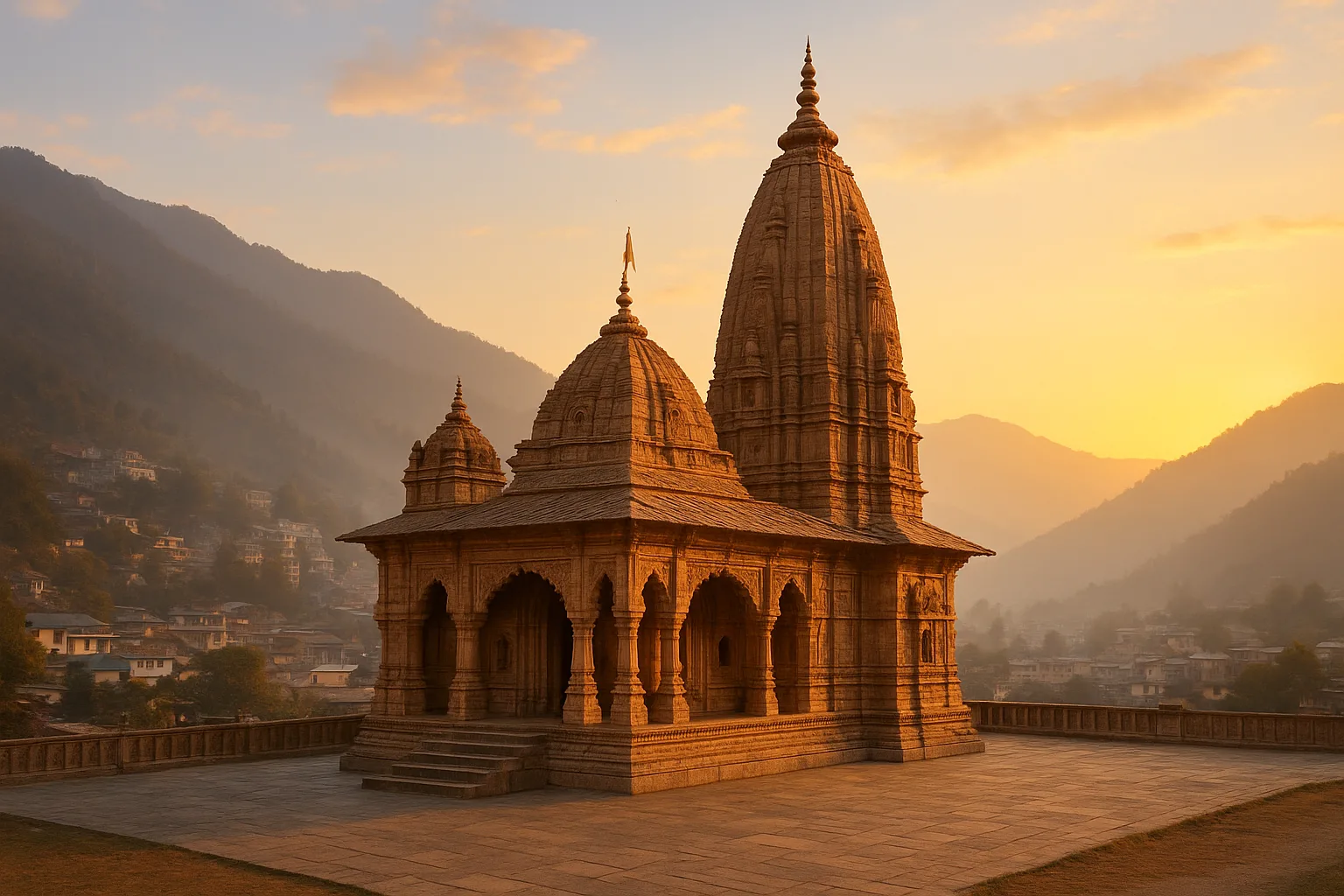
The air just before sunrise in Chamba carries a chill even in early spring. Along winding lanes of stone, traders and villagers move quietly, their steps converging beneath the imposing silhouette of the Lakshmi Narayan Temple. The clangor of temple bells—deep, resonant—cuts through the mountain stillness, summoning both worship and memory. Here, spiritual devotion and royal ambition have long intertwined. Few places in the western Himalaya so vividly bear witness to the forging of a kingdom as these ancient stones.
Chamba’s Ancient Heart: Geography and Early Settlement
Chamba’s valley, cradled by the Dhauladhar and Zanskar ranges, has always been a place of convergence. Its fertile plain, nourished by the Ravi River, drew early settlers—traders, farmers, and herders—long before the arrival of written records. Oral traditions, passed from elder to child, recall the valley as a sacred land, inhabited by semi-nomadic groups who honored animistic spirits and local deities.
Archaeological evidence, though fragmentary, suggests patterns of settlement dating back to the early centuries CE. Pottery shards and terracotta figures unearthed around Chamba hint at enduring contact with neighboring regions: the Kangra hills to the west, Kashmir to the north, and the plains beyond Pathankot. By the sixth century, the valley’s strategic position on north-south trade routes made it a sought-after prize—a crossroads where cultures and ambitions met.
Oral Tradition, Myth, and the Coming of the Rajput Chieftains
Myth and memory often blend in the stories told by Chamba’s people. The region’s earliest chronicles, such as the Rajatarangini and local ballads, speak of the legendary Raja Sahil Varman. According to oral tradition, Sahil Varman migrated from Kalpagram, a shadowy land in ancient texts, after a divinely ordained journey. He is said to have founded the current town of Chamba in the 10th century, naming it for his beloved daughter, Champavati.
While the specifics of Sahil Varman’s odyssey are lost to time, historians generally agree that the rise of the Chamba kingdom coincides with the broader migration of Rajput clans into the Himalayan foothills. These warrior chiefs, displaced by upheaval in the northwestern plains, established new hill states, bringing with them a distinct style of governance, temple architecture, and patronage of the arts. The founding of Chamba, then, is both a dynastic legend and a reflection of regional political realignment in the early medieval period.
Building Stone, Building Faith: The Lakshmi Narayan Temple Complex
The Lakshmi Narayan Temple stands as Chamba’s oldest and most enduring monument, its shikhara (spire) rising above the town since the mid-10th century. Commissioned by Raja Sahil Varman—according to tradition, as an act of penance and gratitude—the temple complex was more than a place of devotion. It was a declaration of legitimacy, a symbol of royal authority entwined with the divine.
Stone inscriptions and architectural features speak to a high degree of craftsmanship and a synthesis of regional styles. The temple’s sanctum, crowned by a curvilinear tower, draws on Kashmiri influences, while its mandapa (assembly hall) reflects indigenous building methods adapted to seismic terrain. Over the centuries, successive rulers expanded the complex, adding shrines to Shiva, Vishnu, and the goddess—each new construction marking a moment in Chamba’s evolving identity.
- Oral tradition describes how the temple’s location was chosen by divine sign—a cow, it is said, poured her milk upon the sacred spot.
- Historical evidence suggests that the temple established Chamba as a religious center, drawing pilgrims and artisans from far beyond the valley.
- Political history reveals the temple’s role in cementing alliances, hosting royal ceremonies, and broadcasting the power of the Chamba state.
Trade, Pilgrimage, and the Weaving of Communities
By the late 10th and 11th centuries, the Lakshmi Narayan Temple had become a magnet—spiritual and economic—for the region. Chamba’s location on the ancient salt and wool routes brought a steady influx of traders, mendicants, and travelers. The temple precinct, bustling with activity, nurtured a cosmopolitan community: Brahmin priests, merchant guilds, stone carvers, and pilgrims from as far as Ladakh and the Punjab plains.
New belief systems took root alongside older animist practices. The temple’s festivals, especially the Minjar Mela, blended Vedic rituals with local customs, reinforcing a sense of shared identity. Gazetteers from the colonial period note the striking coexistence of faiths in Chamba—Hindus, Buddhists, and later Sikhs—each finding space within the town’s spiritual landscape.
These interactions fostered not only religious tolerance but economic vitality. Artisans adapted motifs from Central Asia and Kashmir into local woodwork and metalwork, while traders brought in goods—salt, grains, textiles—that underpinned the valley’s prosperity. The temple stood at the heart of this network: a spiritual beacon and an engine of statecraft.
Forging State Identity: Kingship, Ritual, and the Sacred Landscape
In the centuries that followed, the Chamba rajas used the Lakshmi Narayan Temple as both sanctuary and stage. The coronation of a new ruler—a raja abhisheka—was incomplete without ritual offerings at the temple’s sanctum. Royal proclamations were carved into its stones, and annual festivals became opportunities for the court to display generosity and might.
The temple also anchored the Chamba state’s spiritual geography. Other hill states—Kangra, Bashahr, Kullu—looked to their own shrines for legitimacy, but few could match the antiquity and prestige of Lakshmi Narayan. The intertwining of throne and temple, so visible in Chamba, offered stability in an era of shifting allegiances and periodic invasions. Even during periods of political turmoil, such as the Ghurid incursions and later Mughal suzerainty, the temple’s rituals continued—a quiet assertion of continuity amid change.
Enduring Legacy: The Temple in Modern Chamba
Today, the Lakshmi Narayan Temple remains the spiritual axis of Chamba. Its bells still echo at dawn, calling not only the devout but all who seek a sense of belonging. The temple’s architecture, carefully restored over the centuries, stands as a testament to the resilience of local traditions and the enduring power of collective identity.
In marketplaces and homes, stories of the temple’s founding are still told—some embroidered with myth, others grounded in memory. The festivals and processions that once marked the rhythms of a medieval court now unite the town’s diverse communities, weaving past and present together. For many in Chamba, the temple is not merely a relic but a living participant in daily life, a reminder that the roots of belonging run deeper than any one era or dynasty.
As our series continues, we will trace the evolving relationship between Chamba’s rulers and their Himalayan neighbors, exploring how faith, diplomacy, and ambition shaped the fortunes of the kingdom in the centuries to follow.
Previous: Rajput Dynasties That Ruled Chamba
Next: Wars, Alliances, and Hill Politics of Chamba