
Series: History of Sirmaur, Himachal Pradesh, India
Phase 2: Medieval Kingdom — Part 8 of 30
This article forms part of a continuing series that follows the gradual emergence of organised power in the western Himalayas. As small communities gave way to clans, chieftainships, and hill states, patterns of rule, alliance, and conflict began to take shape. This phase examines how authority was negotiated through land, ritual, and warfare, laying the groundwork for regional kingdoms that would dominate the medieval landscape.
Twilight on the Shivalik Ridge
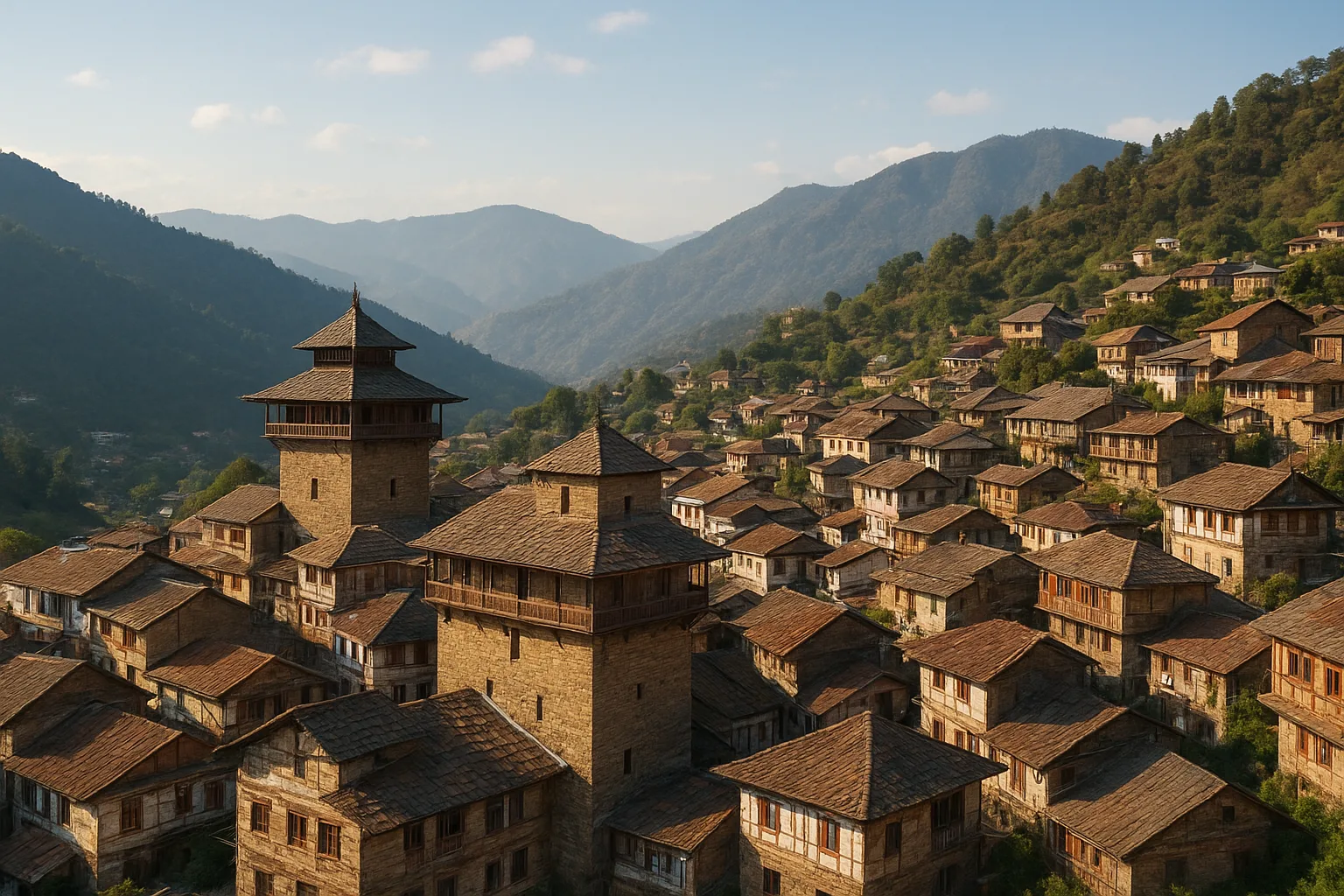
The year is 1621. As the sun recedes behind the rolling hills, a small court assembles atop a wind-swept ridge, surrounded by the thick sal forests and the distant call of peafowl. Below, the Sirmaur hills stretch endlessly—an ancient land, storied by the footsteps of chieftains, traders, and wandering ascetics. Here, a new vision is unfolding: the rise of Nahan, a capital that will give Sirmaur its enduring identity. Fires flicker in the encampment, but the air is charged not just with anticipation, but the weight of centuries past.
Between Legend and Landscape: Sirmaur Before Nahan
Long before Nahan’s foundation, the land that would become Sirmaur bore witness to a patchwork of myth and migration. Oral traditions, passed down in the shadow of the hills, speak of serpent deities and shepherd kings—stories that linger in the collective memory but resist the historian’s pen. Yet, the region was never untouched by the broader tides of history. Archaeological traces and regional chronicles suggest that Sirmaur’s valleys have seen the movement of people since at least the early first millennium CE, if not before.
By the time the early medieval period dawned, Sirmaur was a crossroads. It stood at the southern edge of the Himalayas, where the Shivalik foothills met the plains of what is now Haryana. These ridges and valleys were not empty: scattered settlements, fortified hamlets, and small shrines dotted the landscape. Communities of Rajputs, Gujjars, and indigenous forest dwellers coexisted, often competing for land and resources but also intermingling through trade and kinship.
Mythology, Memory, and the Naming of Nahan
Among Sirmaur’s most enduring legends is the story of Nahan’s naming. According to local lore, Raja Karam Prakash, seeking a new seat of power, was drawn to the tranquil plateau above the Markanda river. It is said that a holy sage, Baba Banwari Das, instructed the Raja to “na har”—never lose heart—when establishing his new capital here. Whether this exchange truly occurred is lost to time, but the story persists, woven into the identity of the city and its people. Such tales are not just folklore; they are the vessels of aspiration and legitimacy for a dynasty in search of roots.
This blend of myth and pragmatism was characteristic of the hill states. Founders routinely invoked spiritual sanction, and Nahan’s foundation was no exception. The city’s chosen site, protected by forests and blessed by water sources, was both a strategic and a symbolic choice—a place where political ambition met sacred geography.
The Sirmaur Kingdom: From Ancient Lineages to Medieval Statehood
Historical inference, drawn from gazetteers and surviving chronicles such as the Gazetteer of the Sirmur State (late 19th century), allows us to trace the outlines of Sirmaur’s early polity. By the 11th century, Sirmaur had emerged as a recognizable hill kingdom, ruled by Rajput dynasties who claimed descent from the Agnivanshi Chauhans of Rajasthan. Their rule, however, was seldom uncontested. The hill states were a tapestry of rival chieftaincies and shifting alliances, shaped by geography and the ebb and flow of power in the plains below.
The original capital, Rajban, lay closer to the Yamuna river, but frequent flooding and the threat of incursions from the plains prompted the search for a more secure anchor. The founding of Nahan in the early 17th century marked the kingdom’s transition from a loosely governed territory to a centralized state, able to exert its influence across the southern Shivaliks.
Trade, Belief, and Everyday Life in Early Nahan
Nahan’s rise was not just a political act—it transformed the rhythms of daily life. Its location on the ancient trade route linking the Punjab plains with the upper Himalayas brought merchants, artisans, and pilgrims. Markets thrived with the barter of salt, grains, and wool; festivals animated temple courtyards, blending Shaivite, Shakta, and animist traditions. The city became a meeting ground for diverse communities: Brahmins and Rajputs administered the court, while craftspeople and traders animated its bazaars.
Religious life centered on a constellation of temples and shrines, many with histories predating the city itself. Sirmaur’s syncretic culture—its celebration of both local deities and pan-Indian gods—reflected the region’s openness to outside influences and its fierce sense of place. Oral tradition recalls the rituals at the Jagannath Temple and the processions that wound through Nahan’s streets each spring, binding the city’s identity to both the sacred and the everyday.
Defending the Realm: Forts, Alliances, and the Shadow of Empires
The history of Nahan is also a chronicle of survival. The city’s fortifications—walls of sun-baked brick and stone—stood as sentinels against both rival hill states and the armies of the plains. The rulers of Sirmaur navigated a precarious world, forging alliances with neighboring states like Bilaspur and Kangra, while at times acknowledging the suzerainty of greater powers such as the Mughal Empire.
These relationships were rarely static. Periods of relative peace alternated with episodes of conflict: skirmishes for control of grazing lands, punitive raids, and the perennial threat of imperial intervention. Through it all, Nahan remained the nerve center—a place where diplomacy, defense, and governance converged. The court’s records, such as the Sirmauri Bahi (account books), reveal a sophisticated administration, managing land revenue, justice, and military service with a blend of local custom and imported norms.
Legacy of a Capital: Nahan’s Enduring Influence
By the close of the medieval period, Nahan had firmly established itself as the heart of Sirmaur. Its streets, palaces, and temples stood as living testaments to the ambitions of its builders and the resilience of its people. The city’s role as a cultural and political anchor shaped not only the contours of Sirmaur’s history, but the very sense of identity that persists today. Modern Nahan, with its bustling markets and layered heritage, remains a place where past and present are inseparable—a city still animated by the stories and struggles of those who came before.
As we journey further in this series, the next chapter will trace how Nahan’s legacy endured through the upheavals of the late medieval and early modern periods, when the currents of empire and colonial ambition swept across the hills, forever altering the destiny of Sirmaur.
Previous: Rajput Dynasties That Ruled Sirmaur
Next: Wars, Alliances, and Hill Politics of Medieval Sirmaur