
Easy Flexibility Exercises for Beginners: Getting Started Safely and Effectively
Flexibility is an important part of overall health, helping you move more freely, reduce muscle tension, and lower the risk of injury. If you’re new to stretching or flexibility exercises, it can feel daunting to know where to begin. The good news is you don’t need fancy equipment or a gym membership to improve your flexibility. Simple, easy exercises done regularly can make a big difference over time.
In this guide, we’ll explore beginner-friendly flexibility exercises, share step-by-step tips to build a sustainable stretching habit, and debunk some common myths. Whether your goal is to ease muscle tightness, improve posture, or simply feel more comfortable moving, these exercises will set you on the right path.
Why Flexibility Matters
Flexibility refers to the ability of your joints and muscles to move through their full range of motion. Benefits of improved flexibility include:
- Better posture and reduced muscle stiffness
- Increased ease and comfort when performing daily activities
- Lower risk of strains and sprains
- Enhanced relaxation and stress relief
Flexibility tends to decrease with age and inactivity, but it’s never too late to start improving it.
Simple Flexibility Exercises for Beginners
Here are some gentle stretches and movements you can try at home. Aim to perform these exercises 3-4 times a week for the best results.
1. Neck Stretch
- Sit or stand with a straight back.
- Slowly tilt your head to one side, bringing your ear towards your shoulder.
- Hold the stretch for 15-30 seconds without forcing it.
- Repeat on the other side.
2. Shoulder Rolls
- Stand or sit comfortably with your arms relaxed by your sides.
- Slowly roll your shoulders forward in a circular motion 10 times.
- Then roll your shoulders backward 10 times.
3. Cat-Cow Stretch (Spinal Flexibility)
- Start on your hands and knees in a tabletop position.
- As you inhale, arch your back gently, lifting your head and tailbone towards the ceiling (Cow pose).
- As you exhale, round your spine upwards, tucking your chin and tailbone (Cat pose).
- Repeat this flow slowly 8-10 times.
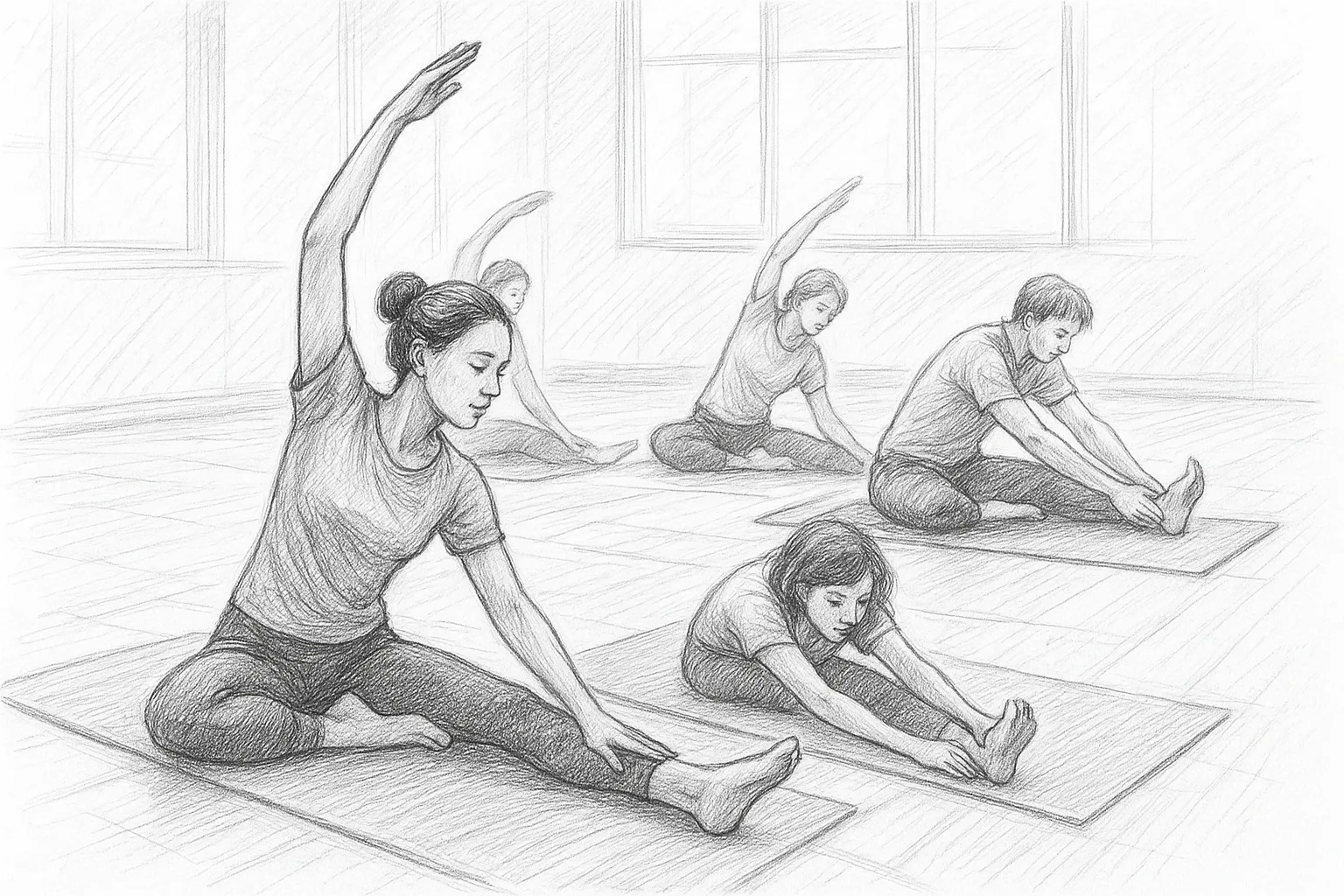
4. Seated Forward Bend
- Sit on the floor with your legs straight in front of you.
- Keeping your back straight, gently lean forward from the hips.
- Reach towards your toes as far as comfortable without pain.
- Hold for 15-30 seconds and slowly come back up.
5. Standing Quadriceps Stretch
- Stand near a wall or chair for balance.
- Bend one knee and bring your heel towards your buttocks.
- Hold your ankle with your hand and gently pull to stretch the front of your thigh.
- Hold for 15-30 seconds, then switch sides.
6. Calf Stretch Against a Wall
- Stand facing a wall with one foot forward and one foot back.
- Press your back heel into the floor, keeping your leg straight.
- Lean into the wall until you feel a stretch in your calf muscle.
- Hold for 15-30 seconds, then switch legs.
Step-by-Step Tips for Building a Sustainable Flexibility Habit
- Start Slow and Gentle: Flexibility improves gradually. Avoid pushing into painful stretches to reduce injury risk.
- Consistency is Key: Aim to stretch at least 3 times a week. Short daily sessions can be more effective than occasional long ones.
- Warm Up First: Stretching cold muscles can cause injury. Do a light walk or some gentle movement for 5 minutes before stretching.
- Breathe Deeply: Use slow, deep breaths during stretches to help muscles relax and increase effectiveness.
- Focus on Major Muscle Groups: Pay attention to areas that feel tight, such as hamstrings, calves, hips, and shoulders.
- Use Props if Needed: A yoga strap or towel can help you reach further during stretches like the seated forward bend.
- Keep a Stretching Journal: Track your progress and note how your body feels to stay motivated.
Common Myths About Flexibility Exercises
Understanding the facts about flexibility can help you approach your routine with realistic expectations.
- Myth: Flexibility is only for young or athletic people. Fact: People of all ages and fitness levels can improve flexibility with gentle, regular practice.
- Myth: You should stretch until it hurts. Fact: Stretching should feel like a gentle pull, not pain. Overstretching can cause injury and setbacks.
- Myth: You need to stretch every day for hours. > Fact: Even short, regular sessions of 5-15 minutes can be enough to see benefits.
- Myth: Static stretching before exercise prevents injury. Fact: Recent evidence suggests dynamic warm-ups are better before activity. Save static stretches for after or separate sessions.
Incorporating Flexibility Into Your Daily Life
Besides dedicated stretching sessions, you can add flexibility exercises to your daily routine in simple ways:
- Stretch gently after waking up to help loosen your body for the day.
- Take short stretching breaks during long periods of sitting, such as at work.
- Combine stretches with relaxation techniques like deep breathing or meditation.
- Try beginner yoga or tai chi classes for guided flexibility and balance practice.
Conclusion
Starting with easy flexibility exercises is a wonderful way to support your overall health and wellbeing. By practising simple stretches regularly, you can gradually improve your range of motion, ease muscle tension, and feel more comfortable in your daily movements. Remember to listen to your body, move gently, and be consistent—small steps add up to lasting results. Make flexibility a regular habit and enjoy the benefits of a more open, relaxed, and mobile body.
This article provides general educational information only and is not a substitute for professional medical advice. Always consult a qualified healthcare professional for personal guidance.