
Series: History of Sirmaur, Himachal Pradesh, India
Phase 1: Ancient & Early Roots — Part 5 of 30
This article is part of a broader historical series exploring the earliest layers of human presence in the western Himalayas. Beginning with landscape, belief, and early patterns of movement and settlement, the series traces how communities adapted to mountainous environments long before formal states or written records emerged. These foundational centuries shaped cultural memory, local traditions, and relationships with the land that would endure through later periods of change.
Twilight on the Mountain Paths
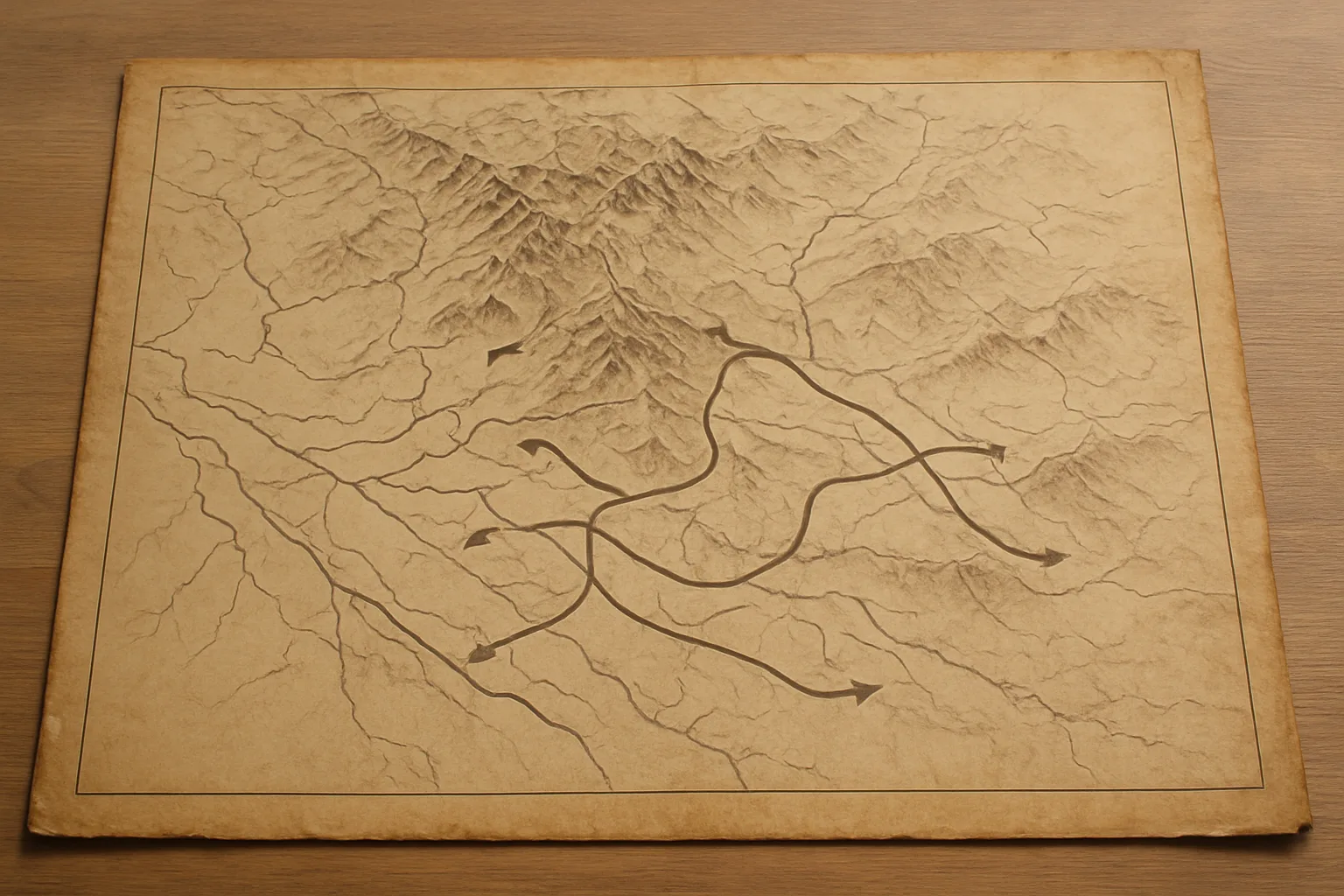
The first light of dawn slants through the dense forests above the Giri river, illuminating narrow trails that wind their way through Sirmaur’s undulating hills. Centuries before the arrival of motor roads or surveyed borders, these footpaths echoed with the sounds of hooves and barter, the rhythmic chant of traders, and the quiet determination of migrants seeking new beginnings. In this hush, Sirmaur was not a remote outpost but a living artery—veins of commerce and culture pulsing between the Himalayan foothills and the great plains below.
Anchoring Sirmaur in Early History
By the turn of the first millennium BCE, the region now known as Sirmaur occupied a strategic position at the southern edge of the Shivalik range. Ancient oral traditions, later echoed in the Gazetteer of the Sirmur State and in regional chronicles, speak of early clans—some tracing descent from legendary chieftains—who settled near the perennial streams and fertile river valleys. The archaeological evidence is fragmentary, yet pottery shards and megalithic remains along the Giri and Tons rivers hint at human presence reaching deep into prehistory. Here, myth and memory tangle: local lore tells of sages and serpent spirits shaping the land, while the historian discerns the slow accumulation of settlements fostered by water and trade.
Oral Traditions and the Mythic Landscape
Sirmaur’s ancient inhabitants wove their landscape into stories. The hills around Renuka Lake, for example, are said in local tradition to be sanctified by the goddess Renuka and her son Parashurama, their legend entwined with the very geography. While the historian reads these tales as cultural touchstones, they also reveal patterns of movement—processions, pilgrimages, and the seasonal passage of herders—that predate written records. These stories, transmitted across generations, mapped the highlands not only as places to inhabit but as routes to traverse and sanctuaries to seek.
Trade Trails: Pathways of Commerce and Exchange
By the early centuries CE, Sirmaur’s valleys had become conduits linking the central Himalayas with the fertile plains of present-day Haryana and the bustling towns along the Yamuna. The region’s principal trade routes followed the river valleys, allowing pack animals to carry salt, wool, grain, and metals between upland pastures and lowland markets. Oral traditions recall the “Salt Men” who braved monsoon-swollen streams to deliver their precious cargo. Historical inference, supported by the accounts of early travelers and local chronicles, suggests Sirmaur was a key stopover for merchants traveling between the Punjab plains and the highland kingdoms of Garhwal and beyond.
Market towns such as Nahan, which later emerged as a political center, likely had earlier counterparts—seasonal bazaars or waystations where communities mingled. Here, barter was more than commerce; it was a crucible for language, dress, and belief systems, forging the region’s distinctive cultural blend. The trading paths were not mere byways—they were the very lifelines of survival and identity.
Migration and Settlement Patterns
The history of Sirmaur is equally a history of movement. The region’s mosaic of communities—Rajputs, Gujjars, Brahmins, and indigenous pastoralists—reflects waves of migration shaped by climate, politics, and opportunity. During periods of drought or political upheaval on the plains, families and entire clans ascended into the relative safety of the hills. Oral genealogies preserved by village elders recall ancestors who “came up from the south” or “crossed from the east,” finding refuge along the Sirmaur valleys.
Not all movement was voluntary. The early centuries saw the rise of new hill states, whose boundaries shifted with alliances and conflicts. As these polities emerged, so too did patterns of tribute, taxation, and settlement. Political history, as documented in the earliest Sirmauri chronicles, records both cooperation and contest: hill rajas granted land to loyal families, while less fortunate groups were pushed further into the forests or up the slopes. Yet through these shifts, the migration routes remained, sustaining a dynamic interplay of cultures.
Emergence of the Hill States and Political Networks
By the early medieval period, Sirmaur’s political landscape began to crystallize. Local chronicles and gazetteers record the emergence of the Sirmaur state, its rulers claiming descent from ancient lineages and establishing their authority at places like Rajban and, later, Nahan. These rulers understood the value of controlling the trade and migration routes: tolls were levied, fortresses erected at key passes, and alliances forged with neighboring states such as Jubbal, Garhwal, and the plains rajas of Ambala and Saharanpur.
Political history in Sirmaur is thus inseparable from its geography. The hill state’s fortunes rose and fell with its ability to steward the movement of goods and people. Even as outside empires—Gupta, Mughal, and later the British—cast their gaze on the region, Sirmaur’s rulers maintained their autonomy by deftly managing these arterial connections.
Belief Systems and Cultural Exchange
Trade and migration did more than enrich Sirmaur materially; they shaped its spiritual landscape. The region’s shrines, some perched on lonely ridges, others nestled beside rivers, reflect a tapestry of influences: animist traditions, Vedic rituals, Shaivite and Shakta cults, and, later, the gentle influx of Buddhist and Jain pilgrims. Oral traditions recall itinerant saints and wandering minstrels who brought new practices and stories, while the archaeological record—scattered temple ruins, sacred stones—attests to centuries of cultural dialogue.
These exchanges were not always peaceful. Competing deities, contested land, and shifting allegiances made the region’s spiritual life as dynamic as its political one. Yet, through it all, Sirmaur’s valleys remained open—welcoming, if sometimes wary, of new ideas and faces.
Legacy of the Ancient Pathways
Today, the old trade trails of Sirmaur may be overgrown, but their legacy endures. The region’s towns, dialects, and festivals bear the imprint of centuries of movement and exchange. Even as modern roads and new borders redefine the map, echoes of the ancient routes remain: in the persistence of transhumant herding, in the shared markets of border villages, and in the memories of families whose ancestors once followed the same winding paths.
As we move forward in this series, the next chapter will explore how Sirmaur’s early political institutions and hill states evolved—shaped by both their environment and their enduring connections to the world beyond the hills.
Previous: Early Religious Beliefs and Sacred Sites of Sirmaur
Next: Foundation of the Sirmaur (Nahan) Kingdom