
Series: History of Una, Himachal Pradesh, India
Phase 5: Modern Era — Part 26 of 30
This article appears within a continuing historical series that follows the western Himalayas into the modern era. With the end of princely rule and the integration into independent India, long-standing social and political patterns were reconfigured. This phase examines how development, state formation, and memory interact with inherited landscapes, shaping contemporary life while carrying forward echoes of the past.
Dawn Over Chintpurni: Arrival at a Sacred Threshold
The air stirs with anticipation as the first rays of sunlight spill across the foothills of the Sivalik range. On the outskirts of Una, a slow-moving line of pilgrims—elderly women, children, men in crisp white kurtas—winds its way toward the ancient temple of Chintpurni. For centuries, this has been more than just a journey; it is a homecoming, a ritual, an act woven into the fabric of Una’s identity. In the hush before morning prayers, the clang of temple bells and the murmur of sacred chants signal not just devotion, but the enduring magnetism of this region at the crossroads of faith and history.
Early Pilgrims and the Foundations of Faith
Una’s spiritual landscape is older than any written record. Oral traditions and archaeological finds suggest that by the Gupta period (4th–6th centuries CE), the rivers and hills of this region were already dotted with shrines to local deities. Early travelers—traders, mendicants, and scholars—followed river valleys, pausing at natural springs and forest clearings that would one day become pilgrimage destinations. The rise of Hinduism’s Shakti tradition, in particular, left an indelible mark here. By the 8th century, the goddess temples of Una began to attract devotees from far beyond the hills.
Chintpurni, perhaps Una’s most renowned temple, is said to have been founded when Mai Das, a devout Brahmin, was visited by a vision of the goddess Chinnamastika. Around the 16th century, as the Mughal Empire expanded, this forested site was transformed into a permanent shrine. The tales of Mai Das’s devotion still echo in the songs sung by pilgrims today, a living link to the region’s earliest spiritual pioneers.
Medieval Patronage and the Rise of Temple Culture
The medieval period ushered in an era of temple-building and royal patronage. Rulers of the Jaswan and Katoch dynasties, whose territories extended into present-day Una, commissioned elaborate shrines and supported annual fairs. Records from the 14th and 15th centuries describe grand processions, where local kings would lead their courts to pay homage at temples like Dera Baba Barbhag Singh and Baglamukhi.
These sites, often perched on hills or nestled beside rivers, became more than places of worship—they were centers of art, learning, and commerce. Sculptors etched intricate motifs onto stone doorways, while scribes and pandits debated philosophy under the shade of peepal trees. The annual melas (fairs) drew traders, musicians, and wandering ascetics, transforming Una into a vibrant crossroads of cultures. These events forged bonds that transcended caste and creed, embedding the spirit of hospitality deep in Una’s character.
Encounters and Exchange: Sikh Gurus and Sufi Saints
The story of Una’s sacred geography cannot be told without honoring its connections to Sikhism and Sufism. During the early 17th century, Guru Gobind Singh, the tenth Sikh Guru, is believed to have passed through Una’s plains on his journey to Paonta Sahib. Oral lore recounts his stay at Amb, where he offered blessings to the local populace and left behind relics that became objects of reverence.
Meanwhile, Sufi saints such as Baba Barbhag Singh spread their message of unity and compassion from their hermitages in the region. The Dera Baba Barbhag Singh Gurudwara, founded in the 18th century, remains a testament to this syncretic legacy. Each spring, thousands gather at the annual Hola Mohalla fair, blurring the boundaries between Sikh and Hindu traditions in a jubilant celebration of faith and community.
Colonial Era: Roads, Railways, and the Making of a Pilgrim Economy
The late 19th and early 20th centuries brought sweeping changes. British colonial authorities, keen to harness the economic potential of the hills, constructed new roads and railways linking Una to Punjab and beyond. The opening of the Nangal Dam and the Amb–Andaura railway station in the mid-20th century dramatically increased pilgrimage traffic.
For the first time, devotees from as far as Delhi and Rajasthan could reach Una’s shrines in a single day. This influx fueled the growth of roadside inns, dharamshalas, and bustling bazaars. Local families took pride in hosting pilgrims, offering water, food, and guidance. The temples themselves adapted, with committees formed to manage donations and organize annual festivals on a grander scale. Tourism and pilgrimage became interwoven, each sustaining the other through times of challenge and prosperity.
Modern Transformations: Heritage, Conservation, and Spiritual Revival
In the decades after India’s independence, Una’s religious sites entered a new phase of evolution. The Chintpurni temple underwent restoration, with careful attention paid to preserving its ancient sanctum. Government initiatives highlighted Una as a key node on Himachal Pradesh’s “Devi Darshan” circuit, drawing growing numbers of both devotees and heritage tourists.
Contemporary figures, such as temple trusts and local conservationists, have championed the restoration of lesser-known shrines like Dhunasar Mahadev and Pattan Shiv Mandir. Efforts to document oral histories and preserve temple art have gained urgency, as modernity brings both opportunity and risk. The rise of digital platforms has also given voice to new generations, allowing pilgrims to share stories and coordinate journeys with unprecedented ease.
Yet, even amid change, the core rituals endure. At Dera Baba Barbhag Singh, the tradition of spiritual healing continues, attracting thousands during the spring fair. At Chintpurni, the offering of sacred threads and the recitation of ancient hymns remain unchanged from the days of Mai Das. It is this blend of continuity and adaptation that defines Una’s enduring appeal.
Landmarks Along the Pilgrim Trail
- Chintpurni Temple: One of the most revered Shakti Peethas, dedicated to Goddess Chinnamastika, with origins tracing back to the 16th century.
- Dera Baba Barbhag Singh Gurudwara: A unique site blending Sikh and Hindu traditions, famous for its annual festival and spiritual healing practices.
- Bangana Lathian Piplu: Known for its panoramic views and serene environment, this site is tied to ancient mythologies and local legends.
- Dhunasar Mahadev: A cave temple devoted to Lord Shiva, believed to be a spot of ancient meditation and mystic lore.
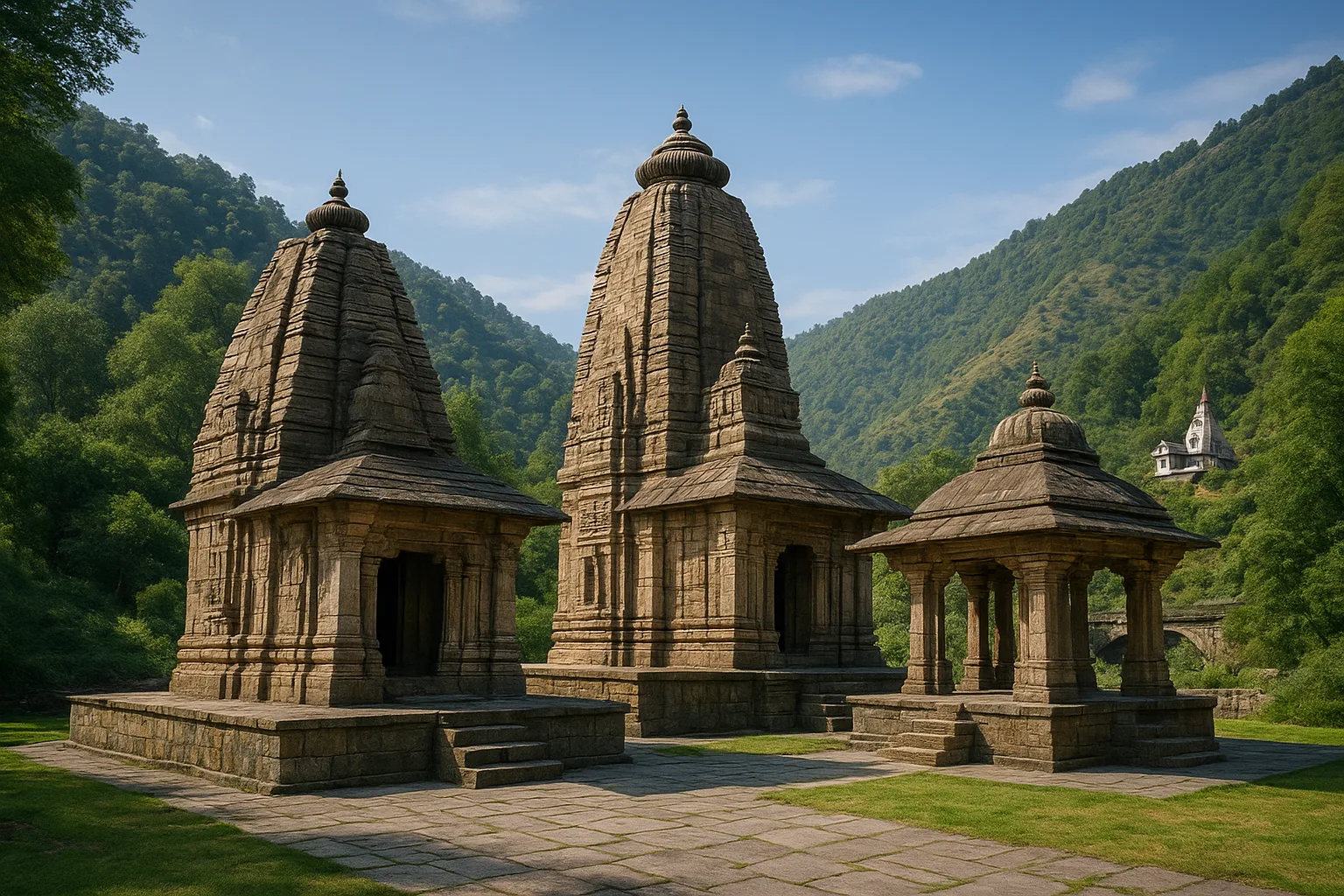
- Pattan Shiv Mandir: An architectural gem on the banks of the Swan River, showcasing intricate stone carvings and centuries-old rituals.
- Sheetla Mata Temple: Dedicated to the goddess of smallpox, this temple holds a special place in folk healing traditions.
Living Heritage: Festivals, Fairs, and Modern-Day Pilgrims
Today, the calendar of Una is punctuated by vibrant festivals that weave together past and present. The Chintpurni Navratri fair transforms the town into a tapestry of color, song, and prayer, as devotees arrive by foot, bus, and train. The Hola Mohalla at Dera Baba Barbhag Singh, with its martial displays and communal feasts, draws Sikhs, Hindus, and curious travelers alike.
In between, smaller gatherings—Shivratri at Dhunasar, Sheetla Mata’s healing rituals, the lively markets at Amb—sustain a rhythm that is both ancient and ever-renewing. For many families, these journeys are rites of passage, moments of reunion and remembrance. For others, they offer solace, healing, or the simple thrill of discovery amid the hills and rivers that have shaped this land for millennia.
Reflections: The Past in the Pulse of Present-Day Una
The story of Una’s temples and pilgrimage sites is, ultimately, a story of resilience and renewal. From the solitary wanderings of Mai Das to the bustling fairs of today, each generation has found meaning in the rituals and landscapes of this region. Tourism, far from eroding tradition, has offered new ways to sustain and celebrate it—opening doors to dialogue, conservation, and shared wonder.
As the sun sets behind the Sivalik hills, the bells of Chintpurni temple echo across the valley, mingling with the laughter of travelers and the quiet prayers of the faithful. In these sounds—ancient, persistent, and ever-changing—resides the living legacy of Una: a place where history is not just preserved, but experienced, every day, by those who come seeking the sacred and find, in turn, a piece of themselves.
Previous: Urban Development and Infrastructure in Una Town
Next: Environmental Challenges in a Rapidly Developing District