
Series: History of Una, Himachal Pradesh, India
Phase 5: Modern Era — Part 25 of 30
This article appears within a continuing historical series that follows the western Himalayas into the modern era. With the end of princely rule and the integration into independent India, long-standing social and political patterns were reconfigured. This phase examines how development, state formation, and memory interact with inherited landscapes, shaping contemporary life while carrying forward echoes of the past.
The First Asphalt Road and a Changing Morning
It is the late 1960s, and dawn breaks over the plains where Himachal meets Punjab. The hum of bullock carts and the clatter of wooden wheels have always defined mornings in Una, a modest town perched on the banks of the Sutlej’s tributaries. But on this particular day, the air is thick with the scent of hot tar. Children peer from doorways as a team of laborers, under the watchful eye of the ambitious Sub-Divisional Officer, Ram Lal Verma, lays the first stretch of asphalt road through the heart of Una. Old-timers shake their heads in disbelief—change has arrived, and with it, a new era for their town.
Roots: Una’s Early Settlement Patterns
Before the modern trappings of streetlights and roundabouts, Una was a cluster of hamlets—Brahmpur, Joharji, Ramnagar—each with its own well and a patchwork of winding footpaths. During the British Raj, Una’s location made it a strategic post on the route to Kangra and the hill stations beyond. The British constructed dak bungalows and established a modest cantonment, setting in motion a slow but steady transformation. Local families—such as the influential Soods and the enterprising Kaushals—served as intermediaries between colonial administrators and the rural populace, smoothing the flow of goods and information.
Railways: The Steel Thread of Connection
Few events altered Una’s destiny as dramatically as the arrival of the railway. In the early 1990s, after decades of petitions and political wrangling, the broad-gauge railway line from Nangal Dam to Una was finally inaugurated. The first engine, greeted by garlands and a brass band, brought with it not just passengers but also the possibility of commerce on a new scale. The station—now a recognizable landmark—became the pulse of the town. With every whistle and plume of smoke, Una grew more connected to the industrial centers of Punjab and the administrative hubs of Himachal Pradesh.
For generations, villagers had watched the trains speed by on distant tracks, uncertain if their town would ever truly be a part of the modern world. The day the Una railway station opened, elders recalled, felt like a promise kept. Students journeyed to new schools in Chandigarh and Delhi, traders expanded their reach, and the flow of new faces brought a cosmopolitan energy to local markets.
Municipal Ambitions: Laying Foundations for Growth
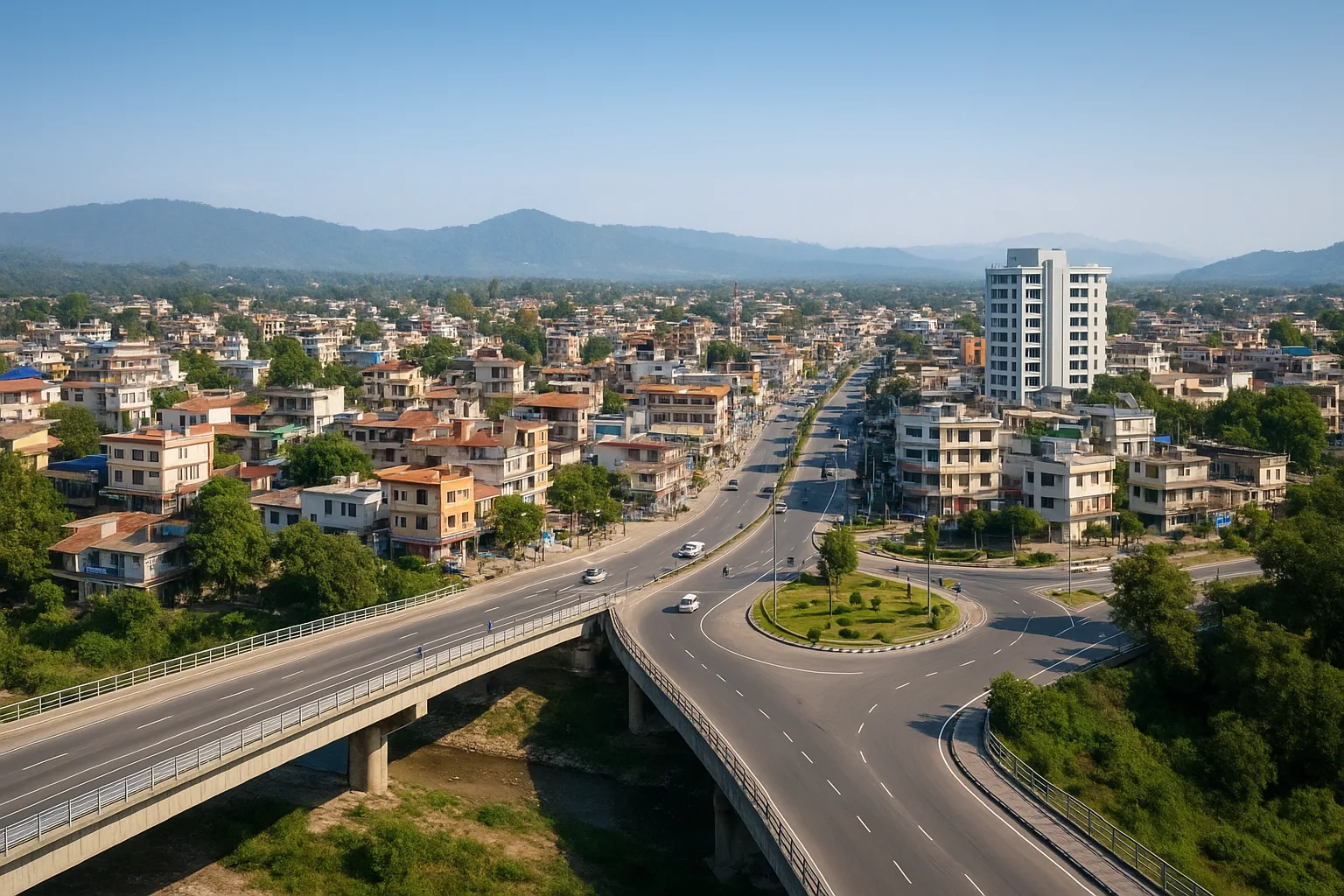
By the 1970s, the demand for civic amenities outpaced Una’s sleepy infrastructure. The establishment of the Una Municipal Committee in 1972, under the stewardship of its first President, Keshav Ram, marked a turning point. The Committee’s early years were defined by pragmatic ambition: piped water supply, electricity lines, drainage projects, and a systematic approach to road building. The town’s main bazaar, once a muddy thoroughfare, was paved and lined with the first concrete shops.
Urban planning was not without its challenges. Flooding during the monsoon and chronic water shortages in summer tested the resolve of administrators. But bureaucrats, engineers, and local leaders—such as the indefatigable Smt. Shanti Devi, who championed sanitation drives—persisted. Neighborhoods like Ramnagar and Shree Nagar expanded, and the town’s population swelled as migrant workers and government employees arrived in search of opportunity.
Post-Independence Growth: The Era of Public Works
After 1947, Una’s fate was increasingly tied to the priorities of the new Indian state. The construction of the Nangal Dam and Bhakra Canal system, not far from town, transformed the landscape. Reliable electricity and irrigation brought prosperity to local farmers, spurring the growth of agro-based industries and cementing Una’s role as a trade center. The Himachal Pradesh Public Works Department (PWD) played a pivotal role—designing roads that wound up to Amb and Mehatpur, building the first government schools, and launching housing schemes for lower-income families.
By the 1980s and 1990s, Una’s urban core was taking shape: the District Headquarters, the Civil Hospital, and the bustling Sabzi Mandi (vegetable market) became landmarks. The construction of the National Highway 503A, linking Una to Hoshiarpur and Dharamshala, accelerated economic growth and encouraged a new wave of entrepreneurship. Small factories—textiles, brick kilns, and food processing units—sprang up on the town’s outskirts, drawing workers from surrounding villages.
Education, Healthcare, and Civic Spaces: A Town Matures
Infrastructure, however, is more than bricks and mortar; it is also the scaffolding on which communities build their lives. The establishment of Government College Una in 1968, followed by schools like DAV Public School and Kendriya Vidyalaya, gave local youth access to quality education without leaving home. The Civil Hospital, expanded in the 1990s under the stewardship of Dr. R.K. Sharma, became a regional healthcare hub, serving not just Una but also patients from Bilaspur and Hamirpur.
Urban planners carved out new parks and playgrounds—Indira Stadium and the Children’s Park—offering green spaces where families gathered for festivals, cricket matches, and Sunday picnics. The construction of the new bus stand, with its covered platforms and digital timetable boards, symbolized Una’s embrace of modernity while retaining its small-town warmth. The town’s religious diversity found expression in the restoration of the ancient Baba Barbhag Singh Gurudwara and the ambitious renovation of the Shiv Bari Mandir, both of which drew pilgrims and visitors from across northern India.
Challenges of Growth: Environment, Equity, and Identity
No story of urban development is without its shadows. As Una’s population ballooned, so did the pressure on land and resources. Illegal construction, encroachment on public spaces, and the degradation of the Swan River threatened the delicate ecological balance. Administrators like Deputy Commissioner Harbans Singh led environmental campaigns to restore water bodies and regulate building codes, but the task proved daunting. The town’s rapid expansion risked eroding its unique cultural identity—a blend of Pahari tradition and Punjabi zest—prompting local historians and artists to document oral histories and preserve folk festivals.
Yet, the resilience of Una’s citizens shone through. Women’s cooperatives organized waste management drives, schoolchildren participated in tree-planting campaigns, and business associations lobbied for sustainable growth. The town’s newspapers—Ajit Samachar and Amar Ujala—chronicled these struggles and triumphs, giving voice to a community determined to shape its own future.
Modern Landmarks and the Road Ahead
Today, as part of the ambitious Smart Cities Mission, Una is experimenting with solar-powered streetlights, digital governance platforms, and urban mobility solutions. The opening of new shopping complexes, multiplex cinemas, and the expansion of the industrial estate reflect a town in transition—eager to embrace the promises of the 21st century while mindful of the pitfalls faced by other rapidly urbanizing regions.
Younger generations, many of whom travel to Chandigarh or Delhi for work and study, return home with new ideas for startups, social initiatives, and urban renewal. Local leaders continue to debate the balance between heritage and progress, ensuring that Una’s future remains a conversation, not a foregone conclusion.
Reflections: Una’s Urban Legacy
From the first stretch of asphalt to the digital signboards of today, Una’s urban story is one of ambition, adaptation, and community spirit. Each road, railway, and public square bears the imprint of those who dreamed of a better life for their town. This legacy shapes Una’s present—visible in the bustle of the bazaar, the laughter in its parks, and the quiet pride of its citizens. As Una continues to evolve, its history of urban development and civic resilience offers both a guide and a challenge: to build not just for growth, but for a future that honors the dreams and dignity of all who call Una home.
Previous: Agriculture, Irrigation, and Rural Economy Today
Next: Tourism, Temples, and Pilgrimage Sites of Una