
Series: History of Solan, Himachal Pradesh, India
Phase 5: Modern Era — Part 30 of 30
This article appears within a continuing historical series that follows the western Himalayas into the modern era. With the end of princely rule and the integration into independent India, long-standing social and political patterns were reconfigured. This phase examines how development, state formation, and memory interact with inherited landscapes, shaping contemporary life while carrying forward echoes of the past.
A Dawn in the Hills: Solan Awakes
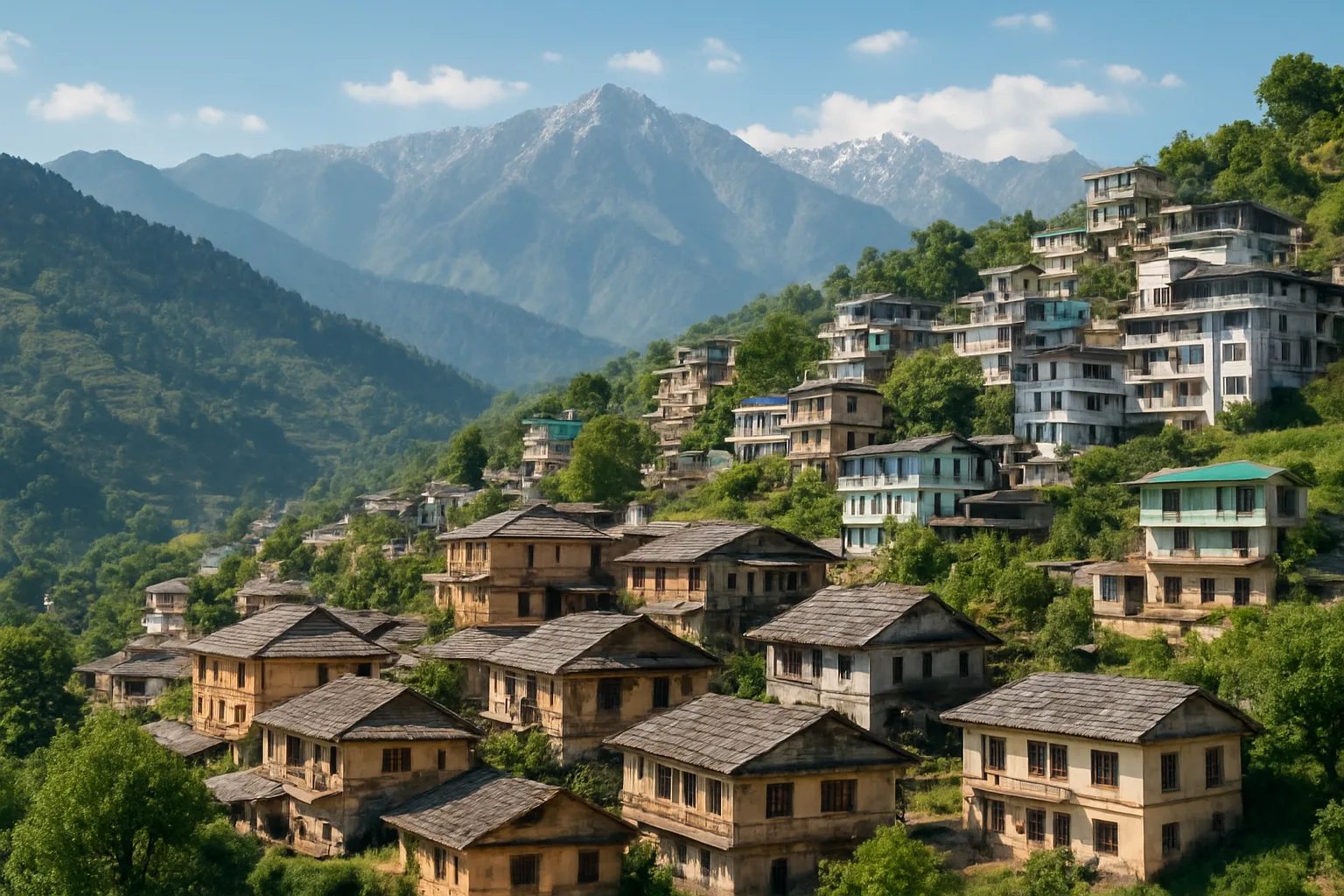
On a chilly morning in the Himalayan foothills, the mist clings to the slopes as the first golden rays of sun illuminate the bustling town below. Vendors ready their stalls along the Mall Road, schoolchildren hurry past centuries-old shrines, and the distant chug of a narrow-gauge train echoes across the valley. This is Solan—a town whose every stone and street whispers of its layered past, resilient present, and the promise of an ever-evolving future.
Echoes of Antiquity: The Rajput Roots
Long before Solan became a municipal hub or earned fame as the “Mushroom City of India,” it was a land watched over by the Thakurs and Rajput chieftains of Baghal. The region’s earliest documented rulers, the Baghal dynasty, established their seat at Arki, a few miles from present-day Solan. Oral traditions and colonial-era district gazetteers recall how the Baghal rulers, such as Raja Kishan Chand in the 19th century, managed a patchwork of small villages, forests, and trade routes winding through the lower Himalayas.
Solan itself remained a small hamlet, named after the revered goddess Shoolini Devi. The annual Shoolini fair, still celebrated with great fervor, traces its roots to these early days—an expression of gratitude to the deity believed to protect the valley from misfortune. It was this spiritual core that would give Solan both its name and its earliest sense of identity.
Paths Converge: The British Era and the Birth of a Town
The 19th century brought seismic changes. As the British consolidated their power in North India, the strategic value of the Kalka-Shimla corridor grew. The construction of the Kalka-Shimla Railway in the early 20th century—an engineering marvel winding through 103 tunnels—altered the fate of Solan. The town, once a mere stopover for pilgrims and traders, became a vital railway junction and cantonment. Colonial officers, drawn by the region’s salubrious climate, built stately bungalows and stringently planned the town’s growth.
Solan’s population swelled with an influx of railway workers, soldiers, and support staff. The British established breweries, such as the iconic Mohan Meakin Brewery, leveraging the area’s pristine water sources and cool climate. By the 1920s, Solan had acquired a cosmopolitan air—a blend of local Himachali, Punjabi, and Anglo-Indian influences evident in its architecture, cuisine, and even its annual events calendar.
Resilience Through Upheaval: Independence and Integration
The years leading up to and following Indian Independence were marked by uncertainty. The princely state of Baghal—like its neighbors—faced the challenge of integrating with the new Indian Union. In 1948, after negotiations and local resistance, Solan was merged into the state of Himachal Pradesh. The transition was not without friction; administrative boundaries shifted, and new governance structures replaced centuries-old feudal traditions.
Yet, Solan adapted. Government offices, educational institutions, and health facilities began to dot the landscape. The Dr. Yashwant Singh Parmar University of Horticulture and Forestry, established in 1985, became a beacon of agricultural innovation, drawing students and researchers from across the country. Through these transformations, the town’s Shoolini Mata temple and the annual fair remained steadfast—anchors to tradition amid change.
Modern-Day Mosaic: Industry, Education, and Culture
By the late 20th century, Solan’s profile had shifted. No longer a sleepy railway town, it became an industrial and educational hub. Pharmaceutical companies set up factories in the Baddi-Barotiwala-Nalagarh corridor, turning the region into a powerhouse of manufacturing. The town’s moniker as the “Mushroom City” arose from its flourishing mushroom cultivation industry—a testament to the ingenuity of local farmers and agricultural scientists.
Yet, Solan’s essence is not just economic. The city pulses with cultural energy. The Shoolini Utsav, a panoply of traditional music, dance, and community rituals, draws visitors and locals alike. The British-era Christ Church stands in quiet testimony to the town’s colonial legacy, while bustling markets—like the Lower Bazaar and Mall Road—offer everything from Himachali handicrafts to piping hot momos.
Education remains a pillar. Institutions like Jaypee University of Information Technology and government colleges have made Solan a magnet for youth across Himachal and neighboring states. The city’s blend of old and new is visible everywhere: students with laptops gather near ancient temples, and high-tech labs operate alongside time-honored orchards.
The People Behind the Progress: Leaders and Luminaries
Solan’s progress is inseparable from its people. Dr. Yashwant Singh Parmar, the “architect of Himachal Pradesh,” was born in the district and played a pivotal role in shaping the region’s destiny post-independence. His vision for rural upliftment and agricultural modernization left an indelible mark not just on Solan, but on the entire state.
Equally influential have been the teachers, farmers, and entrepreneurs who have shaped the town from within. The legacy of the Mohan family, founders of the Mohan Meakin Brewery, continues in Solan’s industrial scene. Local artisans keep alive traditional crafts—such as wood carving and wool weaving—while new generations have embraced digital entrepreneurship and eco-tourism.
Looking Ahead: Solan’s Future in a Rapidly Changing World
Today, Solan stands at a crossroads. Urbanization is surging, bringing challenges of infrastructure, environmental preservation, and social cohesion. The delicate balance between heritage and modernity is tested daily—visible in debates over heritage conservation, tourism management, and sustainable development. The town’s location on the busy National Highway 5 makes it a gateway to both Shimla and Chandigarh, drawing migrants, investors, and tourists in increasing numbers.
Yet, optimism prevails. Local government and civic bodies are investing in green spaces, smart city initiatives, and disaster preparedness. Community groups are reviving folk arts, supporting women’s cooperatives, and organizing environmental clean-up drives along the Ashwani Khad and nearby forests. Educational institutions are collaborating on climate research and skill development programs, ensuring that Solan’s youth are equipped for the future.
Solan’s story is far from over. The town’s enduring spirit—shaped by centuries of adaptation and renewal—offers hope that it can navigate the complexities of the 21st century while honoring its unique identity.
Reflections: The Legacy That Endures
In every corner of Solan, the past mingles with the present. The rhythmic prayers at Shoolini Mata’s temple, the laughter echoing through colonial-era halls, the determined faces in laboratories and classrooms—all speak to a community that has thrived through adversity and embraced change. Solan’s history is not a relic, but a living force, shaping its roads, its festivals, and its aspirations.
As the sun sets behind the hills and the town lights flicker on, Solan stands resilient, rooted in its history yet open to new beginnings. In the journey from Rajput hamlet to modern city, Solan has crafted an identity as dynamic as the mountains that cradle it—reminding all who pass through that the story of a place is forever written by those who dwell within it.
Previous: Oral Histories and Memories of Solan’s Elders