
Series: History of Sirmaur, Himachal Pradesh, India
Phase 5: Modern Era — Part 30 of 30
This article appears within a continuing historical series that follows the western Himalayas into the modern era. With the end of princely rule and the integration into independent India, long-standing social and political patterns were reconfigured. This phase examines how development, state formation, and memory interact with inherited landscapes, shaping contemporary life while carrying forward echoes of the past.
Nightfall Over Nahan: Echoes of Sirmaur’s Ancient Hills
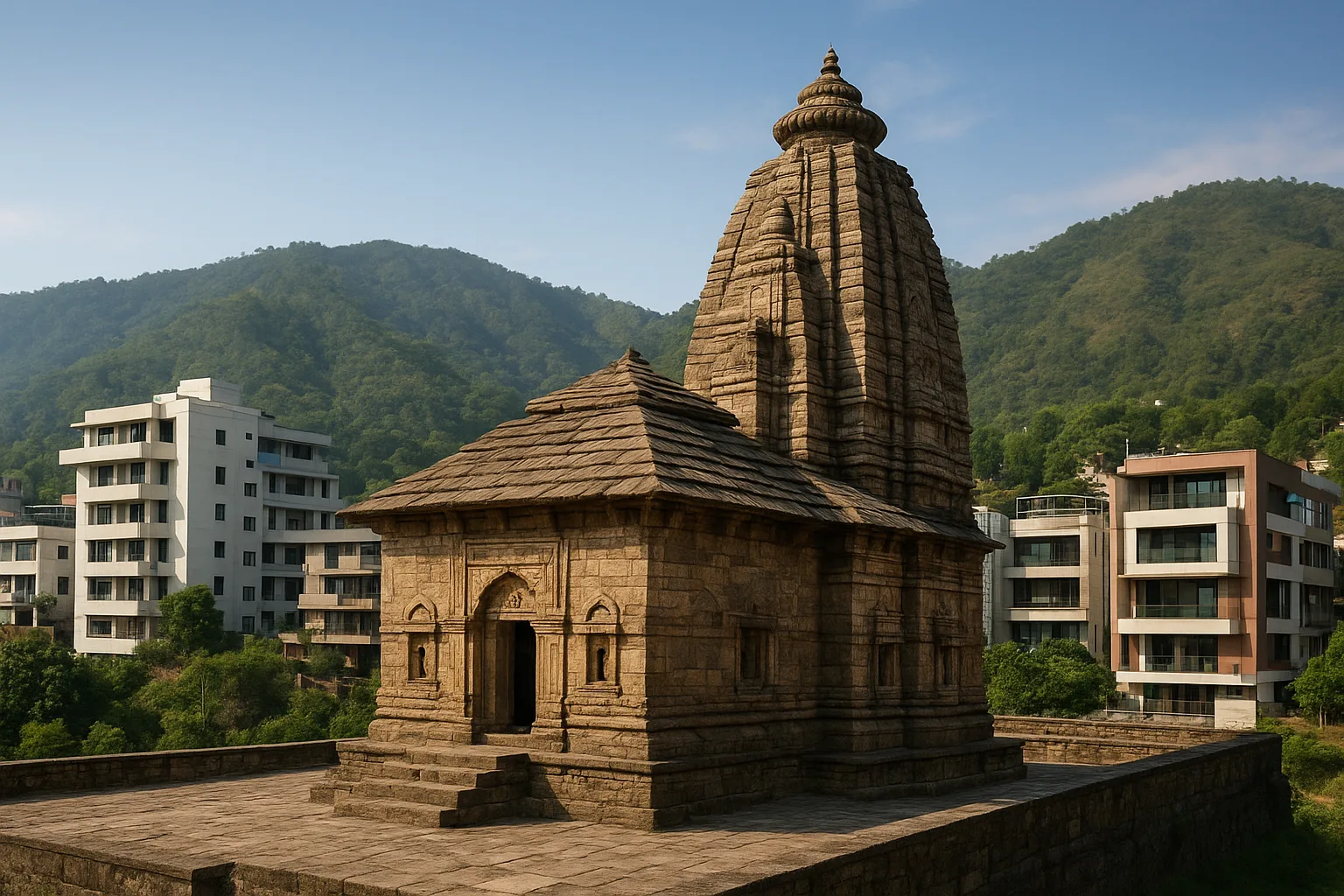
The evening air in Nahan, perched atop a gentle ridge, carries a chill that hints at the Himalayan peaks beyond. As the sun dips behind the Shivalik foothills, the town quiets. Streetlights flicker on, illuminating old market lanes near the palace—a testament to centuries of change. Here, in the heart of Sirmaur, the past is never far from the present. Every stone, every winding path, seems to carry a story older than the town itself.
From Myths to Memory: Ancient Roots of Sirmaur
Long before the emergence of organized states, the valleys and forests of Sirmaur were home to communities whose names are lost to time. Oral traditions, passed from village to village, speak of sages and spirits, of gods who walked among men. The Giri and Tons rivers—lifelines for the region’s earliest inhabitants—feature in local myths, suggesting a land closely tied to nature and ritual.
Yet, when we look past the poetry of legend, the archaeological and linguistic evidence points to a steady influx of tribes from the north and west. The Kol and Kirata peoples are thought to have been among the earliest settlers, followed by Indo-Aryan migrations that gradually transformed the cultural landscape. These waves of settlement gave rise to a patchwork of hill communities, each with their own customs, dialects, and beliefs.
Early Settlements and Everyday Life
While written records are scarce before the medieval period, the traces of these earliest societies can be read in the enduring customs of Sirmaur’s villages. Terraced fields, carved painstakingly into the hillsides, signal a reliance on agriculture and a deep understanding of the land. Sacred groves and shrines—some predating the region’s temples—speak to animist beliefs and ancestor worship that likely predate later Hindu influences.
Trade routes, though little more than forest paths in those days, connected the settlements of Sirmaur to the wider world. Salt, wool, and forest produce moved between the hill valleys and the plains of the Yamuna-Ganga doab. These routes, referenced in early gazetteers and later British chronicles, enabled not just commerce but the exchange of ideas and faiths—Buddhism, Shaivism, and local deities coexisted in a shifting spiritual landscape.
Mythology and Historical Inference: Where Fact Meets Faith
As with much of the western Himalayas, Sirmaur’s early history is woven from a blend of oral legend and fragmentary records. The region’s founding myths feature prominently in folk songs and the memories of temple priests. Tales of Raja Sirmour, the eponymous founder, abound, though historians recognize these as symbolic rather than literal truths. The Deorha and Jat communities, along with indigenous groups like the Hatti, figure prominently in these stories—each asserting ancient rights to land and water.
Modern scholarship, cautious yet curious, teases out kernels of truth beneath the myth. The emergence of the Sirmaur dynasty, for example, is inferred from copper-plate grants, genealogies, and the records of neighboring hill states. These sources suggest that by the 11th century, Sirmaur was a recognized polity, with its capital at Rajban before shifting to Nahan centuries later. The lineages of local rulers, preserved in temple inscriptions and Persian chronicles, provide a patchwork chronology that anchors Sirmaur in the broader history of Himachal’s princely states.
Communities, Power, and Belief Systems
Sirmaur’s society has always been a tapestry of interwoven identities. Rajput clans, claiming descent from legendary ancestors, established themselves as the region’s political elite. Yet, the majority of the population remained tied to the land—farmers, shepherds, and traders whose daily lives were shaped by the rhythm of the seasons and the dictates of custom.
The region’s religious landscape was equally diverse. Shaivism and Devi worship dominated, but the persistence of local deities—such as Shirgul and Bhangayani—underscored the enduring power of indigenous beliefs. Buddhist influence, though waning by the medieval period, left subtle marks: motifs in temple architecture, fragments of iconography, and the memory of monastic settlements once active along ancient trade corridors.
Through conquest, alliance, and migration, Sirmaur absorbed influences from the plains and neighboring hill states. The arrival of Mughal emissaries and, later, the Sikh and Gurkha incursions, introduced new dynamics of power and resistance. The region’s rulers navigated these pressures with a combination of diplomacy and martial prowess, balancing autonomy with the demands of more powerful neighbors.
The Modern Era: Colonial Shadows and New Beginnings
By the early nineteenth century, the landscape of Sirmaur had changed dramatically. The Gorkha occupation, though brief, left scars—devastated villages and shifting alliances. With the British East India Company’s expansion into the hills after 1815, Sirmaur’s princely rulers negotiated for survival and autonomy, ceding some powers while preserving local traditions. The region’s inclusion in the Punjab States Agency brought new administrative structures, but also new roads, schools, and markets.
As the twentieth century dawned, Sirmaur’s people found themselves drawn into the wider currents of Indian nationalism. Local leaders, inspired by the freedom movement, began to challenge feudal authority and demand land reforms. The princely state’s eventual integration into the Indian Union in 1948 marked a turning point—an era of new possibilities, but also the challenge of preserving identity in a rapidly changing world.
Sirmaur Today: Heritage and Horizons
Walk the lanes of Nahan—or the ancient paths leading to Paonta Sahib and Shillai—and the past feels ever-present. Festivals honoring mountain deities, the slow rhythm of life in terraced villages, and the resilience of oral traditions all bear witness to a deep historical memory. Today, Sirmaur stands at a crossroads. Its forests and rivers face pressures unknown to earlier generations, while its people negotiate the balance between tradition and modernity.
Yet the roots run deep. The stories recounted by elders, the rituals enacted in ancient shrines, and the pride in a distinct Sirmauri identity all speak to a region still shaped by its past. As Sirmaur looks to the future—navigating development, migration, and questions of belonging—it does so with the confidence of centuries endured and stories yet to be told.
The next part of this series will trace the transformations brought by independence and the decades that followed, exploring how Sirmaur’s legacy continues to inform its evolving present.
Previous: Oral Histories and Memories of Sirmaur’s Elders