
Series: History of Hamirpur, Himachal Pradesh, India
Phase 5: Modern Era — Part 30 of 30
This article appears within a continuing historical series that follows the western Himalayas into the modern era. With the end of princely rule and the integration into independent India, long-standing social and political patterns were reconfigured. This phase examines how development, state formation, and memory interact with inherited landscapes, shaping contemporary life while carrying forward echoes of the past.
First Light Over the Valleys
Morning mist lingers over the undulating hills of Hamirpur, traced by the lazy Beas and dotted with terraced fields that bear silent witness to centuries of life. This landscape—part of the lower reaches of Himachal Pradesh—has long been a crossroads, where the past breathes through every stone and stream. Even today, elders recall stories spun by their ancestors, echoing in the rhythms of village work and festival song. To walk these paths is to step into a living archive, where memory, myth, and the hard edge of history converge.
From Mythic Echoes to Early Settlements
Oral traditions in Hamirpur are rich with mythology, weaving the land into the great tapestry of Indian epic lore. Local legends speak of the Pandavas’ passage during their exile, and of sages meditating in forests that, even now, conceal ancient shrines. These tales, cherished and retold, lend the hills an aura of sanctity and timelessness. Yet, while such stories shape cultural identity, historians distinguish them from documented events, recognizing their power as mythic frameworks rather than literal chronicles.
Archaeological traces and regional gazetteers suggest that Hamirpur’s earliest settlements were shaped by the region’s geography. The relatively gentle slopes, reliable water sources, and proximity to key passes favored the emergence of small agrarian hamlets. By the early centuries CE, these communities had begun to coalesce, their patterns visible in the surviving remains of terracing, water management systems, and the enduring layout of old village cores.
Ancient Beliefs and Social Ties
Faith, in Hamirpur, has always drawn deeply from the land. Ancient folk deities—some of whom are still venerated—presided over fields and forests. Over time, Shaivism and Vaishnavism made their way into the hills, blending with indigenous worship. Small shrines and stone lingams, sometimes half-swallowed by moss, reveal a long continuum of belief and adaptation. The region’s oral traditions, carefully recounted in the works of 19th-century gazetteers, capture this complex tapestry: a world where local gods, ancestral spirits, and pan-Indian deities coexist.
The communities that grew here were tightly knit, their bonds forged through both necessity and shared ritual. Extended families clustered in compact settlements, their lives governed by the rhythms of agriculture and the uncertainties of climate. Festivals—many of which endure—marked the passage of seasons, reinforcing social cohesion and affirming ties to both land and lineage.
Trade Routes and the Dawn of Hill States
Hamirpur’s location, bridging the high Himalayas and the fertile plains, placed it along secondary trade routes that threaded through the region. Goods from the Punjab and beyond occasionally found their way into local markets, bringing not just commerce but also new ideas, crafts, and stories. Iron implements, pottery, and textiles circulated through barter, their origins sometimes traceable in the motifs and methods preserved by present-day artisans.
By the late first millennium, the rise of hill polities began to reshape the region’s fortunes. Small chieftaincies—some referenced in Rajput chronicles—emerged, their authority rooted in control over land, water, and the loyalty of local clans. It was within this shifting political landscape that the foundations of later princely states were laid.
Hamirpur and the Kingdom of Katoch
The recorded history of Hamirpur sharpens in the medieval period, particularly with its relationship to the Katoch dynasty. The Katochs, one of India’s oldest royal lineages, ruled the broader Kangra region, and Hamirpur often found itself under their influence. The district’s name itself pays homage to Raja Hamir Chand, a Katoch monarch whose reign (1700–1740 CE) witnessed renewed assertion over these hills. It was during his time that the fort at Hamirpur was either founded or significantly reinforced, anchoring the town’s strategic importance.
Historical inference, supported by early British surveys and local chronicles, suggests that Hamirpur’s administrative and military role grew through the 18th century. The region, however, constantly negotiated its autonomy, caught between the ambitions of neighboring hill states, the encroaching Sikh empire, and, eventually, the British Raj.
Colonial Encounters and the Modern Age
The coming of the British in the mid-19th century brought seismic changes. Hamirpur—once a node in a feudal tapestry—was remapped, its boundaries redefined and its governance subjected to new systems. Gazetteers from this era document not only the administrative reforms but also the resilience of local customs and identities. British officers, both baffled and enchanted by the region’s traditions, recorded festivals, clan disputes, and the peculiarities of panchayat justice with a mix of curiosity and condescension.
Education, infrastructure, and the slow trickle of modernity began to reach Hamirpur by the late colonial period. The town’s population grew, markets expanded, and, after Independence, the region became part of the newly formed Himachal Pradesh. Yet, even as roads and schools multiplied, the cadence of life retained much of its old character—a measured coexistence of old and new.
Shaping the Present, Envisioning the Future
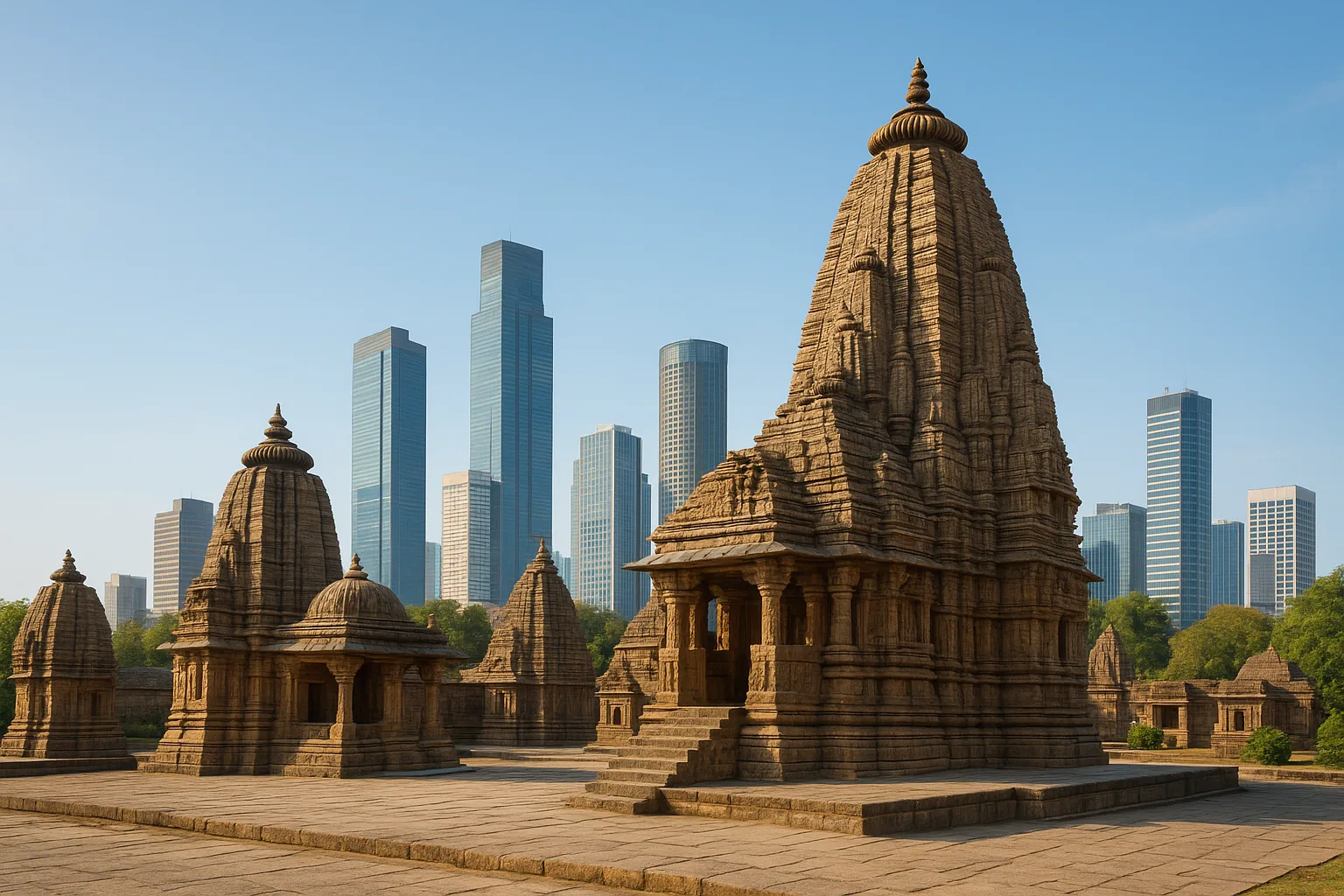
Today, Hamirpur stands at a crossroads, its past tangible in the stones of its temples, the names of its villages, and the memories of its people. The region’s ancient roots continue to shape its sense of self—a pride visible in language, in festival, and in the careful stewardship of fields and forests. Young generations, educated in local schools and universities, carry forward stories that bind them to both land and lineage, even as they look outward to new horizons.
As the series draws to a close, Hamirpur’s journey from myth and memory to modernity offers not only a story of adaptation but of enduring identity. In the next series, we will turn our attention to the contemporary challenges and aspirations facing this storied district, exploring how its historical legacy informs debates over development, environment, and cultural preservation.
Previous: Voices of the People: Oral Histories from Hamirpur