
Series: History of Solan, Himachal Pradesh, India
Phase 4: British Period — Part 19 of 30
This article is part of a wider series tracing the transformation of the western Himalayas under colonial influence. As British authority extended into the hills, existing political systems were restructured through treaties, administration, and new forms of governance. This phase considers how colonial rule reshaped society, economy, and space while leaving lasting imprints on local identity.
The Day the Train Arrived
It was a chill morning in 1903 when the distant whistle of an approaching train echoed through the hills around Solan. Villagers gathered near the unfinished platform, their shawls pulled tight, eyes wide with anticipation and uncertainty. For many, this was their first glimpse of the Kalka-Shimla Railway—a symbol of British ambition, but also a harbinger of change. They watched as British officers in starched uniforms disembarked, followed by boxes of supplies and unfamiliar faces. This scene, so ordinary in its details, marked the beginning of a new era for the town. Solan, once a quiet stop on the trade route between Kalka and Shimla, was waking up to the rhythms of the colonial world.
Solan’s Landscape Before Empire
Before the British arrived, Solan was a modest outpost nestled between pine-clad hills and terraced fields. Shepherds led their flocks along ancient tracks, while traders paused beneath the shade of deodar trees, sharing news from distant valleys. The town’s heart was its bustling bazaar: a patchwork of mud-brick shops, open-air stalls, and the smell of roasting grains. Life was dictated by the seasons and the slow pulse of rural Himachal Pradesh. The ruling family of Baghat, of which Solan was a part, maintained order through local chieftains and traditions, their authority a distant but constant presence.
Colonial Shadows: British Arrival and Everyday Adjustments
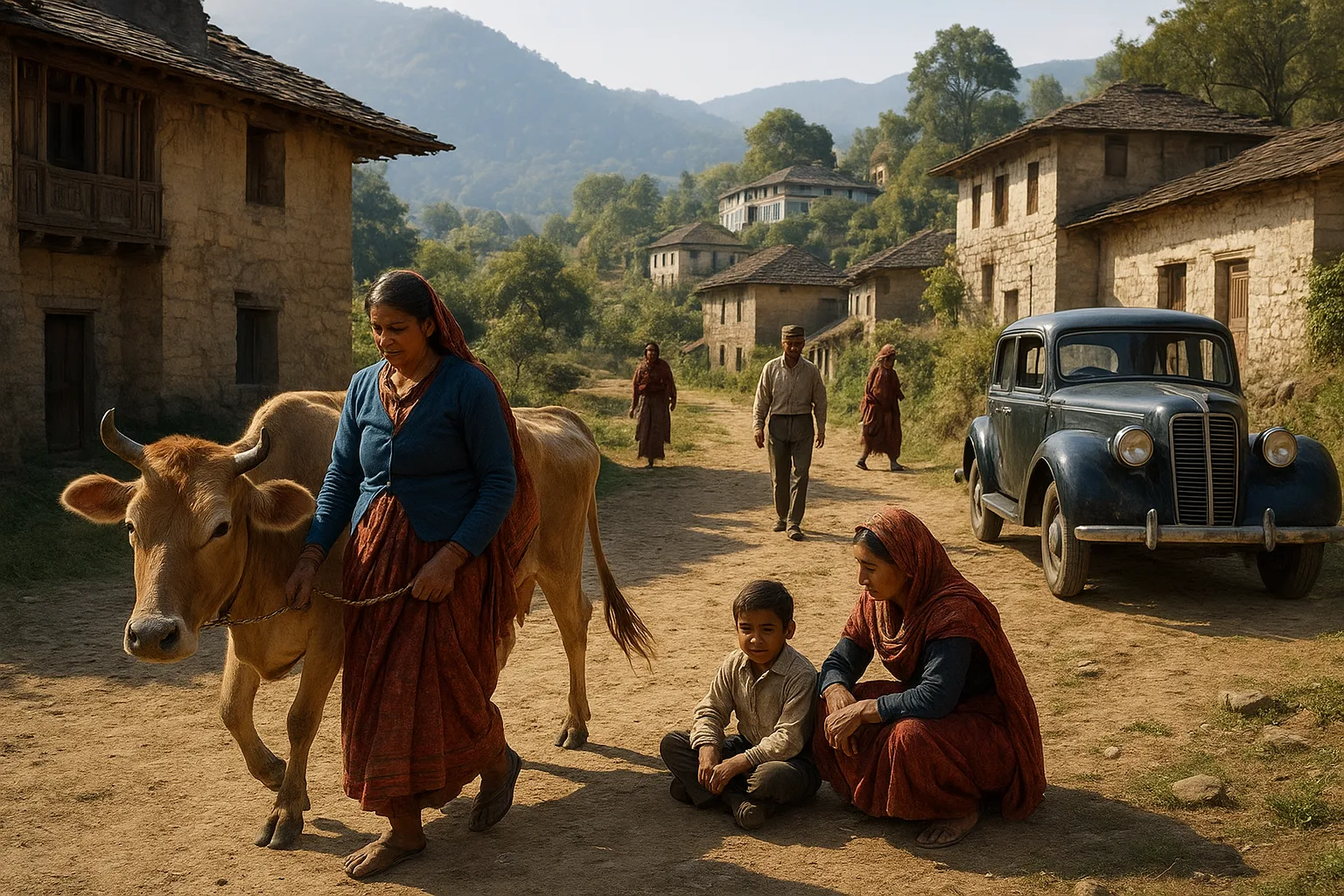
When the British established their foothold in the region in the mid-19th century, their priorities were clear: security for Shimla, the summer capital, and reliable transport for goods and officials. Solan’s strategic location did not go unnoticed. Barracks soon rose on the outskirts, and roads were carved into the hillside with forced labor. The British presence was felt not just in new buildings, but in the rhythm of daily life. Local farmers found their land requisitioned for cantonments or railway lines, while shopkeepers learned to cater to the tastes of British soldiers and administrators.
One can imagine a tea-seller, Ram Lal, whose tiny stall now served both pahari villagers and British sergeants. He learned to brew strong, sweet tea for the English palate, and his son picked up snatches of the foreign tongue. The bazaar adapted, offering tinned sardines and imported biscuits alongside roasted corn and ghee. Yet, for every new opportunity, there was a quiet cost—customs bent, traditions jostled, and old livelihoods threatened by unfamiliar rules and taxes.
Home and Hearth: Family Life Under British Rule
Inside homes, change crept in the form of new work routines and aspirations. Many young men took jobs as porters or clerks for the railway or cantonment, drawn by the promise of steady wages. Women continued to manage households, but their daily tasks now included fetching water from wells built to British specifications, or preparing meals for boarders who worked on the railway.
Children’s lives, too, began to shift. The establishment of mission schools in Solan offered education in English and arithmetic, attracting ambitious families. Some parents—like Laxmi Devi from the nearby village of Kandaghat—dreamed of sending their sons to work in Shimla’s government offices. Others worried about the erosion of local languages and customs, as traditional folk tales were replaced by English readers and hymnbooks.
Markets, Fairs, and Social Gatherings
Despite these changes, the bazaar remained Solan’s beating heart. Weekly markets drew villagers from across the valley, their baskets brimming with produce, wool, and gossip. The annual Solan Fair—originating from the worship of goddess Shoolini—retained its old vibrancy, though now the crowd included British officers observing with curiosity and sometimes unease.
Yet, even these gatherings bore the imprint of empire. Taxes were collected with new efficiency, and market inspectors, often local men appointed by the British, enforced regulations. Disputes over prices or weights were now settled in cantonment courts, where English law and unfamiliar procedures replaced the old council of elders. Still, the fair provided a rare space where all could mingle, share news, and—if British eyes turned away—discuss resistance and hope for a return to better times.
Strain and Solidarity: Enduring Hardships
Colonial policies did not always favor the local population. New taxes and land assessments sometimes pushed families into debt. Famines, such as the ones that swept through north India in the late 19th century, made survival precarious. Relief efforts coordinated from Shimla often fell short of reaching the hill villages. In these hard times, Solan’s people leaned on each other—sharing food, labor, and comfort. The Sikh and Hindu temples, alongside the new Anglican church, became centers not just for worship but for community aid.
There were also moments of quiet defiance. When the British attempted to restrict grazing rights or limit access to forest resources, villagers organized petitions and, on occasion, refused to comply. Oral histories recall how leaders like Babu Ram, a respected elder from the outskirts of Solan, would gather neighbors to argue their case before the colonial magistrate. Though victory was rare, these acts fostered a sense of shared identity and purpose.
Encounters with Empire: Ordinary People and Colonial Authority
For most townsfolk, encounters with British power were a daily reality—sometimes intimidating, sometimes mundane. The cantonment’s rules dictated curfews, sanitation standards, and even what could be sold in the bazaar. British officials, such as Mr. E. C. Buck, the Deputy Commissioner, were both distant rulers and occasional visitors, their presence marked by processions and public meetings. Local policemen—sometimes drawn from neighboring districts—enforced order, but were themselves often caught between two worlds.
Yet, the lines between ruler and ruled were not always clear. Friendships and rivalries grew in the shared spaces of the market, and some families prospered by adapting to new opportunities. The arrival of the railway, for example, brought travelers from across India, fostering a small but lively cosmopolitanism. Solan’s inns and guesthouses filled with hill traders, laborers, and British clerks trading stories over evening fires.
Echoes of Change: The Road Toward Independence
By the 1920s and 1930s, the winds of political change blowing through India reached Solan. News of the Non-Cooperation and Quit India movements filtered in via railway passengers and local newspapers. While large-scale protest was rare in this quiet town, young men—many educated in mission schools—began to question colonial rule. Some joined the freedom movement in Shimla or Delhi, while others supported the cause quietly at home.
Still, for most, the struggle was not only political but practical: how to sustain their families, preserve their customs, and navigate the shifting sands of colonial authority. The resilience and adaptability of Solan’s people carried them through these uncertain years, even as the world around them changed irrevocably.
Legacy: How Colonial Life Shaped Modern Solan
Today, echoes of colonial Solan linger in its architecture, its railway, and its diverse community. The markets remain lively, the schools founded by missionaries still stand, and the memory of adaptation and endurance lives on. The experience of ordinary people during the British period—marked by hardship, resourcefulness, and occasional defiance—helped forge the unique character of Solan. This legacy is visible in the town’s blending of tradition and modernity, its openness to newcomers, and its enduring sense of community. The past, with all its complexity, continues to shape the daily life of Solan’s people, urging them forward while reminding them of their shared roots.
Previous: Colonial Administration and Governance in Solan
Next: Solan’s Role in the Indian Freedom Movement