
Series: History of Solan, Himachal Pradesh, India
Phase 4: British Period — Part 20 of 30
This article is part of a wider series tracing the transformation of the western Himalayas under colonial influence. As British authority extended into the hills, existing political systems were restructured through treaties, administration, and new forms of governance. This phase considers how colonial rule reshaped society, economy, and space while leaving lasting imprints on local identity.
In the Shadows of the Shivaliks: The Dawn of Resistance
The morning mist clung to the slopes of Solan as the narrow-gauge train chugged into the station, its whistle echoing through the pine forests. It was 1921, and the town’s quiet streets belied the tension simmering beneath the surface. British officers, their uniforms crisp and eyes wary, paced the platforms, their gazes fixed on groups of locals who gathered in hushed conversation. Among them was a young schoolteacher, Prem Chand Sharma, clutching a folded pamphlet that would soon ignite a spark of rebellion in this seemingly unremarkable hill town.
The Colonial Stamp on Solan
Solan’s strategic location between Kalka and Shimla ensured it was swept into the British colonial fold early in the nineteenth century. The arrival of the Kalka–Shimla Railway in 1903 transformed the sleepy town into a conduit for colonial administration and commerce. British officials established summer residences, while the brewing industry—symbolized by the Mohan Meakin Brewery—flourished under imperial patronage.
Yet, beneath the veneer of colonial order, local resentment festered. Land revenues increased, local customs were disregarded, and the British presence felt both distant and invasive. Villagers whispered stories of dispossession and exploitation, setting the stage for the first stirrings of organized resistance.
Seeds of Nationalism: Early Influences
By the early 1920s, the echoes of Mahatma Gandhi’s call for Swaraj reached even the isolated valleys of Himachal. In Solan, educated youth and teachers became the first conduits of nationalist thought. Figures like Prem Chand Sharma and Jyoti Prasad, inspired by the Non-Cooperation Movement, organized clandestine meetings at the Arya Samaj Mandir. Leaflets and banned newspapers circulated under the noses of wary British officers.
Local zamindars and traders, initially cautious, began to support the cause—providing funds for relief efforts and boycotting British goods. The Arya Samaj emerged as a crucial institution, nurturing a climate where debates on self-rule and equality flourished.
The Salt March Reverberates in Solan
1930 saw the Salt Satyagraha sweep across India, and Solan was not untouched. News of Gandhi’s arrest reached the hill town with a jolt. Students of Government School Solan, led by the fiery Lila Ram, staged a walkout in protest. Teachers faced the wrath of British inspectors for their open support, while local women—many for the first time—marched to the Giri River, symbolically collecting salt in defiance of colonial law.
The British response was swift and harsh. Police raids intensified, and several local leaders, including Lila Ram and Ganga Devi, were arrested. The jail in nearby Kandaghat swelled with political prisoners. Yet, the repression only steeled the resolve of Solan’s residents, who began to see their struggle as part of a larger, national movement.
World War II and the Rising Tide
The outbreak of World War II brought fresh challenges. The British war effort drew resources and manpower from Himachal’s hills, and Solan’s young men were conscripted into the Indian Army. At the same time, the Quit India Movement of 1942 sent shockwaves through the region. Underground networks flourished, distributing Congress bulletins and organizing strikes at government offices and the brewery, which was seen as a symbol of British economic control.
Among the unsung heroes was Pushpa Devi, a nurse at the local hospital who secretly treated injured protesters and facilitated communication between Solan and activists in Shimla. Her courage became legendary, inspiring a new wave of participation among women and youth.
Local Alliances and the Princely States
The princely states surrounding Solan, notably Baghat and Keonthal, played a complex role. Their rulers, beholden to the British, often acted as intermediaries, enforcing colonial directives while attempting to maintain local legitimacy. This duality led to tension—and, occasionally, opportunity. In 1945, a secret conclave was held at a farmhouse near Kasauli, where local leaders from Solan, Baghat, and Keonthal coordinated protest actions and negotiated safe passage for refugees fleeing colonial crackdowns.
As independence loomed, the lines between princely authority and popular will blurred. Local rajas, sensing the inevitable, began to distance themselves from the British, tacitly allowing nationalist activities to proceed. This pragmatic cooperation expedited the transition of power when 1947 arrived.
The Final Push and the Dawn of Freedom
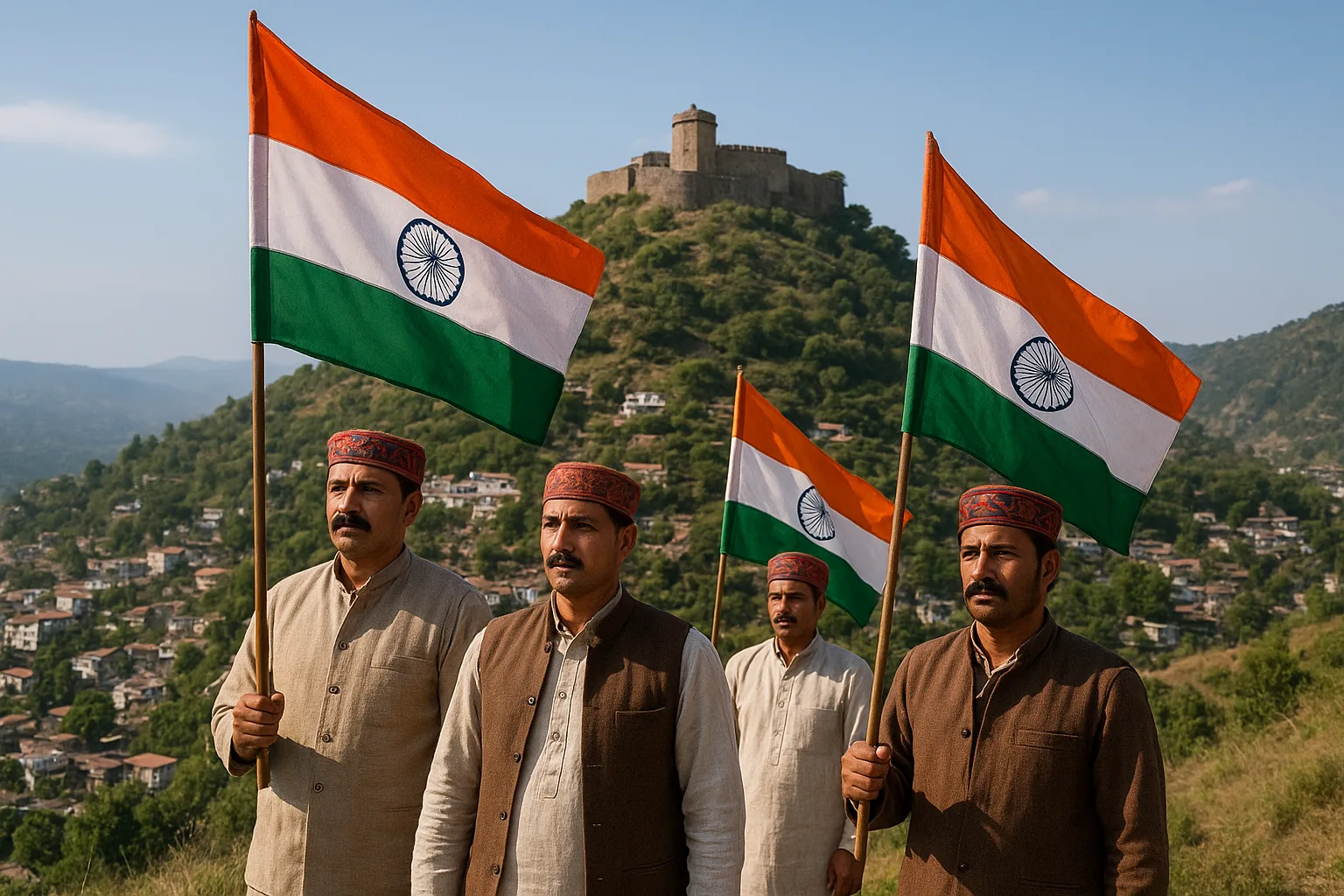
By 1946, Solan was firmly entrenched in the freedom struggle. Congress flags fluttered from rooftops, and the town’s bazaar bustled with rumors of impending change. When the news of India’s independence broke on August 15, 1947, a spontaneous procession wound its way through Solan’s streets. Elders wept openly; young men and women danced, tears mingling with laughter. The church bells and temple gongs rang in unison, a rare harmony in a town once divided by colonial lines.
In the days that followed, Solan’s first local council was formed, with former activists assuming leadership roles. The challenges ahead were immense—partition refugees arrived seeking shelter, and the new administration grappled with integrating the princely states into Himachal Pradesh. Yet, the spirit of solidarity forged during the freedom movement became Solan’s guiding light.
Legacy: The Freedom Struggle’s Echo in Modern Solan
Today, Solan’s tranquil facades—from the bustling Mall Road to the quiet corners of the old Arya Samaj Mandir—conceal stories of courage and conviction. Annual Independence Day celebrations draw crowds to the historic Gorkha Fort and the railway station, sites that once witnessed the march of history. Schools recount the stories of Prem Chand Sharma, Lila Ram, Pushpa Devi, and countless unnamed citizens who chose resistance over silence.
The legacy of the freedom movement is woven into Solan’s civic identity. Local governance, social welfare initiatives, and a spirit of volunteerism trace their roots to those years of struggle. In a rapidly changing India, the lessons of unity, sacrifice, and hope that defined Solan’s role in the freedom movement continue to inspire new generations—reminding the town that even the smallest places can shape the destiny of a nation.
Previous: Life of Ordinary People in Colonial Solan
Next: Solan After Independence: Administrative Changes