
Series: History of Solan, Himachal Pradesh, India
Phase 4: British Period — Part 18 of 30
This article is part of a wider series tracing the transformation of the western Himalayas under colonial influence. As British authority extended into the hills, existing political systems were restructured through treaties, administration, and new forms of governance. This phase considers how colonial rule reshaped society, economy, and space while leaving lasting imprints on local identity.
The Arrival: A New Order in Solan
In the chill of an early spring morning in 1852, a line of horse-drawn carriages wound their way up the serpentine road from Kalka. At their head rode Captain Charles Ford, a British officer dispatched by the colonial government to establish a new administrative outpost in Solan. Until then, the town—nestled in the lush folds of Himachal’s lower Himalayas—had been a quiet junction, shaped by local princely alliances and the rhythms of the hills. But the arrival of the British would usher in an era that would leave Solan forever transformed.
Pre-Colonial Roots and the British Imperative
Before British ambitions reached Solan, the area was a patchwork of small estates, loosely governed by the Baghat princely family. The rugged terrain made direct governance difficult, and local chieftains enjoyed relative autonomy, collecting taxes, settling disputes, and maintaining order as they saw fit. But after the Anglo-Gorkha War (1814–1816), as British influence crept further into the hills, Solan’s strategic location between Shimla and Kalka drew the attention of colonial planners.
The British were determined to secure their lines of communication and supply to Shimla, which had become their summer capital by the 1830s. Solan’s mild climate and proximity to the new Kalka-Shimla road made it a natural choice for establishing an administrative center and military cantonment.
Building the Colonial Framework: From Outpost to Cantonment
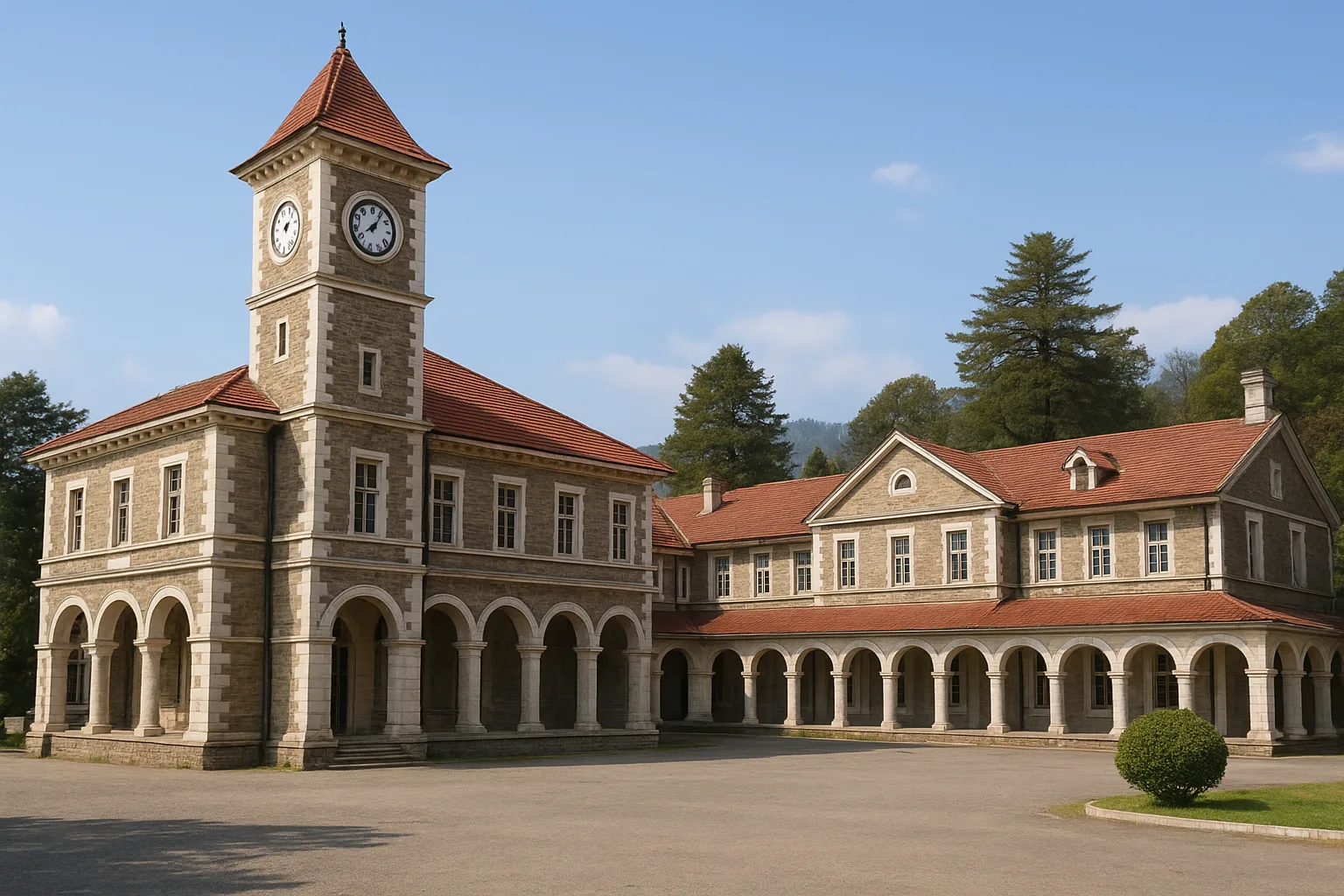
By the mid-19th century, Solan was humming with activity. British engineers oversaw the construction of barracks, officer residences, and the first stone-and-brick administrative offices. The cantonment was laid out with an eye for order—broad avenues, parade grounds, and neatly planned neighborhoods. At its core was the Deputy Commissioner’s bungalow, which became the nerve center of British power in the region.
Unlike the bustling hill stations of Shimla or Mussoorie, Solan’s cantonment was quieter but no less significant. Here, British officials enforced new systems of land revenue, introduced English-style courts, and created posts for native clerks and policemen. The face of local governance shifted: where once a village headman or raja might have settled a dispute beneath a pipal tree, now a British magistrate presided, gavel in hand, over a formal courtroom.
Key Figures and Administrative Structures
Among the most influential figures in this transformation was Major Henry T. Burne, who served as the first formal Assistant Commissioner of Solan in the 1860s. Burne was known for his meticulous record-keeping and his efforts to balance the interests of the British Raj with those of the local Baghat rulers. Under his tenure, Solan’s administration grew more elaborate: police posts multiplied, and the town’s first jail was constructed.
The British established a tripartite structure in Solan: the civil administration (headed by the Deputy Commissioner), the military garrison (under a Colonel or Major), and the judiciary. Each arm worked in concert, but ultimate authority rested with the European officers. Still, Indian subordinates—such as Munshi Ram Prasad, an early native magistrate—played an essential role in linking colonial authority to the local population.
Everyday Life Under Colonial Rule
The rhythms of daily life in Solan soon reflected the new order. British regulations standardized market days, sanitation, and public works. The cantonment bazaar, with its tea shops and general stores, became a meeting place for soldiers, officials, and local residents. The British brought new crops and gardening techniques, which transformed the surrounding hillsides into productive fields and orchards.
At the same time, colonial bureaucracy imposed unfamiliar burdens. New taxes and land surveys unsettled old patterns of ownership. The British penchant for paperwork meant that even simple affairs—such as property disputes or marriage registrations—now required trips to the district clerk’s office. Yet, for many in Solan, these changes brought a sense of stability, with better roads, improved policing, and the promise (if not always the reality) of impartial justice.
The Role of Solan in Regional Governance
Solan’s importance grew as the British developed their hill administration. By the late 19th century, it was no longer just a waystation—it served as a vital link in the chain of British governance stretching from the plains up to Shimla. The town hosted district-level meetings, revenue collections, and even occasional visits from the Punjab Lieutenant-Governor.
Solan’s administrative reach extended to the neighboring princely states, including Kuthar and Keonthal. British officers often mediated disputes between these local rulers, using Solan as neutral territory. In 1901, for example, a famous arbitration between the rulers of Baghat and Kasauli over forest rights was convened in Solan’s cantonment hall, with British officials presiding over the proceedings.
Resistance, Adaptation, and the Seeds of Change
Not all greeted the new order with open arms. From the earliest days of British rule, there were quiet acts of resistance—petitions against new taxes, complaints about conscription, and, occasionally, open defiance. In 1919, as news of the Jallianwala Bagh massacre rippled through the hills, a group of students and traders in Solan organized a protest, demanding greater representation in local governance. Although quickly suppressed, such episodes signaled that colonial rule was not as unchallenged as it appeared on the surface.
Meanwhile, Indian elites in Solan began to adapt to the new order. Local families sent their sons to English-medium schools opened by the British, hoping to secure jobs in the civil service or police. The town’s first public library, established in 1928, became a hub for intellectual debate and nationalist ideas.
The Twilight of Colonial Administration
As the British Raj entered its final decades, Solan’s role shifted again. The town served as a staging ground for wartime logistics during both World Wars, with British and Indian troops passing through its cantonment. In the 1940s, as independence loomed, Solan’s administrative offices became centers of uncertainty—British officials prepared to depart, while local leaders debated the shape of self-rule to come.
On a monsoon-drenched morning in August 1947, the Union Jack was lowered from the Deputy Commissioner’s bungalow for the last time. Indian officials assumed control, and the era of colonial administration in Solan came to a close. But the institutions, customs, and even the very layout of the town bore the unmistakable imprint of nearly a century of British governance.
Legacy and Reflection: Solan’s Modern Identity
Today, as you walk the tree-lined avenues of Solan or visit its historic cantonment, echoes of the colonial era remain. The administrative buildings, the orderly markets, and even the rhythms of municipal governance are shaped by the systems devised under British rule. Yet Solan’s story is not one of simple inheritance—it is a tale of adaptation, resistance, and transformation.
The legacy of colonial administration continues to influence the town’s civic life, its legal traditions, and its sense of place within Himachal Pradesh. As Solan grows and modernizes, the lessons of its colonial past—both the order and the upheaval—offer a lens through which to understand its present challenges and future hopes. In the next part of this series, we will explore how Solan’s residents navigated the changing political landscape on the eve of independence, and how those choices continue to shape the town’s identity today.
Previous: Railways and Roads: Transforming Solan Under British Rule
Next: Life of Ordinary People in Colonial Solan