
Series: History of Shimla, Himachal Pradesh, India
Phase 4: Freedom & Transition — Part 20 of 30
This article is part of a wider series tracing the transformation of the western Himalayas under colonial influence. As British authority extended into the hills, existing political systems were restructured through treaties, administration, and new forms of governance. This phase considers how colonial rule reshaped society, economy, and space while leaving lasting imprints on local identity.
High Summer in the Hills: Shimla at the Twilight of Empire
Morning mists drift across the ridges of Shimla, softening the outlines of the neo-Gothic spires and half-timbered houses that stand in deliberate contrast to the thick forests of Himalayan cedar. It is the early 20th century, and the town’s winding Mall Road hums with the clipped conversation of colonial officials, their presence a daily reminder that Shimla is not merely a mountain retreat, but the summer capital of British India. Yet beneath this veneer of imperial order, the currents of resistance and change are already stirring—currents that will soon make Shimla both a stage for power and a crucible of the Indian freedom struggle.
The Colonial Capital: A Seat of Power and Its Paradoxes
By the late 1800s, Shimla had become a symbol of colonial authority. From May to October each year, the British administration relocated the machinery of governance from the punishing heat of Calcutta and, later, Delhi, to this cool hill station. The town’s elegant Viceregal Lodge, completed in 1888, dominated the skyline—a fortress of stone and wood where the fate of millions was debated, decreed, and dispatched via telegraph to the far reaches of the subcontinent.
Documented records from regional gazetteers of the period describe Shimla as a place of “unusual concentration of officialdom,” its seasonal influx not only of administrators but also of politicians, journalists, and the growing number of Indian civil servants. The town’s cosmopolitan character belied the social divisions that defined the age: the Mall, for much of the era, remained off-limits to Indians except by special permit, a daily reminder of the exclusivity of colonial rule.
Local Communities and the Shifting Identity of Shimla
Beneath its imperial façade, Shimla was home to communities whose histories stretched far beyond the British era. Oral traditions among the Pahari and Gaddi peoples tell of early settlements in the region’s forested glens, long before the British surveyors arrived in the early 19th century. These traditions speak of sacred groves, local deities such as Shyamala Devi (from whom Shimla is believed to derive its name), and annual fairs that punctuated the agricultural year.
Historical inference, drawn from early land records and regional chronicles, suggests that by the late 1800s, there was already a steady migration of craftspeople, traders, and laborers from the surrounding hill states—such as Keonthal, Jubbal, and Bushahr—into Shimla. These communities formed the backbone of the town’s economic life, supplying food, building materials, and services to the colonial elite, and gradually establishing their own neighborhoods along the slopes.
Shimla’s Role in the Nationalist Awakening
As the 20th century progressed, Shimla’s importance transcended its administrative function. The town’s status as a seasonal capital brought it into the orbit of the emerging nationalist movement. Indian political leaders, lawyers, and journalists began to frequent Shimla—sometimes as part of official delegations, sometimes to petition the Viceroy, and increasingly to organize resistance.
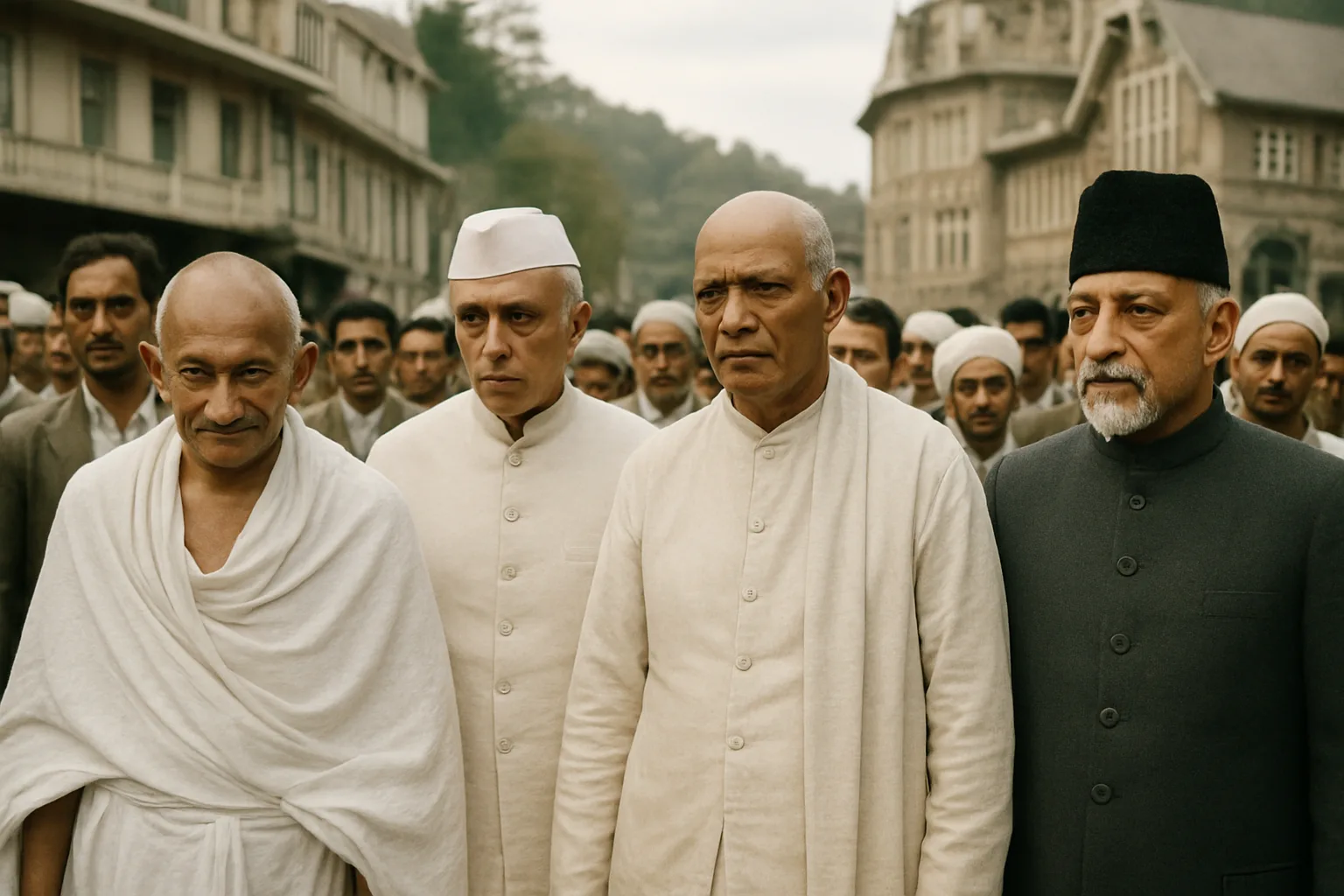
Documented history records the presence of figures such as Motilal Nehru, Annie Besant, and later, Mahatma Gandhi, who visited Shimla in 1921. These visits were often accompanied by tense negotiations and public meetings in the town’s public halls and gardens. Shimla became the site of several important conferences, including the 1945 Simla Conference, where British officials met with Indian leaders to discuss the terms of independence—a gathering that would lay the groundwork for the country’s eventual partition.
Layers of Resistance: Local Agency and National Movements
The freedom struggle in Shimla was not limited to elite negotiations. Local forms of resistance, sometimes less visible in national chronicles, played a crucial role in shaping the region’s political consciousness. Workers in the Public Works Department and railway construction gangs organized strikes in protest against discriminatory wages and working conditions—actions that were reported in both colonial and vernacular press.
The labor movements in Shimla connected local grievances to broader nationalist causes. Student groups, inspired by events in Bengal and Punjab, formed clandestine societies to distribute pamphlets and organize rallies. Oral histories from families in Sanjauli and Lower Bazaar recall how public processions, often disguised as religious gatherings, voiced demands for self-rule and the removal of colonial restrictions on Indians’ movement and assembly.
Negotiation, Compromise, and the Shadow of Partition
By the 1940s, Shimla was at the center of some of the most consequential negotiations in modern Indian history. The Simla Conference of June 1945, convened by Viceroy Lord Wavell, brought together the Indian National Congress, the Muslim League, and other political factions. Though the conference ultimately failed to produce consensus, its proceedings underscored Shimla’s symbolic and practical importance as a neutral ground—remote, yet intimately connected to the fate of the subcontinent.
As partition loomed, Shimla witnessed both the euphoria of impending independence and the anxieties of an uncertain future. The town’s mixed population—Hindus, Sikhs, Muslims, and Christians—experienced the transition in varied ways. Regional gazetteers from the late 1940s document the arrival of refugees from Punjab and the redefinition of Shimla’s civic identity as it ceased to be the colonial summer capital and became the capital of Punjab, and later, Himachal Pradesh.
The Enduring Legacy of the Freedom Struggle in Shimla
The events of the freedom movement left an indelible mark on Shimla’s landscape and memory. The Viceregal Lodge, once a symbol of imperial power, now houses the Indian Institute of Advanced Study. The Mall, once restricted, has become a public promenade where echoes of protest and negotiation linger in the air. Annual commemorations and local museums remind residents and visitors alike of the region’s pivotal role in the struggle for independence.
Shimla’s journey through the freedom struggle was shaped by its unique position at the intersection of empire and resistance, local and national aspiration. Even today, the rhythms of civic life in Shimla carry forward the legacies of negotiation, adaptation, and the enduring quest for self-determination. As we move forward in this series, the next part will trace the early years of Shimla in independent India—the challenges of transition, the shaping of new institutions, and the memories that continue to inform its civic identity.
Previous: Rise of Nationalist Sentiment in Colonial Shimla
Next: 1947: End of British Rule in Shimla