
Series: History of Shimla, Himachal Pradesh, India
Phase 4: Freedom & Transition — Part 19 of 30
This article is part of a wider series tracing the transformation of the western Himalayas under colonial influence. As British authority extended into the hills, existing political systems were restructured through treaties, administration, and new forms of governance. This phase considers how colonial rule reshaped society, economy, and space while leaving lasting imprints on local identity.
Monsoon Clouds over the Mall: Shimla at the Turn of the Century
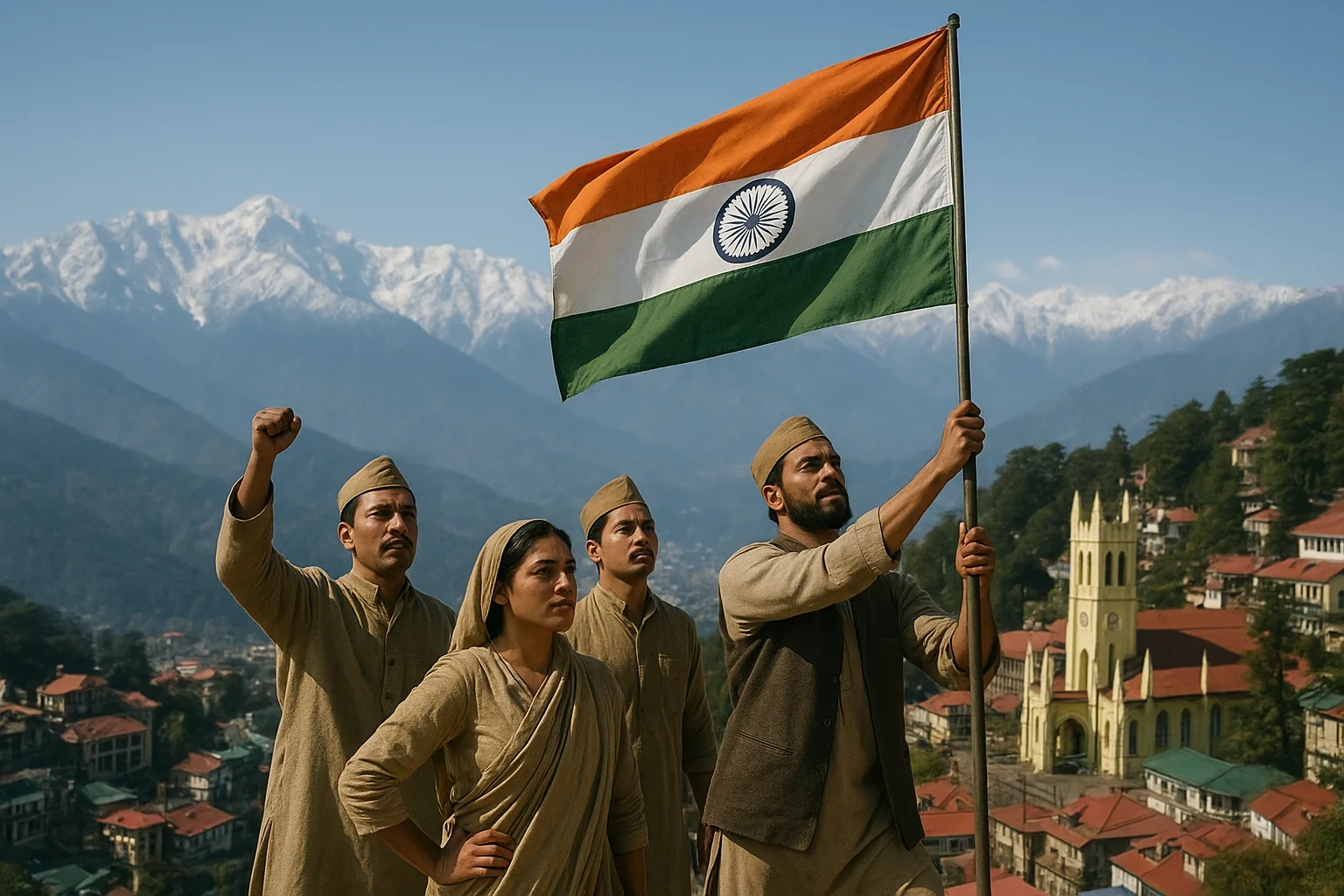
The year is 1905. Monsoon mist hangs thick over the cedar-clad hills, muffling the clatter of tongas along Shimla’s winding Mall Road. On the sunlit southern slopes, colonial bungalows—some gabled, some grand—peer over the valleys, their gardens manicured and their flagpoles bearing the Union Jack. Yet inside these walls, beneath the formal chatter of British officers and their families, stirrings of a different kind have begun to take root. In drawing rooms and public halls, in makeshift reading clubs and on the cricket field, a new undercurrent of political thought is quietly threading its way through the town. Shimla, the summer capital of British India, is poised on the cusp of transformation: a hill station about to become a crucible for nationalist sentiment.
Shimla’s Colonial Backbone: Administrative Nerve Centre
Shimla’s prominence as the summer capital of British India was firmly established by the latter half of the nineteenth century. The British had arrived in force after the Gurkha wars of the early 1800s, and by the 1830s, the town had already begun its ascent as a strategic administrative centre. Records from the period—such as the Imperial Gazetteer of India—describe Shimla as host to the Viceroy and his council during the oppressive heat of the plains, its cool climate drawing the entire machinery of colonial governance into the hills each summer.
This seasonal migration brought not only civil servants and military men but also a shifting tide of Indian clerks, tradespeople, and service staff. Alongside the British, communities from the Punjab, Garhwal, and local hill states settled in Shimla’s lower bazaars and outlying villages, bringing with them languages, customs, and a quiet resilience. Early local chronicles and oral traditions recall how these neighborhoods—Lakkar Bazaar, Lower Bazaar, and Jakhu—became melting pots of cultures, faiths, and ambitions.
Hill Society and Silent Currents of Change
While British society in Shimla was insulated—governed by a strict code of exclusivity and racial hierarchy—local residents developed their own social world in the town’s shadow. The late nineteenth century saw the emergence of educational initiatives, often led by mission schools or local philanthropists. Shimla’s first Indian high schools, started under the patronage of local notables and religious reformers, became crucibles for new ideas. Here, students encountered Indian reform movements, the works of Bankim Chandra Chattopadhyay, and the nascent Indian National Congress through clandestine reading circles and student debates.
Many oral traditions from the region describe how festivals and fairs—originally religious or seasonal in character—took on new meaning as spaces for discussion and collective awareness. The bustling Ram Lila ground, for instance, became not just a stage for mythic dramas, but a place where local grievances and hopes could be aired in veiled language.
The Arrival of Political Discourse in Shimla
Documented history records the first formal political gatherings in Shimla as early as the 1890s. The Indian National Congress, founded in 1885, had begun to attract attention even in the hills. By 1906, the Shimla branch of the Congress was hosting meetings in rented halls, with local lawyers, teachers, and traders in attendance. The presence of the Viceroy’s council, and the annual influx of officials, meant that national leaders frequently passed through the town, sometimes holding private discussions with their supporters in discreet venues.
Among the earliest champions of nationalist thought in Shimla were men like Lala Lajpat Rai and Pandit Kanshi Ram, whose visits are recalled in both local memoirs and administrative reports. Their speeches—often couched in the language of reform and rights—challenged the colonial status quo and inspired a generation of local activists. The influence of the Arya Samaj, which had found a strong foothold among the educated classes, further emboldened calls for self-rule and social renewal.
Shimla’s Hill States and the Broader Freedom Movement
Shimla’s unique position—perched between the princely hill states and British-administered Punjab—meant that its political culture was shaped by both. The rulers of neighboring states such as Keonthal, Jubbal, and Bushahr maintained complex relationships with the British, sometimes acting as intermediaries, sometimes as reluctant collaborators. Regional chronicles and administrative records show that local discontent—over forest rights, taxation, and the authority of the colonial bureaucracy—often spilled over into organized protest.
By the 1920s, the Non-Cooperation Movement and later the Civil Disobedience Movement found sympathetic ears among Shimla’s youth and working classes. Strikes by municipal workers, schoolboy protests, and pamphlet campaigns became increasingly common. The town’s bazaar areas—once sites of economic exchange—now pulsed with political activity. Notably, women’s participation in these movements grew, marking a subtle but profound shift in the social landscape.
Literature, Press, and the Spread of Nationalist Ideas
The press played a crucial role in shaping and spreading nationalist consciousness in colonial Shimla. Local newspapers—often published in Urdu, Hindi, and later English—brought news of the wider struggle for independence to the hills. The circulation of banned literature and seditious pamphlets, as noted in police reports of the period, contributed to a vibrant underground culture of dissent.
Shimla’s libraries and reading rooms, once exclusive preserves of the British elite, gradually opened their doors to Indian readers. Here, the works of Tilak, Gandhi, and Tagore passed from hand to hand, their ideas debated late into the night. Oral accounts from the town’s elders recall the thrill and anxiety of these gatherings, as well as the ever-present risk of surveillance by colonial authorities.
From Hill Station to Hotbed: Shimla’s Place in the National Imagination
By the eve of independence, Shimla had become more than just a retreat for colonial power. It was a contested ground—a place where the machinery of British rule confronted the aspirations of a new India. The town hosted critical meetings between Indian leaders and British officials, most famously the Shimla Conference of 1945, which sought to determine the contours of postwar political settlement.
Yet beyond the corridors of power, it was the steady rise of local political awareness—the speeches in schoolyards, the debates in tea shops, the silent processions along the Mall—that truly marked Shimla’s transformation. The nationalist spirit that took root here would ripple through the region, shaping not only the future of Himachal Pradesh but also the broader fabric of Indian democracy.
Echoes of the Past: Nationalism’s Legacy in Modern Shimla
The rise of nationalist sentiment in colonial Shimla left a legacy that endures in the city’s civic life, political culture, and collective memory. Today, the old debating halls still stand, some repurposed as educational institutions, others as cultural centers. The vibrant mix of languages, faiths, and communities that defined the colonial bazaar continues to shape Shimla’s identity. The spirit of questioning authority—nurtured in the shadow of empire—remains a hallmark of the region’s public discourse.
As the next part of this series will explore, the decline of colonial rule and the fraught negotiations of independence brought new challenges and opportunities to Shimla. The town’s journey from imperial summer capital to the heart of a newly independent state is a story of adaptation, resilience, and the enduring quest for self-determination.
Previous: Shimla Conferences and Imperial Politics
Next: Shimla During India’s Freedom Struggle