
Series: History of Mandi, Himachal Pradesh, India
Phase 4: Mughal, Sikh & British Period — Part 18 of 30
This article is part of a wider series tracing the transformation of the western Himalayas under colonial influence. As British authority extended into the hills, existing political systems were restructured through treaties, administration, and new forms of governance. This phase considers how colonial rule reshaped society, economy, and space while leaving lasting imprints on local identity.
A Misty Valley on the Cusp of Change
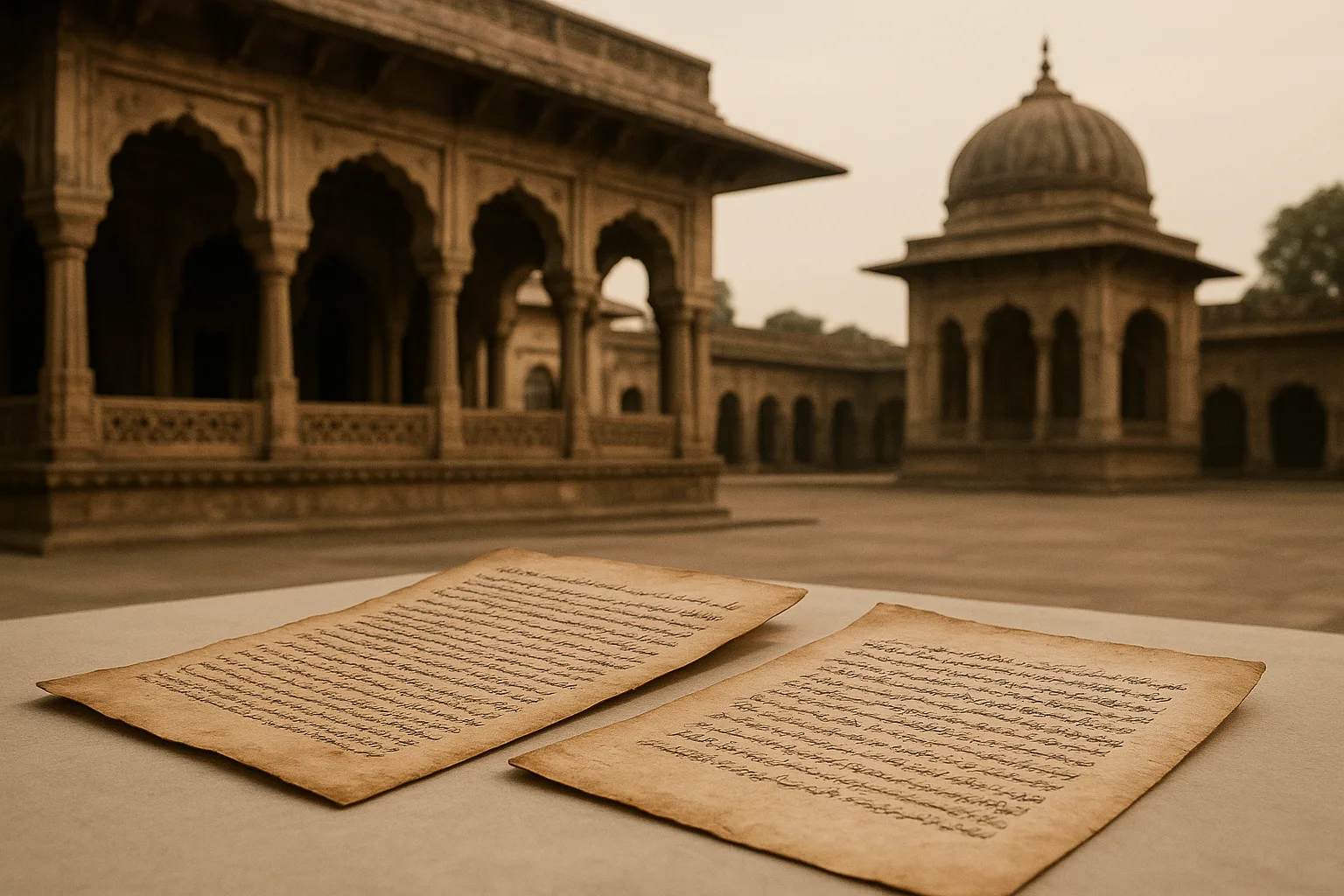
The year is 1846. As dawn breaks over the encircling hills, the Beas River glimmers through the morning fog. In the heart of Mandi, courtiers gather in the stone-walled durbar of Raja Bijai Sen, anxiously awaiting news from distant Shimla, where the British—new arbiters of power in the Himalayas—are reshaping the fates of princely states. The air is heavy with uncertainty, yet one thing is clear: Mandi’s world is about to change.
From Ancient Roots to Colonial Crossroads
Before the British banners arrived, Mandi’s story was already centuries old. Oral traditions trace the valley’s earliest settlements to the time when the Kol and Khasa peoples roamed these slopes. The riverbanks saw the rise of shrines dedicated to local deities—Seraj, Kamru Nag, and Tarna Devi—whose legends remain etched in the region’s collective memory. Trade caravans threaded along precipitous paths, linking Mandi with Ladakh, Tibet, and the Punjab plains. Over time, scattered settlements coalesced into organized hill polities, with the Sen dynasty emerging as the dominant force by the late medieval period.
In the chronicles of the Rajput chiefs and the regional gazetteers, Mandi appears as both a cultural outpost and a strategic waystation, ruled by a line of rajas who balanced alliances and rivalries with their neighbors in Suket, Kullu, and Chamba. The town itself, with its bustling bazaar and stone temples, was a microcosm of Himalayan society—where merchants, priests, artisans, and peasants shaped daily life, and the boundaries between myth and history often blurred.
The Shadows of Empire: British Interests Awaken
The early 19th century brought seismic shifts to North India. As the Sikh Empire under Ranjit Singh expanded westward, the British East India Company, wary of both Sikh power and Gurkha ambitions, strengthened its foothold in the hills. The Anglo-Nepalese War (1814–1816) and Anglo-Sikh hostilities redrew boundaries across the sub-Himalayan states. Mandi, sandwiched between larger forces, walked a diplomatic tightrope. Official correspondence from the era reveals how the Sen rajas skillfully played Sikh, Gurkha, and British interests against each other to retain their autonomy.
Yet, as the Sikh Empire crumbled after the First Anglo-Sikh War, the British gaze settled firmly on the region. The Treaty of Lahore (1846) and the subsequent cession of hill territories to the British marked a turning point. Mandi’s rulers now faced not just new overlords, but an entirely different conception of governance—one rooted in contracts, codes, and bureaucracy rather than old alliances and ritual suzerainty.
Treaties Signed and Sovereignty Redefined
The British, ever methodical, sought to regularize their relationships with the hill states. In March 1846, a formal treaty was signed between Raja Bijai Sen and the Governor-General’s Agent. The terms were pragmatic: Mandi would remain a princely state, but its external affairs, military, and succession would be subject to British approval. In return, the raja retained internal autonomy and his hereditary rights. British officials, often working from the summer capital at Shimla, were now the final arbiters of disputes and succession crises in the region.
Details from the Punjab Hill States Gazetteer record how the new order was explained to local elites. Customary tribute gave way to a fixed annual payment. The raja’s right to raise troops was sharply curtailed, and cross-border trade was regulated through British customs posts. The colonial presence was visible but, at first, light-handed—relying on treaties, resident advisers, and the implicit threat of force, rather than direct administration.
Old Power, New Rules: Administration under the Raj
The British approach in Mandi was to govern through local structures, provided they served imperial interests. The Sen rajas retained their palaces, court rituals, and patronage of temples. Yet under the surface, change rippled through the administrative machinery. Judicial reforms introduced new codes of criminal and civil law, gradually supplanting customary justice. Revenue assessments became more systematic, as British surveyors mapped fields and forests with unfamiliar precision.
For the common people, the effects were both subtle and profound. Some welcomed the promise of greater stability and the curbing of arbitrary exactions. Others resented the disruption of old patterns—especially as British economic policies increasingly favored cash crops, tolls, and resource extraction. The ancient trade routes that had once connected Mandi to Tibet and the Punjab faced new restrictions, even as British engineers surveyed roads to link the valley more tightly to the colonial heartlands.
Communities in Flux: Society and Belief Under Colonial Rule
In the early decades of the Raj, Mandi’s social fabric remained deeply rooted in its traditions. The raja continued to preside over major festivals, and the goddess Tarna Devi’s temple remained the axis of civic life. Yet the arrival of new officials, missionaries, and merchants brought fresh influences. English schools opened for the children of the elite, and the first postal routes threaded through the hills. The introduction of British legal principles challenged customary hierarchies, even as the old caste and clan networks adapted to the new order.
Documented accounts from travelers and colonial officers describe a society caught between worlds—its bazaars humming with both ancient chants and the clipped commands of British orderlies. While the majority of the population remained rural and attached to ancestral land, new opportunities—and new anxieties—emerged with every turn of the colonial wheel.
Legacies of Encounter: The Valley Remembers
By the late nineteenth century, Mandi had become a model of indirect rule: outwardly traditional, inwardly transformed. The treaties signed in the shadow of British power had redrawn the lines of sovereignty and set in motion changes that would ripple through generations. Yet, even as the Union Jack fluttered above Shimla, the Sen dynasty maintained a distinct identity, rooted in centuries-old customs and a deep connection to the land.
Today, the echoes of that pivotal era linger in Mandi’s palaces and temples, its festivals and family stories. The treaties and administrative reforms of the British period did not erase the valley’s ancient roots—they layered new meanings atop them. The balance between tradition and change remains a defining feature of Mandi’s spirit, as its people continue to negotiate their place between mountains and modernity.
In the next part of this series, we will journey deeper into the daily realities of colonial rule: how the people of Mandi navigated famine, taxation, and the first stirrings of nationalism beneath the watchful eyes of the Raj.
Previous: Impact of Sikh Expansion on the Mandi State
Next: Colonial Rule and the Transformation of Trade in Mandi