
Series: History of Mandi, Himachal Pradesh, India
Phase 2: Medieval Kingdom & Dynasties — Part 10 of 30
This article forms part of a continuing series that follows the gradual emergence of organised power in the western Himalayas. As small communities gave way to clans, chieftainships, and hill states, patterns of rule, alliance, and conflict began to take shape. This phase examines how authority was negotiated through land, ritual, and warfare, laying the groundwork for regional kingdoms that would dominate the medieval landscape.
Mist and Stone: Dawn Above the Beas
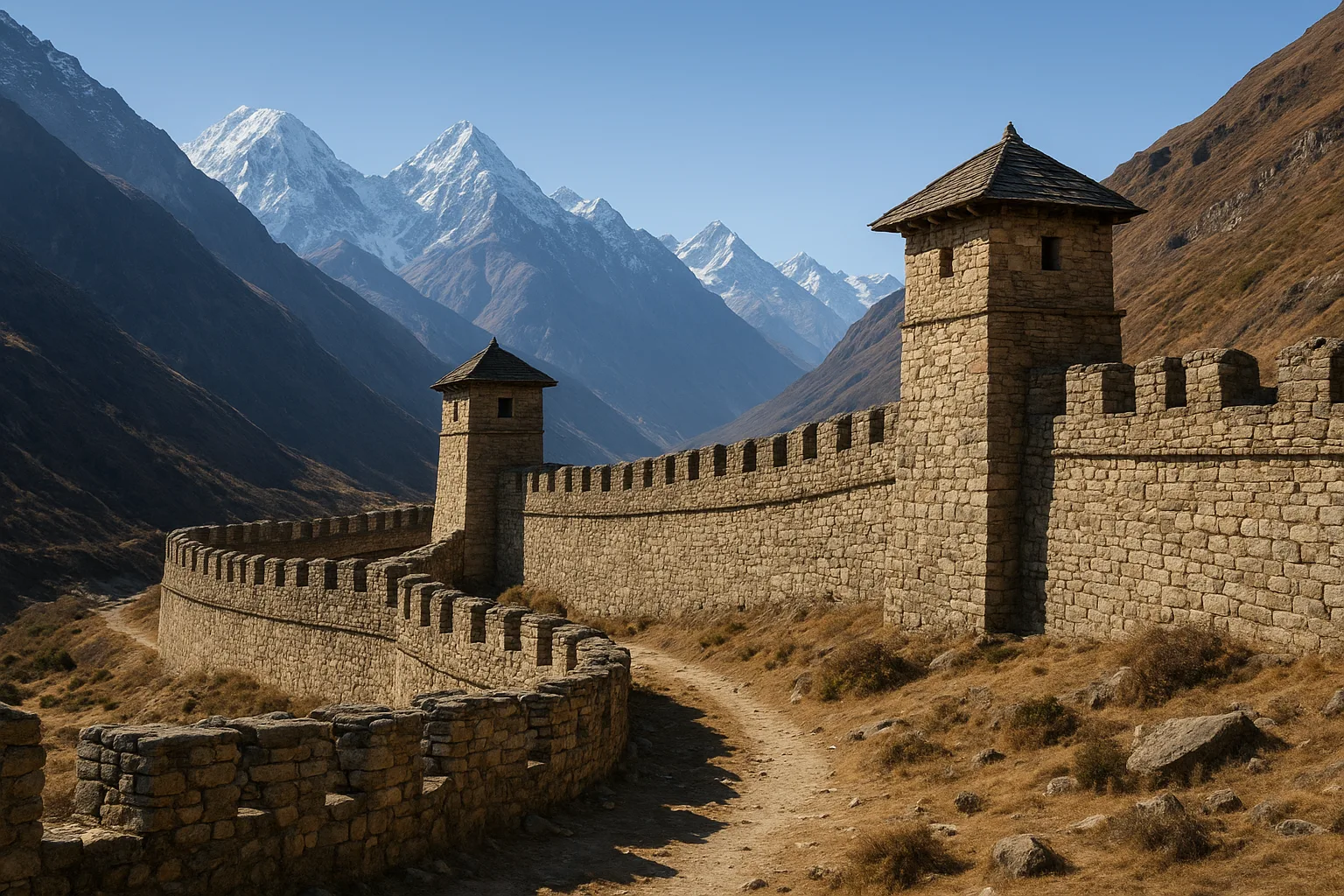
The valley stirs as the first light kisses the ramparts of Mandi’s ancient forts. A chill breeze curls down from the Dhauladhar, carrying the echo of distant conch shells—a tradition older than memory. Stone walls, moss-laden and battered, stand sentry over the river below. It is the fourteenth century, and the world beyond these hills churns with ambition and uncertainty. Here, in the folds of Himachal, fortresses rise not just from rock and mortar, but from centuries of faith, fear, and the relentless urge to endure.
Early Settlements and the Art of Protection
Long before the Mandi kingdom’s name echoed beyond the Sutlej, hill communities clustered along trade arteries and river crossings. Oral traditions speak of settlements shielded by dense forests and the natural barricades of ridges and ravines. Mythology, as retold by local bards, credits ancient rajas with summoning deities for protection, but the archaeological record points to more pragmatic origins: clusters of timber-and-stone dwellings encircled by earthen embankments.
These early villages—inhabited by pastoralists, traders, and artisans—were strategically sited. The Beas, winding through the valley, provided water and trade, while steep slopes offered vantage points against raiders. Communities such as the Chandelas, Thakurs, and Rajputs began to coalesce, shaping what would become the political geography of the region.
From Myth to Masonry: The Rise of Hill Forts
As the power of emerging hill states grew, defensive architecture evolved. The folklore of Mandi tells of spirits and guardian goddesses blessing the laying of fort foundations, yet historical inference reveals the hand of necessity. Rivals—both neighboring chieftains and distant empires—cast hungry eyes on the riches moving through these passes.
By the late medieval period, the construction of kot (forts) became a hallmark of authority. Early fortifications, often little more than walled enclosures, gave way to more ambitious citadels. The earliest mentions in regional gazetteers describe forts at Bhiuli, Kullu, and Suket as centers of both administration and refuge. Their walls, built from locally quarried stone and timber, were designed to weather sieges and monsoon rains alike.
Military Strategy and the Shaping of the Kingdom
Unlike the open plains of North India, warfare in the hills demanded adaptation. The rulers of Mandi, keenly aware of their environment, invested in layered defenses. Hill forts were sited to control narrow passes, river crossings, and fertile valleys. Watchtowers dotted the ridgelines, allowing for early warnings—smoke signals or drumbeats could summon defenders in moments.
Historical records from the late fifteenth century, including accounts preserved in the Riyasatnama chronicles, describe a military system based on fealty and local knowledge. The rajas maintained small standing forces, augmented by levies from loyal clans such as the Sen, Pathania, and Chandel. Forts were not isolated monuments, but nodes in an interconnected network—each with its own garrison, food stores, and water cisterns. In times of siege, the population could retreat within, sustaining itself through carefully managed supplies.
Belief Systems, Ritual, and the Art of Defense
For the people of Mandi, fortifications were never merely utilitarian. Oral traditions abound with stories of rituals—offerings to Mahamaya or Bhima Kali—conducted before laying a cornerstone. Each fortress bore a shrine, a reminder that the divine was enlisted in matters of statecraft and war.
The intertwining of military and spiritual life is evident in the festivals still celebrated today, where echoes of ancient war dances and martial processions survive. The symbolic protection of the gods was mirrored by the very real, tangible protection of thick walls and high battlements.
Trade Routes, Alliances, and the Changing Face of Conflict
Mandi’s strategic location placed it at the crossroads of commerce. Caravans from Tibet and Ladakh threaded through the valleys, bringing salt, wool, and exotic wares. With prosperity came risk: rival states and bandit clans sought to capture the wealth flowing along these arteries.
As documented in accounts from the Imperial Gazetteer of India, the rulers of Mandi invested not only in fortifications but also in diplomacy. Strategic marriages, shifting alliances, and tribute payments became as important as stone walls. When larger powers—first the Mughal suzerainty, later the Sikh and British empires—cast their gaze upon the hills, the forts of Mandi stood as both bulwark and bargaining chip.
Legacy of Stone: Echoes in Modern Mandi
Today, the remnants of Mandi’s fortifications stand half-swallowed by forest and time, but their influence endures. The city’s layout, the rhythms of its festivals, and even the pride of its communities are shaped by a heritage of vigilance and resilience. Local tales still recount the sieges and stratagems that once defined life here—reminding residents and visitors alike that every stone has a story.
As we journey forward in this series, the focus will shift from the stones of defense to the evolving tapestry of governance and daily life—exploring how these fortified walls witnessed the rise of a unique culture at the heart of the Himalayan kingdom.
Previous: Mandi’s Historic Relations with Kangra, Kullu, and Suket
Next: The 81 Temples of Mandi: History, Legends, and Faith