
Series: History of Shimla, Himachal Pradesh, India
Phase 3: British Era — Part 12 of 30
This article belongs to a historical series examining how expanding empires and regional powers reshaped life in the western Himalayan hills. As external influences pressed into the mountains, local rulers navigated diplomacy, resistance, and accommodation. This phase explores how wider political currents intersected with entrenched hill traditions, altering governance without entirely displacing older structures.
Himalayan Mornings: Early Encounters on the Ridge
The year is 1864. The Himalayan air is crisp, tinged with the scent of pine and wild rhododendron. Morning sunlight glances off the slate roofs of a fledgling hill station, still dwarfed by the immense forests and distant snow peaks. It is on this ridge, some 2,200 meters above sea level, that a remarkable transformation is quietly underway. Shimla, once an obscure settlement amidst the cedar woods, is about to step into the heart of imperial administration as the summer capital of British India.
A Region on the Edge of Empire: Shimla Before the British
Long before the Raj, Shimla was part of a mosaic of small hill states and tribal domains, each shaped by the rugged topography of the lower Himalayas. Historical records from the late medieval period, including regional gazetteers and early British surveys, indicate that the area fell under the influence of the Keonthal state, whose rulers maintained their authority through small forts and alliances with neighboring hill chieftains. Oral traditions, echoing through the villages of the region, speak of deities like Shyamala Devi, believed to be the spiritual guardian of these hills. These stories, though rooted in faith rather than record, gave the town its name—a subtle continuity that persists even as empires changed.
Passage and Pilgrimage: Shimla’s Place in Regional Networks
Shimla’s early history is not one of great battles or sprawling cities but of quiet resilience. The old cart roads and narrow trails that wound across the ridges linked the settlements of the region to larger trading centers in the plains, such as Sirmaur, and further afield to Tibet. Small-scale trade in salt, wool, and agricultural produce moved along these routes, providing the economic threads that connected Shimla to the wider Himalayas. The area’s relative isolation, protected by dense forests and steep slopes, offered sanctuary to those seeking respite from the turbulence of the plains, especially during the periodic upheavals of the Mughal decline and the rise of Sikh power in the early 19th century.
Arrival of the Empire: The British Encounter
The British first entered the region in the aftermath of the Anglo-Gurkha War (1814–1816). Their victory over the Gurkhas, who had briefly occupied parts of the lower Himalayas, brought the surrounding hill states into closer contact with the East India Company. Shimla’s initial appeal to British officers was practical rather than strategic: its climate offered relief from the oppressive heat and disease of the North Indian plains. The earliest recorded visit by a British official, Lieutenant Ross, came in 1819, followed closely by Charles Pratt Kennedy, who built the first permanent European house in 1822. The town grew slowly at first, its population a mixture of local hill people, Rajput and Brahmin landholders, and a scattering of British residents escaping the summer heat of Calcutta and Delhi.
The Making of a Capital: Political Calculations and Colonial Vision
By the mid-19th century, the British began to see in Shimla not only a retreat but a potential administrative hub. The devastating heatwaves of the plains, coupled with the logistical challenges of governing a vast and restive subcontinent, prompted the colonial elite to seek higher ground. Lord Amherst and Lord Combermere were among the first Governors-General to spend summers in Shimla, setting a precedent that would become tradition. The construction of the Hindustan-Tibet Road in the 1850s, threading its way through treacherous mountain passes, further anchored Shimla’s role as a gateway to the interior Himalayas and beyond.
It was under the viceroyalty of John Lawrence, in 1864, that Shimla was officially designated the summer capital of British India. The decision was not merely a matter of comfort; it was a statement of imperial power and logistical necessity. Each year, the machinery of government—its files, clerks, and ministers—ascended the winding mountain roads, transforming the town into the nerve center of colonial decision-making for half the year. Regional gazetteers from the late 19th century record the influx of civil servants, military officers, and their families, all reshaping the demographic and architectural character of the settlement.
Life on the Ridge: Society, Architecture, and the Shimla Season
The transformation of Shimla into the summer capital sparked profound changes in its physical and social landscape. British planners imposed a new order on the old hilltop: broad, tree-lined avenues, Gothic churches, and timbered bungalows replaced the scattered hamlets and orchards. The Mall, Shimla’s central promenade, became the social axis of the town, a place where colonial officials, officers’ wives, and visiting dignitaries mingled in the cool mountain air. Local craftsmen and laborers, drawn from the surrounding villages, contributed to the booming construction, giving rise to a unique architectural blend of British and Pahari styles.
At the same time, the rhythms of life for Shimla’s indigenous communities changed. The annual arrival of the colonial administration brought new opportunities and tensions. Oral histories from local families recount both the economic benefits of employment and the social stratification that emerged as the colonial town grew. Places of worship—temples for the local deities and churches for the British—stood side by side, their bells and conch shells marking the passage of time in a town now divided by both altitude and custom.
Shimla’s New Identity: From Mountain Outpost to Imperial Stage
By the late 19th century, Shimla had become more than a seasonal retreat. It was a symbol of British India’s administrative ambitions and a stage for imperial spectacle. The town hosted the annual “Shimla Season,” a calendar of balls, theatrical performances, and diplomatic encounters. It was here, in the salons and on the cricket fields, that policy was debated, alliances forged, and the fate of millions discussed far from the searing plains. Regional chronicles and government reports from this era describe the town’s bustling markets, the sounds of construction, and the mingling of languages—Hindi, Pahari, English—echoing through the valley below.
Yet, beneath the veneer of imperial order, the old stories persisted. The local people continued to honor Shyamala Devi, celebrating festivals that predated the Raj. The land itself, with its shifting mists and sudden storms, served as a reminder that Shimla’s identity was shaped by forces older and deeper than any colonial boundary.
Echoes of Empire: Shimla’s Legacy and Continuing Transformation
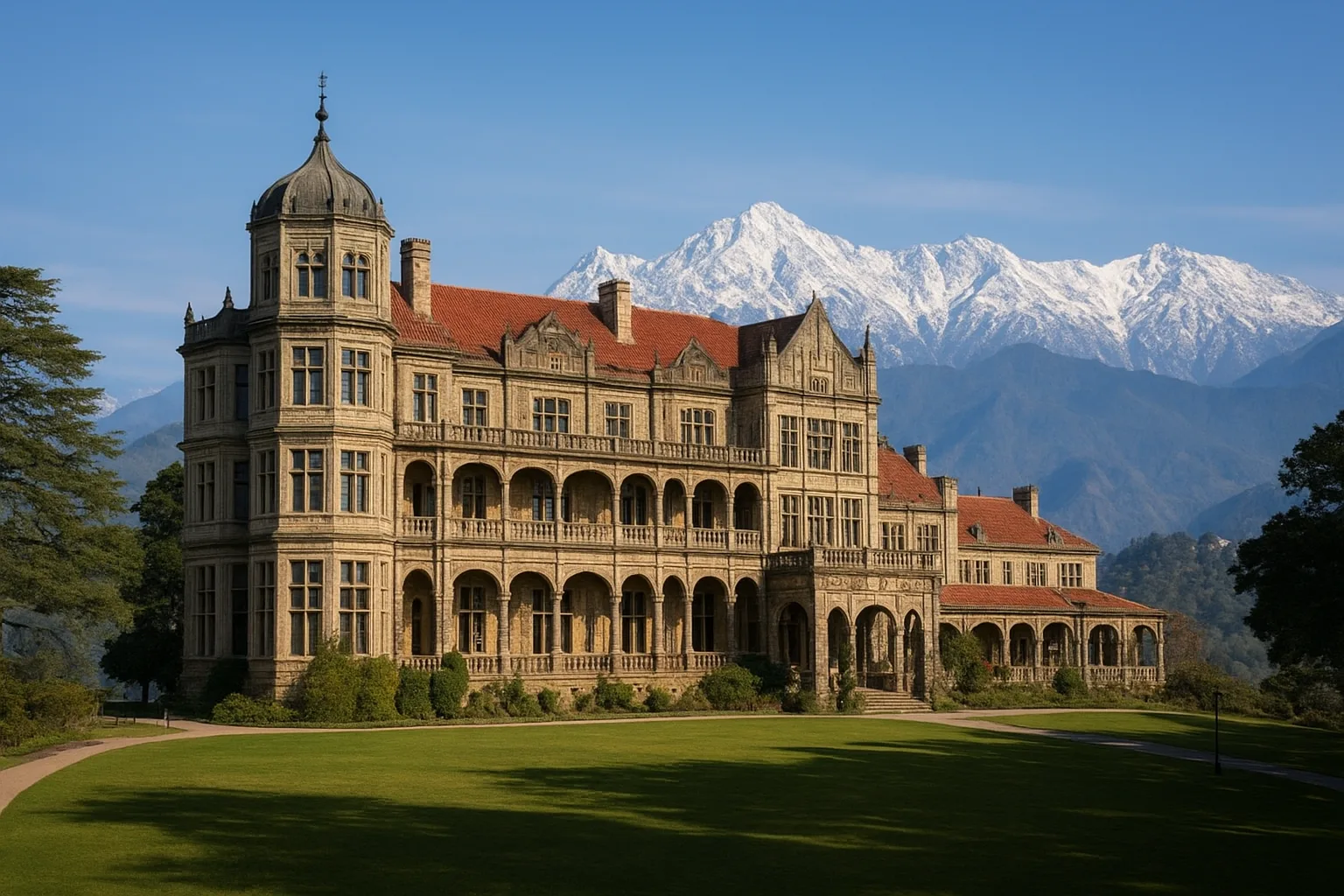
Today, the legacy of Shimla as the summer capital endures in its architecture, its cosmopolitan spirit, and its role as a crossroads of cultures. The Ridge, once the ceremonial heart of the British Raj, remains a gathering place for locals and visitors alike. The old Viceroy’s Lodge, now the Indian Institute of Advanced Study, stands as a quiet witness to the debates and decisions that once shaped a continent.
The transformation that began in the 19th century continues to inform Shimla’s identity. The mingling of traditions—colonial and indigenous, ancient and modern—gives the town its unique character. As we look ahead to the next part of this series, we will trace the ways in which the political and social changes of the late British era set the stage for Shimla’s emergence as a center of nationalist ferment and, eventually, as the capital of a newly independent Himachal Pradesh.
Previous: How the British Discovered Shimla
Next: Building a Colonial City in the Himalayas