
Series: History of Lahaul & Spiti, Himachal Pradesh, India
Phase 1: Ancient & Prehistoric Roots — Part 4 of 30
This article is part of a broader historical series exploring the earliest layers of human presence in the western Himalayas. Beginning with landscape, belief, and early patterns of movement and settlement, the series traces how communities adapted to mountainous environments long before formal states or written records emerged. These foundational centuries shaped cultural memory, local traditions, and relationships with the land that would endure through later periods of change.
The Mountain Passes at Dawn
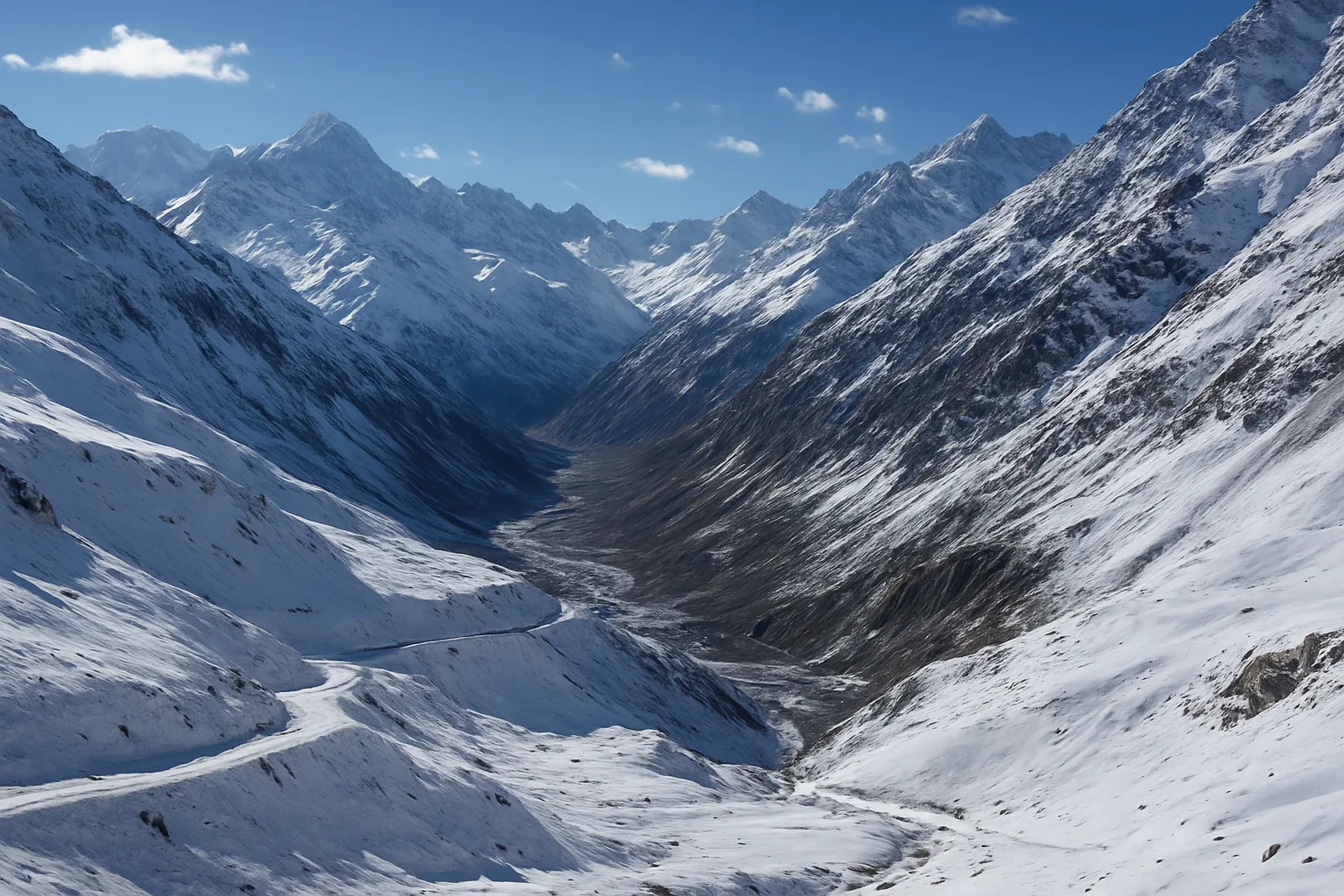
Imagine a dawn centuries ago: the first rays of sunlight spill over jagged Himalayan peaks, illuminating a land hemmed in by formidable ridges and deep river gorges. In this silent expanse—where the air is thin and the landscape painted in ochres, browns, and glacial whites—stretches the region of Lahaul-Spiti. Even today, its isolation is deeply felt, but in the ancient world, this remoteness was destiny. To cross these mountains was to step between worlds, and for those who called Lahaul-Spiti home, geography was both a guardian and a gatekeeper.
Anchored in the Roof of the World
Lahaul and Spiti, now districts in Himachal Pradesh, have long stood at the threshold of inner Asia and the Indian subcontinent. The region’s earliest presence in recorded memory emerges not from written texts, but from the land itself: archaeological traces, oral stories, and the echoes of ancient travelers. Long before the emergence of states and chronicled rulers, these valleys were shaped by the rhythms of rivers—the Chandra, Bhaga, and Spiti—and by the slow, seasonal pulse of migration and survival.
Regional gazetteers and early British survey accounts, such as those compiled in the late 19th century, describe Lahaul-Spiti as a land largely cut off from the great plains to the south and the high plateaus to the north for much of the year. Only narrow passes—Baralacha La, Kunzum La, and a handful of others—provided tenuous links to neighboring worlds. This profound geographical isolation would become the central theme of the region’s early history.
Oral Traditions and the Veil of Myth
In the absence of ancient written records, the earliest stories of Lahaul-Spiti live on in oral tradition. Elders speak of times when mountain spirits wandered freely, and the land was home to beings both human and supernatural. Myths recall fierce deities inhabiting the peaks, and rivers born from the tears of gods—narratives that explain the stark environment in the language of awe and reverence.
Among the earliest inhabitants, local belief systems revolved around animism: every boulder, stream, and ridge was alive with presence. Shamans and priests mediated between people and the spirits, performing rituals to ensure safe passage, good harvests, or protection from avalanches and floods. These traditions, passed down through generations, are not mere legends—they represent the region’s first attempts to make sense of a world shaped so profoundly by geography and climate.
Evidence from the Earth: Early Settlements and Societies
While myth fills in the silences of prehistory, archaeology and historical inference provide a more tangible glimpse of early life. Traces of ancient settlements—stone dwellings, burial cairns, and petroglyphs—dot the high valleys. Some scholars suggest these may date back as far as the first millennium BCE, though precise chronologies remain debated. What is clear, however, is that the first communities were small, tightly knit, and deeply attuned to the environment.
The harsh climate dictated a semi-nomadic existence. People followed a seasonal cycle: tending barley and peas in brief summers, herding yaks and sheep, and retreating to stone shelters as winter’s snows descended. Isolation was not merely a fact of geography; it was a way of life, forging resilience and a fierce sense of place. The echoes of these early societies persist in the terraced fields and fortified villages that still cling to the hillsides.
Trade Routes and the Outside World
Despite formidable isolation, Lahaul-Spiti was never completely cut off. The region found itself on the margins of ancient trade routes—arteries that pulsed with the movement of salt, wool, grain, and precious turquoise. Caravans from Ladakh, Tibet, and the Indian plains would brave the high passes during the short summer thaw, bringing goods as well as new ideas and beliefs.
These fleeting contacts left their mark. Early Buddhist influences, for example, made their way into Spiti by the mid-first millennium CE, as evidenced by ancient monastery sites and rock inscriptions. Yet, the region’s fundamental character remained: a fiercely independent society, shaped more by its own traditions than by currents from afar. The outside world was glimpsed only in flashes, filtered through the prism of local need and custom.
Emergence of Hill States and Political Boundaries
By the turn of the first millennium CE, the wider Himalayas witnessed the rise of small hill states and shifting polities. Lahaul and Spiti, however, occupied a liminal position—claimed by distant rulers, but often left to their own devices. Chronicles from neighboring regions sometimes mention Lahaul and Spiti as borderlands: places of passage, not power. The Kullu rajas, the Guge kingdom in Tibet, and later the Ladakhis all asserted suzerainty at various times, but the reality on the ground was shaped by local chieftains and community councils.
This pattern of semi-autonomy, punctuated by brief episodes of outside control, set the stage for centuries to come. Village headmen and monastic leaders wielded real authority, balancing the demands of survival with the need to preserve autonomy. The sense of being “apart”—politically as much as geographically—became deeply embedded in the Lahaul-Spiti identity.
Continuity and Memory in the High Valleys
Today, the stark beauty of Lahaul-Spiti remains unchanged, and so too do many echoes of its ancient past. The land’s isolation still shapes daily life, from the rhythms of agriculture to the resilience of its people. Oral traditions, belief systems, and communal institutions forged in antiquity continue to inform identity and belonging. Geography, in this sense, is not just a backdrop but an active force—one that has shaped, and continues to shape, the destiny of this remarkable region.
In the next part of our series, we will journey deeper into the early religious transformations that swept through Lahaul-Spiti, tracing the arrival of new faiths and the ways they blended—sometimes uneasily—with older traditions. The story of these high valleys is only just beginning to unfold.
Previous: Ancient Trade Routes Across the High Himalayas
Next: Life and Survival in the Ancient Cold Desert