
Series: History of Lahaul & Spiti, Himachal Pradesh, India
Phase 1: Ancient & Prehistoric Roots — Part 5 of 30
This article is part of a broader historical series exploring the earliest layers of human presence in the western Himalayas. Beginning with landscape, belief, and early patterns of movement and settlement, the series traces how communities adapted to mountainous environments long before formal states or written records emerged. These foundational centuries shaped cultural memory, local traditions, and relationships with the land that would endure through later periods of change.
Before the Dawn: A Land Sculpted by Ice and Wind
The bitter wind rises before dawn, rattling the yak-hair tents near a stream that no longer runs. In the shadow of the towering Zanskar range, the earliest inhabitants of Lahaul-Spiti stir. They have learned to read the sky’s omens and the snow’s stubborn patterns, for theirs is a world where survival demands reverence for every small sign. Millennia before written chronicles, this high-altitude desert—one of the coldest and driest on earth—demanded both cunning and community from those who would call it home.
Ancient Echoes: Tracing the Region’s Earliest Footprints
Lahaul and Spiti lie cradled between Greater Himalaya and the Tibetan Plateau, separated from the lush Kullu valley by the Rohtang Pass and from Ladakh by high, windswept ridges. Archaeological traces are sparse but telling: fragments of microliths and petroglyphs found near Tabo and Keylong hint at human habitation as early as the late Stone Age. Oral traditions—echoed in local legend—speak of migrations from the north and west, of ancestors who followed wild rivers before the glaciers retreated, settling where the land allowed brief seasons of life.
Yet, the evidence remains elusive. Unlike the fertile plains of the Indus or the Ganges, this is not a land of ancient cities. Survival here meant adaptation—to thin air, harsh winters, and the ever-present threat of famine. The earliest communities likely clustered along the riverbanks, where meltwater allowed for sparse barley cultivation and the keeping of goats and sheep. Their world was one of constant negotiation between abundance and deprivation.
Myth, Memory, and the First Settlements
Oral traditions in Lahaul and Spiti are rich with tales that blur myth and memory. Elders recall the wandering La-dvags, or ‘people of the high passes,’ whose ancestors are said to have descended from the gods and shaped the valleys with their footsteps. Many villages claim descent from legendary founders—like Gyapo Gyaltsen of Lahaul—whose feats are celebrated in winter gatherings, where stories are as vital for survival as food or fire.
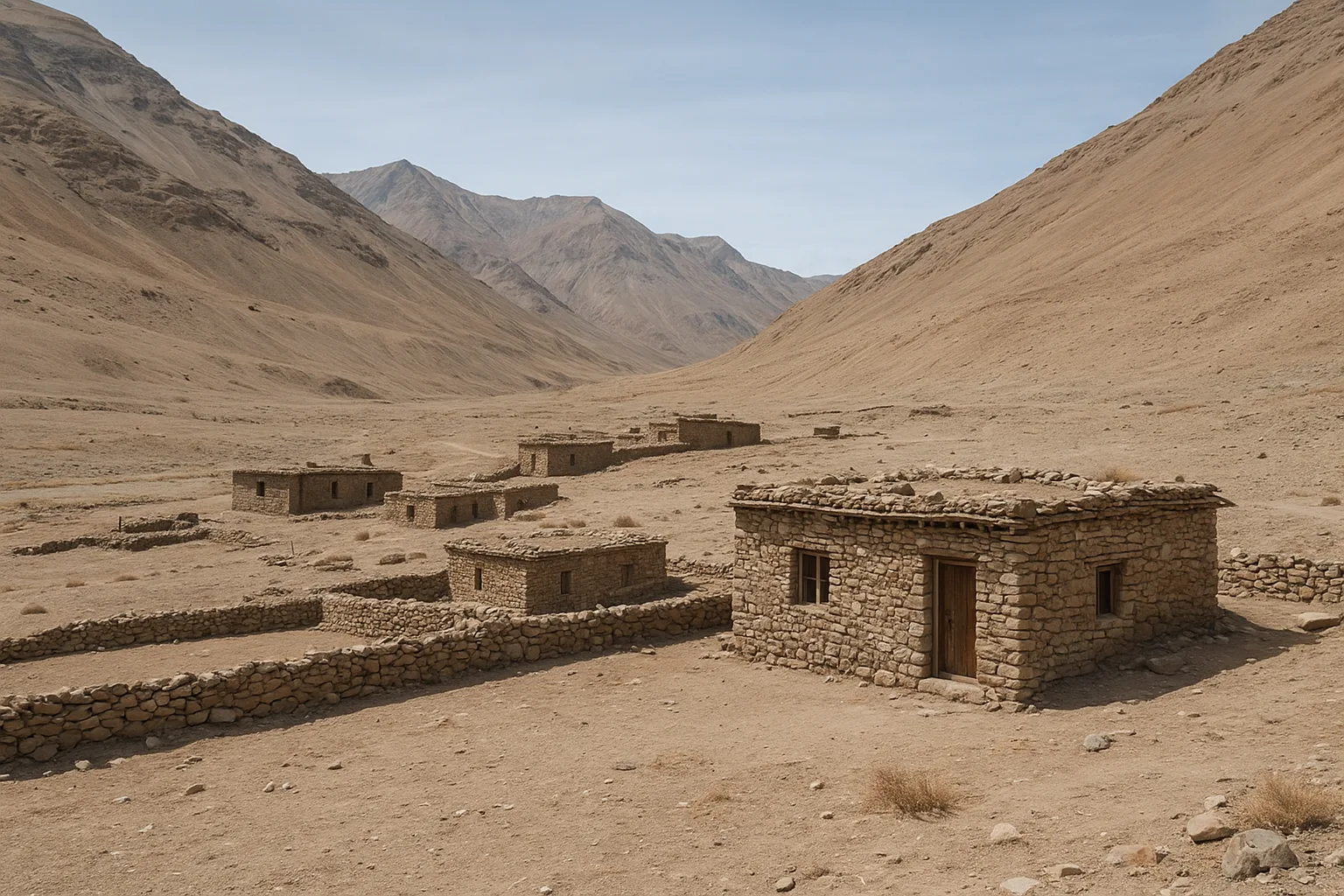
Yet historical inference suggests a more complex tapestry. The isolation imposed by geography fostered a distinct cultural resilience. Small settlements, ringed by stone walls against wolves and wind, developed sophisticated systems of communal labor and resource sharing. Local lore, preserved in the rhythms of seasonal festivals, hints at ancient animist beliefs—worship of sky, earth, and water spirits—long before Buddhism’s arrival. These early faiths endured in ritual and architecture, visible even today in the chortens and cairns scattered across the high desert.
Crossroads of the Mountains: Trade and Early Connections
Despite their seeming isolation, Lahaul and Spiti were never truly cut off. The valleys served as vital corridors between India, Tibet, and Central Asia. By the Bronze Age, early trade routes threaded through the region, linking it to the Silk Road’s southern arteries. Salt, wool, and turquoise passed through mountain passes like Kunzum La, carried by caravans whose footprints can still be traced in the oral histories of Spiti’s villages.
These ancient routes were more than conduits for goods—they brought stories, beliefs, and new technologies. The introduction of barley and buckwheat, sturdy crops suited to high-altitude farming, transformed settlement patterns. The art of spinning yak wool and weaving it into thick blankets became a hallmark of survival. Even as empires rose and fell beyond the mountains, the people of Lahaul-Spiti became expert navigators of both geography and diplomacy, mediating relationships between distant polities and their own fiercely independent communities.
Belief Systems in the Cold Desert
Long before the monasteries of Tabo and Key would rise, belief in Lahaul-Spiti was woven from the land itself. Early communities practiced forms of shamanism, invoking the spirits of mountains and rivers for protection and abundance. Remnants of these animist traditions persist: stones painted with ochre, sacred groves left untouched, and rituals performed at springs believed to be the abodes of local deities.
As trade intensified, new religious currents arrived. Bon, the indigenous faith of the Tibetan plateau, likely filtered into Spiti around the first millennium BCE, bringing with it oracles and the veneration of sky gods. Over centuries, these practices mingled with imported Buddhist ideas, creating a spiritual landscape as layered as the region’s geology. The earliest stupas, built of mud and stone, stood as markers of both faith and territorial boundary—silent witnesses to the transformation of belief over time.
Emergence of Early Hill States and Political Memory
The earliest documented political history of Lahaul-Spiti emerges not from grand monuments, but from the patient record-keeping of later chroniclers. The Kullu Gazetteer notes that by the early centuries CE, the valleys saw the rise of small hill principalities, each ruled by local chieftains or gyalpos. These rulers—sometimes little more than elected elders—mediated disputes, organized communal labor for canals and granaries, and led defense against raiders from neighboring valleys.
Spiti, in particular, maintained a tradition of zail administration, where authority was distributed among village councils. The memory of these early hill states, preserved in both oral and written tradition, speaks to a society where survival depended as much on cooperation as on competition. Political boundaries were porous, shaped by seasonal migration and shifting alliances rather than fixed lines on a map.
Ancient Roots, Enduring Legacies
To walk the high trails of Lahaul-Spiti today is to step into a landscape where the past is never far from the surface. The rhythms of survival—of cooperation, adaptation, and reverence for the land—still shape life in these valleys. Ancient irrigation channels, some in use for over a thousand years, continue to bring water to barley fields. Festivals and rituals echo beliefs older than Buddhism, while stories passed from elder to child keep memory alive where written history is silent.
As we move forward in this series, the next part will delve into the arrival of Buddhist thought and the rise of monumental monasteries—tracing how new ideas and powers transformed the cold desert’s ancient heart. The echoes of this earliest era remain, woven into every stone and story of Lahaul-Spiti’s enduring highland culture.
Previous: Geography and Isolation in Early Lahaul–Spiti History
Next: Early Political Organisation of the Spiti Valley