
Series: History of Lahaul & Spiti, Himachal Pradesh, India
Phase 5: Modern Era — Part 23 of 30
This article appears within a continuing historical series that follows the western Himalayas into the modern era. With the end of princely rule and the integration into independent India, long-standing social and political patterns were reconfigured. This phase examines how development, state formation, and memory interact with inherited landscapes, shaping contemporary life while carrying forward echoes of the past.
At the Threshold of the Himalayas
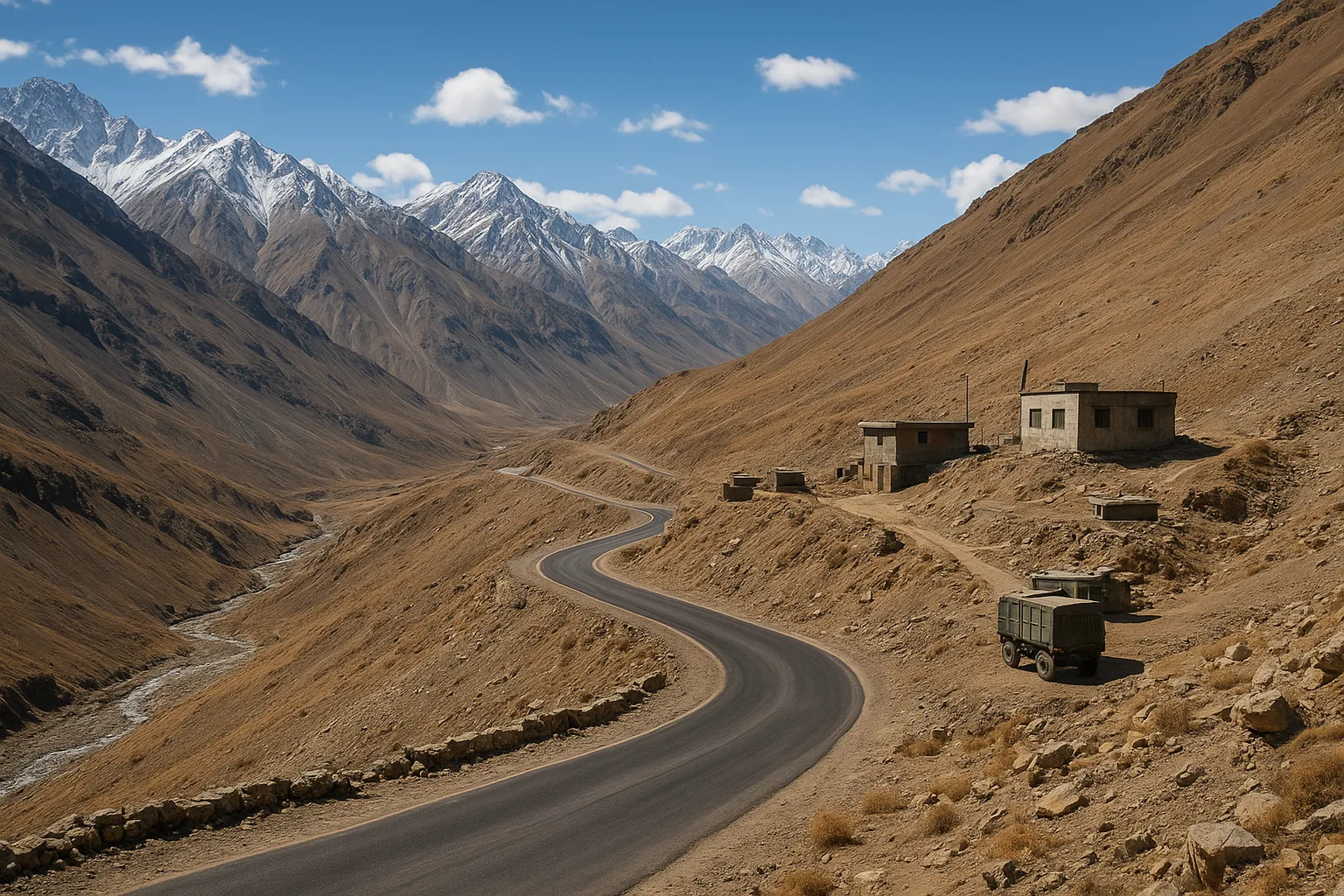
The wind bites hard at Kunzum La. Far below, the river Chandra snakes through barren ochre, and the vast silence of Spiti stretches away toward the Tibetan plateau. This is not merely a mountain crossing—it is a hinge upon which centuries have turned. The stark beauty of Lahaul-Spiti is deceptive; beneath its quiet lie stories of movement, vigilance, and survival. Here, at over 4,500 meters, the strategic importance of this region has always been woven into its landscape, and in the era of modern India, its role has only grown more profound.
The Ancient Crossroads: Trade, Faith, and Culture
Long before the idea of modern borders, Lahaul and Spiti were natural corridors. Oral traditions among the region’s Bodh and Thakur communities recall a time when caravans plied the high passes, trading salt, wool, and barley between Tibet and the fertile valleys of Kullu and beyond. These routes were never merely economic; they were arteries of belief and custom. Buddhist monasteries at Tabo and Key, some over a thousand years old, stand as testament to a spiritual and intellectual exchange that shaped local identities and drew the region into the broader currents of Himalayan Buddhism.
Local narratives, passed down in winter gatherings, speak of mythic journeys—Padmasambhava’s crossing into Tibet, or the wanderings of saints and traders. While these legends are embroidered with wonder, the physical traces of old trails and the echoes in local dialects offer tangible proof of a region deeply enmeshed in trans-Himalayan life.
From Peripheral Valleys to Borderland Bastion
For centuries, Lahaul-Spiti was seen by distant capitals—whether in Delhi, Lahore, or Lhasa—as a remote and challenging periphery. The British-era gazetteers, such as those compiled in the late 19th century, describe the valleys as sparsely populated, self-reliant, and governed by local chieftains or monastic authorities. Yet, the very remoteness that kept the valleys insulated also made them a prize for those who valued control of high-altitude frontiers.
By the time of British consolidation in the northwest Himalaya, the region’s strategic value was increasingly recognized. The establishment of posts at Kyelang and the mapping of high passes were early signs of imperial interest, even if direct interference remained limited. British chroniclers often remarked on the fierce independence of the people, who balanced local autonomy with pragmatic alliances—sometimes paying tribute, sometimes asserting their distance from lowland power struggles.
Partition, New Borders, and the Weight of Geography
The creation of modern India in 1947 brought with it a new urgency to define and defend mountain boundaries. Lahaul-Spiti, now a district of Himachal Pradesh, suddenly found itself on the very edge of a nation-state grappling with new neighbors and old uncertainties. The valleys’ proximity to Tibet, and by extension China, transformed their strategic calculus overnight.
Documented in government records from the 1950s onward, efforts began in earnest to improve communications and infrastructure. The construction of the Manali–Leh road, with its daring route through Lahaul, was as much a military imperative as a civilian boon. In moments of crisis—such as the 1962 Sino-Indian war—these routes proved vital lifelines, and the local population played a quiet but essential role in supporting logistical operations and maintaining stability in a region where the terrain itself is a formidable adversary.
Communities at the Frontier: Identity and Allegiance
Despite—or perhaps because of—the pressures of geopolitics, the people of Lahaul-Spiti have maintained a distinct sense of self. Villages like Kibber and Sissu continue to nurture traditions that blend Buddhist ritual, indigenous belief, and the necessities of high-altitude life. The old practice of the polyandrous family and the role of monasteries in community arbitration reflect ways of adapting to scarcity and remoteness, even as modernity brings slow but steady change.
Oral traditions often speak of balance—between the outside world and the sanctity of local customs, between vigilance and hospitality. As military and administrative presence increased in the second half of the 20th century, so too did the region’s sense of being both a gateway and a buffer. The annual festivals, the cycle of migration, and the rebuilding after bitter winters all embody a resilience that is both cultural and strategic.
Modern Infrastructure and the Shadow of the Border
Today, Lahaul-Spiti stands at the crossroads of challenge and opportunity. The completion of the Atal Tunnel in 2020, piercing beneath the Rohtang Pass, has radically shortened access to Lahaul from Manali—no longer do months of snow cut off the valley from the rest of India. For the region’s people, this has meant faster transport, new economic possibilities, and a subtle but unmistakable shift in daily rhythms.
Yet, the tunnel is more than an engineering marvel; it is a symbol of the state’s commitment to securing its Himalayan frontiers. Military convoys share the road with tourist jeeps, and the landscape—once the domain of yak herders and monks—now hums with new forms of movement. The shadow of the border remains: periodic tensions with China, debates over infrastructure and ecological impact, and the ever-present need to balance security with local autonomy.
Continuities and the Living Legacy
Through centuries of change, the strategic importance of Lahaul-Spiti has never been just a matter of maps and armies. It is written into the rhythms of its communities, the wisdom of its elders, and the quiet determination of its youth. The region’s geography—once a barrier, now a bridge—continues to shape the destiny of those who call it home, and of a nation that relies on their vigilance, hospitality, and resilience.
As this series continues, we will journey deeper into the lives of Lahaul-Spiti’s people, exploring how ancient traditions and new realities meet at the roof of the world—and how this meeting shapes the future of the mountains and the nation beyond.
Previous: Recognition of Lahaul–Spiti as a Tribal District
Next: Roads, Tunnels, and Connectivity Transforming the Region