
Series: History of Kullu, Himachal Pradesh, India
Phase 5: Modern Era — Part 23 of 30
This article appears within a continuing historical series that follows the western Himalayas into the modern era. With the end of princely rule and the integration into independent India, long-standing social and political patterns were reconfigured. This phase examines how development, state formation, and memory interact with inherited landscapes, shaping contemporary life while carrying forward echoes of the past.
Morning in the Valley: Manali’s Forgotten Quiet
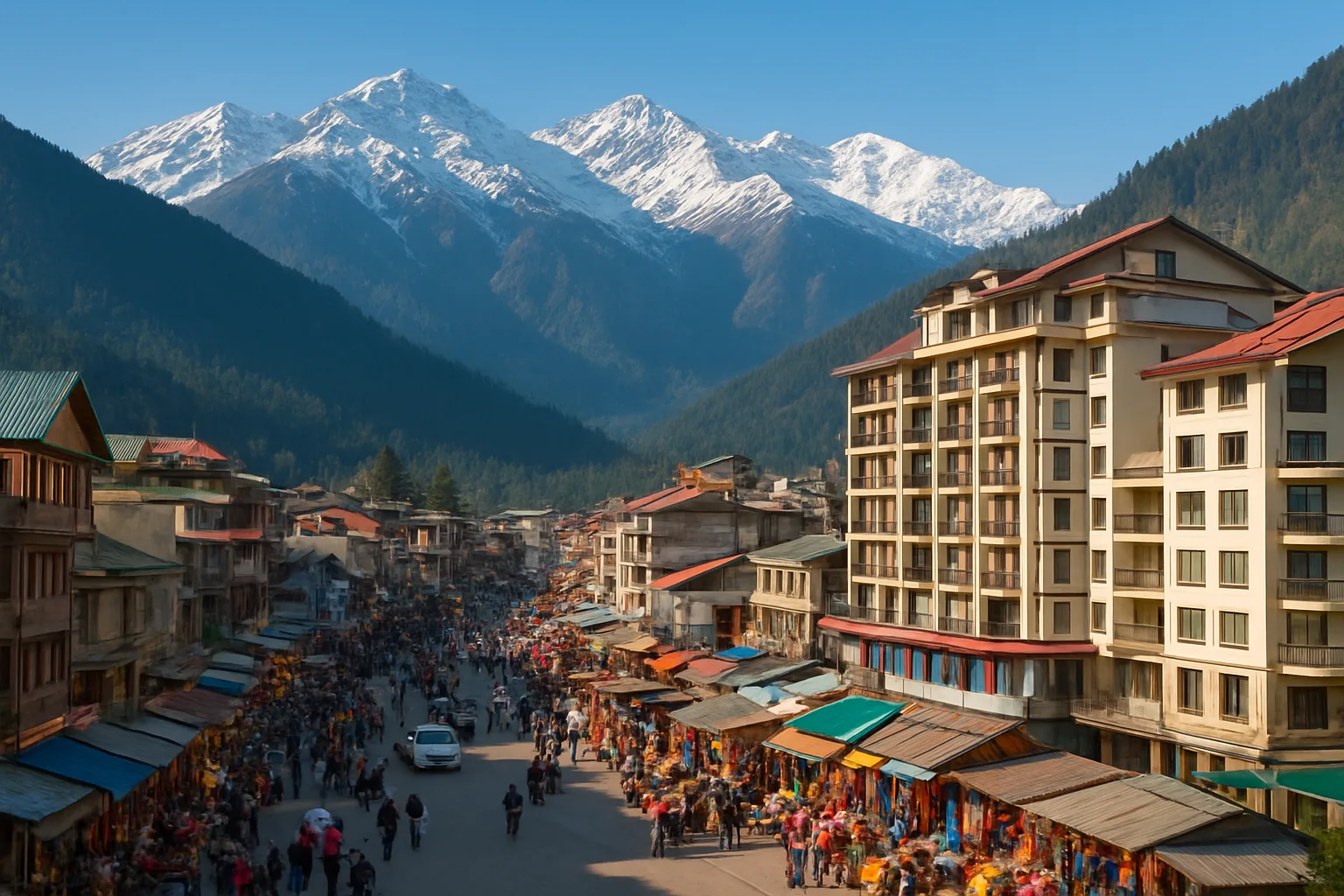
The sun traces slow golden arcs above the Beas River, illuminating the apple orchards and cedar forests that tumble down toward the clustered rooftops of Manali. Today, the air buzzes with languages from across the world—English, Hebrew, French, Hindi, and the clipped Pahari dialects of Himachal. Yet it was not so long ago that Manali was a quiet hamlet, unknown to most outside the valley. Its journey from obscurity to global renown is both a local and a Himalayan story—one rooted in geography, myth, and the shifting tides of history in Kullu.
Ancient Tracks: Myths, Trade, and the World Beyond
Oral traditions in Manali, passed down in winter kitchens and temple courtyards, speak of a valley shaped by gods and survivors. The most enduring legend tells how Manu, the sage who survived the great flood, settled here and gave the village its name—Manali, the abode of Manu. Such stories, woven into the fabric of local identity, are echoed in the shrines and rituals still observed today. Yet, while these myths offer meaning, historians distinguish them from what can be inferred from the archaeological and written record.
The Kullu valley, with Manali at its northern edge, sat astride ancient trade routes connecting the Indian plains to Ladakh and Tibet. Even in the early centuries of the Common Era, small communities of shepherds, farmers, and traders braved the treacherous passes. The valley’s early settlements, inferred from oral histories and later gazetteers, were modest—clusters of wooden homes clinging to river terraces, their survival dependent on barley harvests, river fish, and the rhythms of the seasons.
Communities and Belief: The Hill People of Upper Kullu
Over centuries, the upper Kullu valley became home to a mosaic of communities—Kullavi Paharis, Gaddis, and occasional migrants from Lahaul and Tibet. Their lives revolved around land and livestock, but also around a sacred landscape. The deodar forests were believed to house spirits; the river itself, a living goddess. Oral traditions reveal a pantheon of local deities, with Manali’s Hadimba temple and Manu temple serving as focal points for the village’s spiritual life.
These beliefs were not static. As the centuries passed, the faiths of the valley blended elements of Vedic Hinduism with older animist practices. Rituals honoring village gods continue today, a testament to the valley’s enduring syncretism. This spiritual fabric, distinct from the plains, gave Manali and its neighbors a unique identity within the wider Kullu region.
The Coming of the Hill States: Kullu’s Political Awakening
By the early medieval period, the shifting allegiances of the Western Himalaya began to influence Manali’s fate. According to regional chronicles and gazetteers, Kullu emerged as a modest hill principality by the 8th or 9th century, with its center in Naggar—some 20 kilometers south of modern Manali. The rulers of Kullu, often little more than powerful local chieftains, presided over a network of villages and high-altitude pastures. Political power was diffuse, shaped as much by kinship and customary law as by royal edict.
Manali, at the northern edge of this domain, remained peripheral—a summer grazing ground and a stop on routes leading to the Rohtang Pass. The valley’s remoteness sheltered it from the upheavals of the plains, though the influence of far-off empires—Kushans, Guptas, and later the Mughals—occasionally filtered in through traders and traveling monks.
Colonial Encounters and the Opening of the Valley
The 19th century brought profound change. British colonial officers, in their search for new routes and resources, mapped the Kullu valley in greater detail. The Punjab Gazetteer of the late 1800s describes Manali as a small, picturesque settlement, known mainly for its temples and proximity to the Rohtang Pass. The British, drawn by the region’s dramatic beauty and cool climate, established rest houses and encouraged apple cultivation—laying the groundwork for Manali’s future as a retreat for outsiders.
Roads improved, and with them, the valley’s isolation lessened. By the early 20th century, occasional travelers and missionaries began to arrive. Yet, as late as the 1940s, Manali remained a quiet village, its life marked by seasonal rhythms and the slow pace of mountain time.
After Independence: Roads, Aspirations, and the First Tourists
India’s independence in 1947 ushered in a new era of transformation. National infrastructure projects reached deep into Himachal’s mountains. The construction of the Mandi-Manali road brought the world closer. By the 1960s, Manali was no longer a secret. Domestic tourists, lured by the promise of snow and solitude, began to arrive. The village’s apple orchards flourished, and the first guesthouses opened their doors. Local families, once reliant on subsistence farming, found new livelihoods in hospitality and trade.
The 1970s and 1980s saw a new wave—young international travelers, drawn by stories of Himalayan adventure and spiritual seeking. Manali’s landscape began to change. Cafés, hostels, and trekking agencies sprang up alongside centuries-old temples and fields. The town’s reputation as a haven for backpackers and mountaineers grew rapidly. By the 1990s, Manali was firmly on the map, a crossroads of cultures and ambitions.
Manali Today: A Global Destination with Ancient Roots
Walk through Manali’s bustling streets today, and the village’s layered past is never far from view. Amidst the crowds and commerce, the old wood-carved temples remain, their rituals undisturbed by the passage of time. Local festivals—such as Dussehra—still draw villagers from every corner of Kullu, reaffirming bonds that have endured for centuries. The stories of Manu and Hadimba, of apple pioneers and early trekkers, are retold with pride.
Yet Manali’s ascent is not without challenges. The pressures of tourism—traffic, pollution, shifting land use—test the resilience of both community and landscape. Still, the spirit of adaptation that has defined Manali’s history continues. The village that once marked the end of the road is now a gateway to the Himalaya, a meeting ground for the world and a living testament to Kullu’s capacity for renewal.
Looking Ahead: Kullu’s Enduring Legacy
Manali’s journey from remote village to global tourist hub reflects the broader transformation of the Kullu valley—a region where myth, memory, and modernity intersect. The ancient beliefs, community bonds, and mountain landscapes that shaped Manali’s rise remain vital, anchoring the town as it navigates the complexities of the twenty-first century.
In the next part of our series, we’ll trace how the pressures and promises of mass tourism have reshaped not just Manali, but the entire Kullu valley—challenging old ways of life and inspiring new visions for the future.
Previous: Tourism Boom and Its Impact on Kullu Valley
Next: Environmental Challenges Facing Modern Kullu