
Series: History of Lahaul & Spiti, Himachal Pradesh, India
Phase 5: Modern Era — Part 24 of 30
This article appears within a continuing historical series that follows the western Himalayas into the modern era. With the end of princely rule and the integration into independent India, long-standing social and political patterns were reconfigured. This phase examines how development, state formation, and memory interact with inherited landscapes, shaping contemporary life while carrying forward echoes of the past.
Winter’s Silence on the Rohtang
The year is 1955. A biting wind sweeps across the Rohtang Pass, muting even the distant call of a raven. At nearly 4,000 meters, a handful of Lahauli traders tug at their mules, faces wrapped in wool, eyes fixed on the snow-blind horizon. For centuries, this is how the people of Lahaul and Spiti have greeted winter: with resignation. As the snow deepens, the mountain passes close, and the valleys slip into enforced solitude—months of isolation, broken only by memory and myth.
Valleys on the Edge: Early Settlements and Belief
Long before the age of asphalt, the high valleys of Lahaul and Spiti were worlds apart, both from each other and the plains below. Oral traditions recall ancient migrations—some say from Tibet, others from the Himalayan foothills—woven with stories of sacred lakes, wrathful spirits, and the protective power of mountain deities. These tales, recounted by elders beside flickering hearths, are more than myth: they’re maps of survival, marking springs, passes, and safe grazing grounds.
Archaeological traces—chortens, petroglyphs, and ancient monasteries—hint at communities settled here by the first millennium CE. The belief systems that emerged blended Tibetan Buddhism with older animist practices. In the Spiti valley, the monastic complex at Tabo, founded in 996 CE, would become a beacon of Buddhist scholarship, while Lahaul’s gompas anchored villagers through harsh seasons.
Between Kingdoms and Empires: Lahaul-Spiti’s Place in the World
Historically, Lahaul and Spiti never formed a kingdom of their own, nor did they submit easily to outsiders. Chroniclers like the Imperial Gazetteer describe a region defined less by political boundaries than by passes—Kunzum, Baralacha, Rohtang—that alternately opened and closed the valleys to the wider world. Early hill states such as Chamba and Kullu vied for influence, as did Tibetan authorities, but their reach was tenuous.
Trade, rather than conquest, shaped these valleys. Caravans from Ladakh and Tibet hauled salt, wool, and borax through Spiti’s moonscape, while Lahaul’s villagers traded barley and buckwheat for tea and cloth from Kullu. The old trade routes, now mostly vanished beneath modern roads, once stitched the region into a fragile web of interdependence—one frequently broken each winter by snow and silence.
Colonial Gaze and the First Roads
The coming of the British Raj brought new attention. Surveyors, mapping the mountains for strategic reasons, marveled at the valleys’ inaccessibility. The 19th-century Gazetteers describe the people of Lahaul and Spiti as hardy, self-reliant, and stubbornly independent—attributes shaped by geography as much as culture. The British encouraged the improvement of trails, but the first real roads, such as the mule track over Rohtang, remained precarious and seasonal.
Still, these early efforts planted the seeds of change. The arrival of wheeled transport, even in a limited form, altered trade patterns and slowly chipped away at the region’s isolation. Yet for the majority of Lahaulis and Spitians, winter continued to mean months without mail, supplies, or news from the outside world.
Post-Independence Ambitions: Engineering the Impossible
After 1947, independent India inherited both the challenge and promise of Lahaul-Spiti. The region’s strategic location—bordering Tibet and close to Ladakh—lent urgency to efforts to connect it more reliably with the rest of Himachal Pradesh. In the 1960s, after the Sino-Indian conflict, the government prioritized road-building in the Himalayas. The Manali-Leh highway, begun in the 1960s and completed in stages over decades, became a lifeline, but Rohtang Pass remained a formidable barrier for half the year.
For villagers, the prospect of year-round connectivity was both a promise and a threat. Oral histories from the era capture a mix of hope and anxiety. Would new roads bring prosperity, or erode ancient ways of life? Would modernity’s arrival mean opportunity or loss?
The Tunnel Era: Rohtang’s Transformation
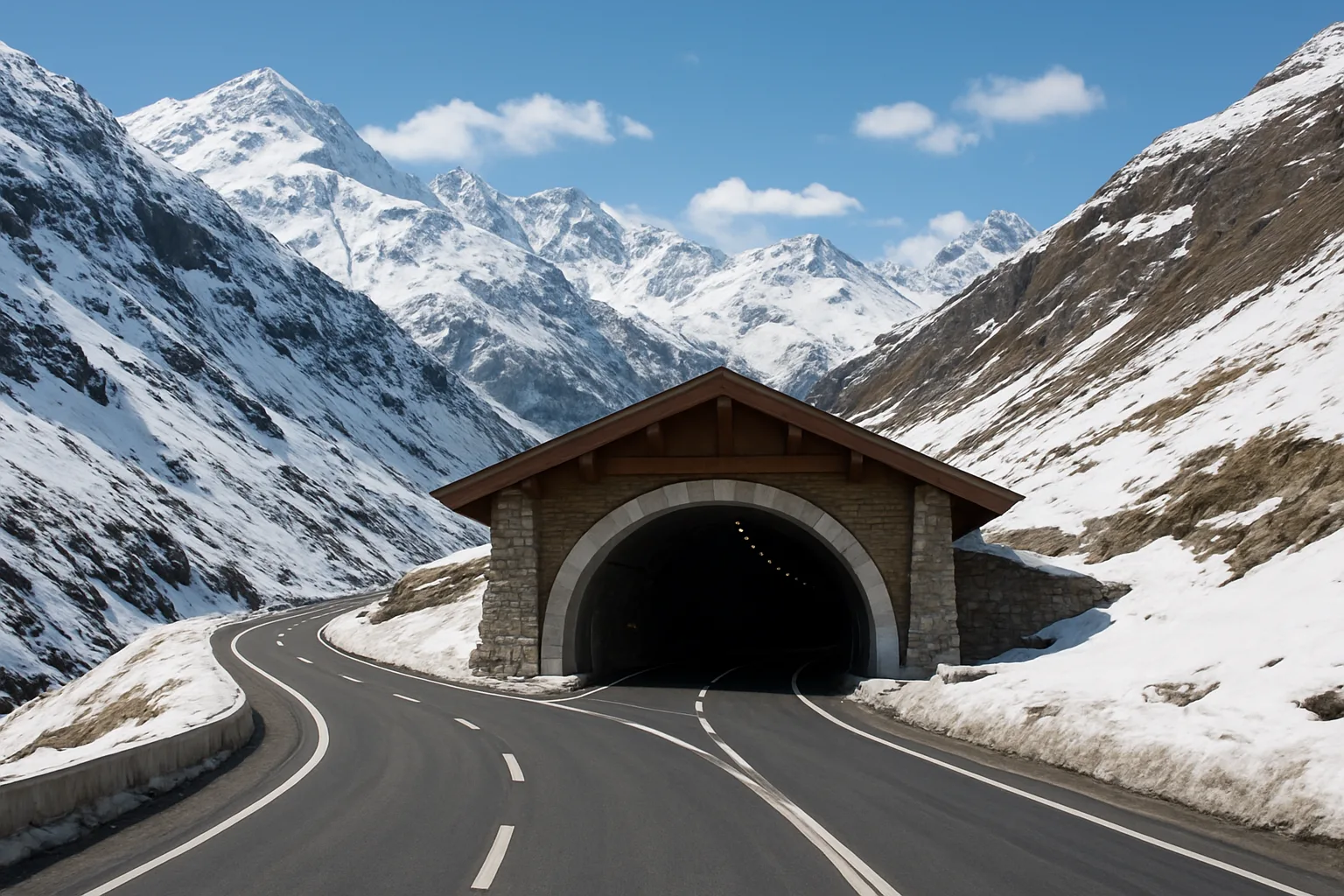
It was not until the early 21st century that the most dramatic transformation occurred. The Atal Tunnel, inaugurated in October 2020 after more than a decade of construction, finally pierced the Rohtang’s icy veil. At 9 kilometers long, it is among the highest road tunnels in the world, and it changed everything. Suddenly, key villages like Keylong were accessible by road even in midwinter. Ambulances could reach the sick. Students could travel for exams. Supplies and news flowed as never before.
The tunnel’s impact is profound. Farmers have new markets for their crops. Tourism, once a trickle, is now a steady stream. Yet, as elders are quick to point out, the benefits come with costs: environmental pressures, shifting cultural norms, and the risk of losing the hard-won resilience that once defined these valleys.
Connectivity and the Meaning of Home
The story of roads and tunnels in Lahaul-Spiti is ultimately a story of adaptation. For a millennium, the region’s geography dictated its fate. Today, infrastructure has begun to rewrite that script, connecting these ancient valleys to the wider world. Yet the memory of isolation—the old winter silence—is never far away. Traditions endure: the midwinter festivals, the communal labor of Losar, the reverence for mountain spirits.
As Lahaul-Spiti stands on the threshold of new possibilities, its people continue to negotiate the balance between progress and preservation. The next part of our series will look at how education, migration, and evolving identity are reshaping the region in the shadow of these newly-forged connections.
Previous: Strategic Importance of Lahaul–Spiti in Modern India
Next: Tourism Growth and Cultural Exposure in Spiti