
Series: History of Kullu, Himachal Pradesh, India
Phase 2: Medieval Kingdom — Part 10 of 30
This article forms part of a continuing series that follows the gradual emergence of organised power in the western Himalayas. As small communities gave way to clans, chieftainships, and hill states, patterns of rule, alliance, and conflict began to take shape. This phase examines how authority was negotiated through land, ritual, and warfare, laying the groundwork for regional kingdoms that would dominate the medieval landscape.
The Valley Awakens: A Scene from Medieval Kullu
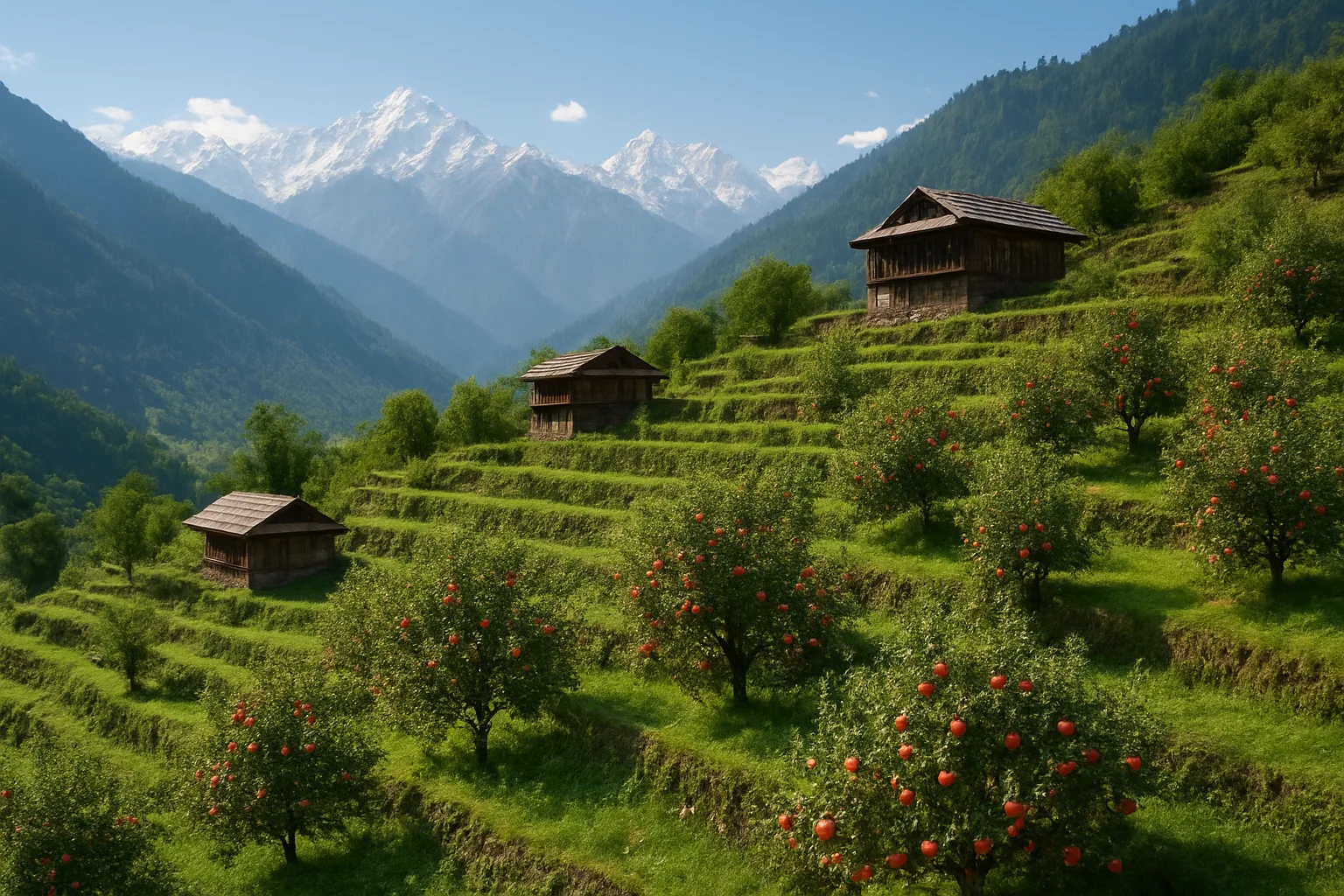
The first rays of the sun filter through clouds snagged on snow-capped ridges, casting gold across the terraced fields of the Kullu valley. In the early medieval centuries, long before modern roads and hydroelectric projects, these slopes echoed with the thud of wooden ploughs and the murmur of streams diverted by hand-carved channels. Smoke rises from huts clustered at the forest’s edge, as families and livestock begin their day. The valley is alive with purpose—a living record of how geography and ingenuity entwined to produce a distinctive Himalayan economy.
Kullu’s Historical Setting: A Crossroads in the Hills
By the 7th century CE, Kullu was already known to travelers and chroniclers as a region of strategic and economic significance. Hemmed in by mountains, the valley serves as a natural corridor between the plains of Punjab and the high passes leading to Ladakh and Tibet. Early accounts—most notably the Rajatarangini and the writings of Chinese pilgrims—hint at a society shaped by migration, trade, and a constant negotiation with nature’s extremes.
Unlike the kingdoms of the plains, Kullu’s rulers presided over a landscape where power was measured as much in harvests as in armies. Oral traditions, passed down in local dialects, speak of legendary chieftains and gods who taught the people how to coax grain from stony soil. Archaeological traces and inscriptions from the medieval period suggest the emergence of formalized hill states, each adapting to the rhythms and risks of mountain life.
Communities and Early Settlements
The medieval valley was a tapestry of villages, each with its own customs and micro-economies. The core communities—predominantly Rajputs, Brahmins, and artisan castes—were bound together by intricate social contracts. The lower slopes and riverbanks became prime sites for settlement, with clusters of houses built from locally quarried stone and deodar wood. High pastures were reserved for summer grazing, a tradition still visible in the annual migration of shepherds.
Ancient belief systems mingled with practical knowledge; local deities, or devtas, were invoked for a bountiful harvest or protection from floods. Many villages maintained sacred groves and held festivals tied to the agricultural calendar, blending myth with the practical realities of survival. While legends abound—some linking the valley to the epic Mahabharata—historical inference reveals a society organized around land and lineage, adapting to the valley’s shifting fortunes.
The Rhythms of Agriculture: Terraces, Crops, and Rituals
Agriculture in medieval Kullu was a feat of adaptation. Broad, sunlit terraces carved into steep hillsides allowed for the cultivation of barley, wheat, and later, paddy rice where water was plentiful. Millet and buckwheat thrived at higher altitudes, while pulses and oilseeds provided essential dietary variety. The Kullu Gazetteer, compiled in the late 19th century but drawing on older traditions, describes these fields as the backbone of valley life—laboriously maintained by communal effort and guided by the lunar calendar.
Water management was both an art and a necessity. Ingenious kuhls—irrigation channels fed by mountain streams—crisscrossed the landscape, their upkeep governed by village councils. The annual cycle of sowing and harvest unfolded alongside religious observances, with each phase marked by offerings to local gods. The social fabric was thus closely interwoven with the tempo of the land, reinforcing a sense of shared destiny in the face of drought, flood, or pestilence.
Beyond Subsistence: Trade Routes and the Flow of Goods
While subsistence agriculture anchored most lives, Kullu’s position on ancient trade routes allowed for surprising economic dynamism. The valley’s merchants and muleteers forged connections with neighboring kingdoms—Lahaul, Spiti, Tibet, and the Punjab plains. Salt, wool, and precious borax moved south from the high plateau, while grains, cloth, and metalware traveled north. The emergence of bustling market towns, such as Sultanpur (the medieval capital), signaled the growing importance of commerce.
Hill states—some large, others little more than fortified hamlets—competed for control of these lucrative caravan paths. The tribute system, documented in royal chronicles and later colonial records, ensured that local rulers benefited from every passing convoy. Over time, Kullu’s economy grew more complex, integrating local craft production (notably weaving and metalwork) into wider trade networks that stretched across the Himalayas.
Political Power and Economic Resilience
The fortunes of Kullu’s medieval rulers rested on their ability to marshal resources and maintain stability. Dynasties such as the Thakurs of Lag and the royal house of Kullu cemented alliances through marriage, land grants, and religious patronage. Control of arable land—measured in bighas—became a mark of status, with temples and monasteries emerging as both spiritual and economic centers.
Yet, the economy’s resilience was regularly tested. Floods, landslides, and invasions from rival hill states could disrupt trade and devastate harvests. Oral epics recall years of hardship—famines that forced migration, or conflicts that redrew the map of valley politics. Still, the people of Kullu adapted: rotating crops, rebuilding terraces, and forging new alliances when old certainties crumbled. This capacity for renewal, grounded in local knowledge and communal effort, would become a defining feature of the region’s identity.
Ancient Roots, Enduring Legacies
Centuries have passed since the first ploughs turned Kullu’s earth, but the valley’s medieval rhythms endure. Today, the terraced fields and stone villages remain, their patterns echoing those laid down by ancestors whose stories are woven into the very landscape. The interplay of agriculture, trade, and belief—tested by natural disaster and political intrigue—has left an imprint still visible in modern festivals, local governance, and the valley’s enduring sense of cohesion.
As we continue our series, the next chapter will follow the rise of regional powers and the conflicts that reshaped Kullu’s destiny, setting the stage for a new era of ambition and uncertainty in the Himalayan heartland.
Previous: Village Governance and Administration in Medieval Kullu
Next: Raghunath Temple: The Religious Turning Point in Kullu History