
Series: History of Chamba, Himachal Pradesh, India
Phase 5: Modern Era — Part 28 of 30
This article appears within a continuing historical series that follows the western Himalayas into the modern era. With the end of princely rule and the integration into independent India, long-standing social and political patterns were reconfigured. This phase examines how development, state formation, and memory interact with inherited landscapes, shaping contemporary life while carrying forward echoes of the past.
At Daybreak in Chamba: A Living Tapestry
As the first rays of sunlight crest the Dhaula Dhar peaks, their pale gold spills into the valley below. Chamba, nestled at the confluence of ancient trade routes and surrounded by cedar-clad hills, awakens as it has for centuries—a place where prayer bells echo through narrow lanes, and the snowmelt-fed Ravi glistens between urban buildings and timeworn shrines. The present day, with its bustle of vehicles and smartphone chatter, overlays but does not erase the older rhythms of life. Here, the past is never far below the surface.
From Forest Glades to Settled Hamlets
Long before Chamba’s temples and palaces rose over the valley, this region’s story began with scattered forest communities. The earliest oral traditions—echoed in Pahari ballads and fireside tales—speak of a land called Brahmpur, a mythical past suffused with spirits and demigods. While such accounts belong to the realm of legend, archaeological hints—like megalithic stones and ancient terracotta—suggest that various proto-hill tribes settled these ridges and valleys as early as the Iron Age.
Documented history enters the scene much later. By the early medieval period, small, kin-based settlements began to cluster near reliable water sources, their houses built of wood and stone. These hamlets, often organized around a central shrine or sacred grove, formed the nucleus of what would become Chamba’s urban identity. The rhythms of seasonal migration, cultivation, and ritual marked the passage of years, and communities developed distinct dialects, crafts, and belief systems—threads that still color Chamba’s cultural fabric.
The Convergence of Trade and Pilgrimage
Geography placed Chamba at a crossroads. Sheltered yet open, it drew traders and pilgrims along routes linking Kashmir, Ladakh, and the plains of Punjab. As early as the 7th century CE, chroniclers like the Rajatarangini mention the movement of merchants, wandering saints, and itinerant craftsmen through these hills.
With the flow of goods—salt, wool, grains, and precious stones—came new ideas. Buddhist monasteries and Shaivite shrines rose along the mountain paths, reflecting the region’s growing cosmopolitanism. Chamba’s bazaar, according to the later Chamba State Gazetteer, became a meeting ground for Gaddis, Rajputs, artisans, and traders from distant lands. This intermingling shaped the town’s early urban culture, blending local traditions with influences from across the Himalayas.
The Rise of Hill States and Urban Authority
By the 10th century, the political landscape of the western Himalayas was shifting. Tribal chieftains gave way to more centralized polities—the hill states. Chamba itself traces its documented royal lineage to Raja Sahil Varman, who, according to both local chronicles and copper-plate inscriptions, founded the fortified capital at Chamba in the early 900s CE. The move from Brahmpur to Chamba, as described in family legends and echoed in the region’s earliest records, was both a strategic and symbolic act—signaling the emergence of urban authority in the valley.
The new capital, ringed by defensive walls and marked by the great Lakshmi Narayan temple complex, became the heart of the state. Royal patronage drew skilled architects and sculptors, whose work in wood, stone, and bronze defined Chamba’s unique style. The city’s layout reflected both practical needs—defense, water supply, trade—and the ritual imperatives of Hindu kingship. Here, political history and cultural identity intertwined: the town was both a seat of power and a sacred center, where festivals, processions, and public rituals reinforced a shared sense of belonging.
Belief Systems: Pluralism Rooted in Place
Chamba’s urban identity has always rested on a foundation of religious pluralism. While the royal family championed Vaishnavism and Shaivism, oral traditions record the continued veneration of local deities—gram devtas—whose shrines dotted the hillsides. Buddhist influences lingered in some quarters, and Sufi mystics found welcome in the valleys. Over time, these threads wove together a distinctive spiritual landscape, one where temple architecture, folk performance, and seasonal fairs expressed both continuity and adaptation.
Regional gazetteers from the British era remark on this syncretism, noting how Chamba’s festivals drew participants from all walks of life. The Minjar Mela, for instance, blends agricultural rites with royal pageantry, while the Chaurasi temples at Bharmour recall even older religious traditions. The result is a civic culture that values both the preservation of the old and the creative incorporation of the new.
Communities and the Changing Urban Scene
As Chamba’s importance grew, so did its diversity. Rajput clans, Brahmin scholars, Gaddi shepherds, and artisan castes each played a role in the city’s development. Migration—both seasonal and permanent—brought fresh skills, languages, and customs. The city’s bazaar became a microcosm of the wider region: a place where wool traders from Lahaul haggled beside Kashmiri shawl merchants and Punjabi grain dealers.
Genealogies preserved by local priests, and accounts in the Chamba Gazetteer, trace the arrival of new families—potters, blacksmiths, musicians—over the centuries. Urbanisation, in this context, was less about swelling populations than about the forging of a complex, shared identity. Each group contributed to the city’s evolving character, from music and cuisine to the vibrant miniature painting tradition for which Chamba is now renowned.
Urbanisation in the Modern Era: Continuity and Challenge
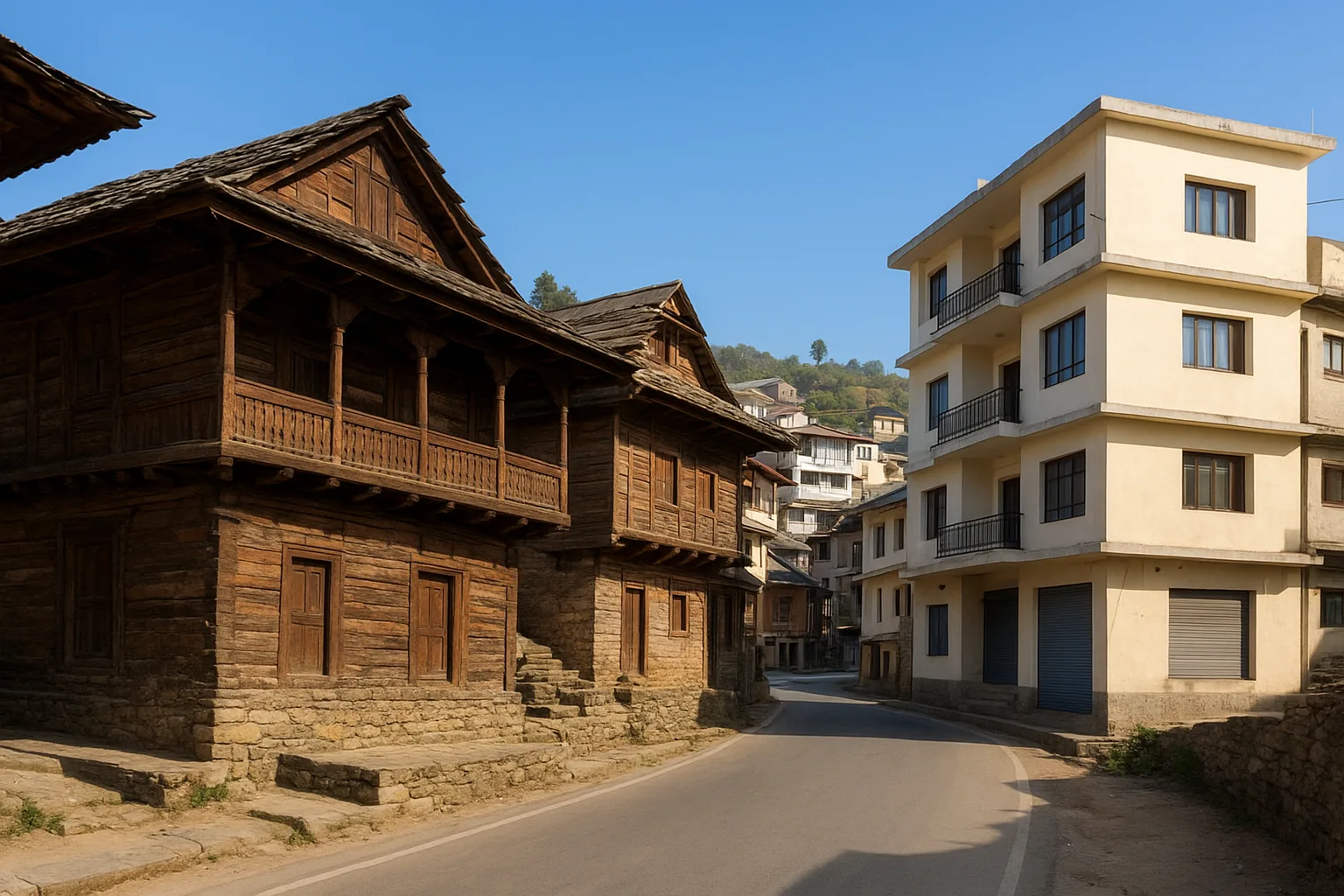
The 19th and 20th centuries brought new pressures. British colonial rule, road-building, and the introduction of new administrative structures altered Chamba’s urban landscape. Yet, the city retained its distinctive rhythm—a blend of market bustle, religious observance, and community life. Today, as modern urbanisation accelerates, questions of identity remain central: How does a valley town, with roots reaching back to myth and monarchy, adapt to the demands of the present?
Municipal buildings and modern schools stand beside medieval temples. Old townhouses give way to concrete flats, yet festivals like Minjar still fill the streets with color and song. The challenge is ongoing: balancing development with preservation, and ensuring that Chamba’s urban identity remains more than just a memory.
Echoes of the Past, Hopes for the Future
The story of Chamba’s urbanisation is one of adaptation and resilience. Ancient beliefs, royal ambitions, and the rhythms of trade have shaped a unique civic culture—one that continues to find expression in daily life, language, and ritual. Even as new buildings rise and the world presses closer, the valley’s people draw strength from roots that run deep.
In the next part of this series, we will step into the era of political reform and modern governance, tracing how Chamba’s institutions and leadership transformed alongside its urban landscape, and how these changes continue to echo through the city’s winding streets and vibrant public life.
Previous: Traditional Crafts in Today’s Chamba
Next: Oral Histories of Chamba’s Elders