
Series: History of Sirmaur, Himachal Pradesh, India
Phase 5: Modern Era — Part 28 of 30
This article appears within a continuing historical series that follows the western Himalayas into the modern era. With the end of princely rule and the integration into independent India, long-standing social and political patterns were reconfigured. This phase examines how development, state formation, and memory interact with inherited landscapes, shaping contemporary life while carrying forward echoes of the past.
Twilight in the Hills: Echoes of the Past
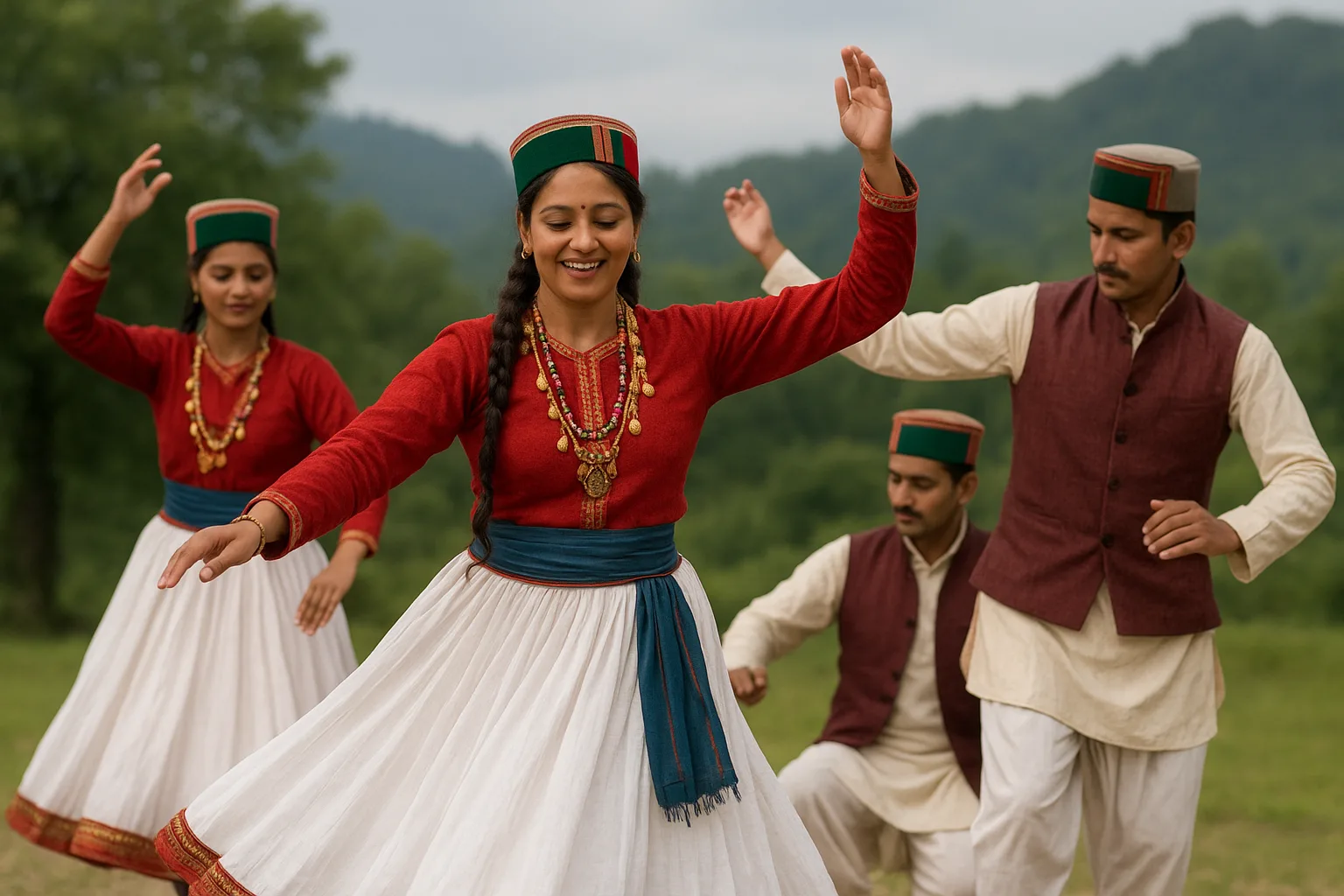
As dusk settles over the terraced fields of Sirmaur, the faint strains of a jagar song rise above the whispering deodar trees. In a small hamlet, elders gather by the hearth, recounting tales of their ancestors—stories that have survived centuries of upheaval, migration, and change. Here, on the eastern rim of Himachal Pradesh, folk traditions are not merely remembered; they are lived, woven into daily life as tightly as the hand-spun woolen cholis still worn for festivals. Yet, these traditions face new challenges as Sirmaur moves further into the modern era—a tension that is neither new nor unfamiliar in the region’s long, layered history.
Roots Beneath the Surface: Sirmaur’s Early Settlements
To understand Sirmaur’s cultural resilience, one must first travel back to its earliest settlements. The region’s valleys—once thick with wild elephants and tigers, as described in British gazetteers—have long been a crossroads. Archaeological finds near Paonta Sahib and Shillai hint at ancient trade routes connecting the Indo-Gangetic plains to the high Himalaya. Early communities, including the Bhots and Jaunsaris, established distinct systems of worship, agricultural rhythms, and oral storytelling. These traditions, rooted in observation of nature and the cycles of the seasons, created a living record—passed down not through written texts, but through song, dance, and ritual.
Oral Traditions and Mythology: Distinct Yet Intertwined
In Sirmaur, the line between oral tradition and mythology is both clear and porous. Folk ballads recount exploits of local heroes and legendary rulers, like Raja Karam Prakash or the mythical serpent king whose blessings were sought for good harvests. These stories, repeated at spring fairs and autumn festivals, are not mere fantasies. Instead, they form a narrative scaffolding for community memory, encoding lessons about justice, kinship, and resilience. Local deotas and goddesses—like Renuka Devi, whose temple remains a focal point—anchor these traditions, their stories blending historical inference with the numinous pull of myth.
Belief Systems and Hill Society
The articulation of belief in Sirmaur has always been pragmatic, shaped by the realities of mountain life. The arrival of Hinduism along the ancient trade corridors brought new rituals, but seldom displaced older animistic practices. Instead, the region’s faiths melded, producing unique syncretic customs. Ancestral spirits are still invoked in household ceremonies, while the annual Shivratri processions demonstrate the enduring presence of Shaiva traditions. Sirmauri folk songs—ghidda, jhoori, and nati—remain oral repositories of these blended beliefs, their verses shifting subtly with each generation.
Communities on the Move: Trade and Cultural Exchange
Trade routes—the arteries of Sirmaur’s early economy—were also conduits for new ideas. Merchant caravans from the plains brought not only salt and grain, but also stories, musical instruments, and textiles. The migratory Gaddi shepherds, moving between summer and winter pastures, became carriers of both material goods and intangible heritage. Each village developed its own variations of folk dance and dress, signaling identity while also adapting to the broader patterns of the region. This complex web of exchange left a mark: Sirmaur’s folk traditions bear the imprint of distant lands, yet retain a distinctly local flavor.
The Emergence of Hill States and Political Memory
By the late medieval era, the process of state formation in Sirmaur began to reshape the cultural landscape. The rise of the Sirmaur princely state—ruled from Nahan—brought new forms of patronage for local arts. Court chroniclers and bards, sometimes referencing Rajatarangini or Mughal records, began to record lineages and notable events. Yet, even as political power centralized, the authority of oral tradition persisted. Village councils and caste panchayats continued to arbitrate disputes according to customary law, often invoking ancestral precedent rather than royal edict.
Documenting Heritage: From Chronicles to Gazetteers
The British arrival in the nineteenth century introduced a new genre: the regional gazetteer. These volumes—such as the famous 1883 Gazetteer of the Sirmur State—catalogued everything from temple rituals to crop calendars. Yet, colonial observers often struggled to distinguish between historical fact and living folk tradition, recording both with equal fascination. This documentation, while sometimes filtered through foreign eyes, preserved invaluable details about Sirmauri life at a moment of profound transition.
Modernity and the Changing Face of Tradition
Independence and the subsequent integration of Sirmaur into Himachal Pradesh brought further change. Roads and schools expanded, and with them, new forms of communication and identity. Yet, even as migration and economic pressures threatened to erode village life, a countercurrent emerged. Local historians, artists, and teachers began to document vanishing customs—recording songs, preserving dialects, and reviving festivals. Today, community-led projects ensure that girls still learn the steps of the nati, and elders pass on the stories of the deotas. In a region where the past is never far from the present, these efforts are less nostalgia than a living act of preservation.
Continuity Amid Change: Sirmaur’s Living Heritage
The story of Sirmaur’s folk traditions is one of adaptation and endurance. From the firesides of the earliest settlements to the digital archives of today, oral culture has shaped the region’s sense of self—bridging generations, faiths, and even empires. As Sirmaur continues to navigate the challenges of modernity, its songs and stories remain a source of strength, reminding its people who they are and where they have come from.
In the next part of our series, we will explore how Sirmaur’s educational and social reforms in the late twentieth century further transformed local identities, and how the community’s roots continue to inform its future.
Previous: Environmental Challenges Facing Sirmaur District
Next: Oral Histories and Memories of Sirmaur’s Elders