
Series: History of Chamba, Himachal Pradesh, India
Phase 5: Modern Era — Part 27 of 30
This article appears within a continuing historical series that follows the western Himalayas into the modern era. With the end of princely rule and the integration into independent India, long-standing social and political patterns were reconfigured. This phase examines how development, state formation, and memory interact with inherited landscapes, shaping contemporary life while carrying forward echoes of the past.
Morning Light in Chamba: A Living Heritage
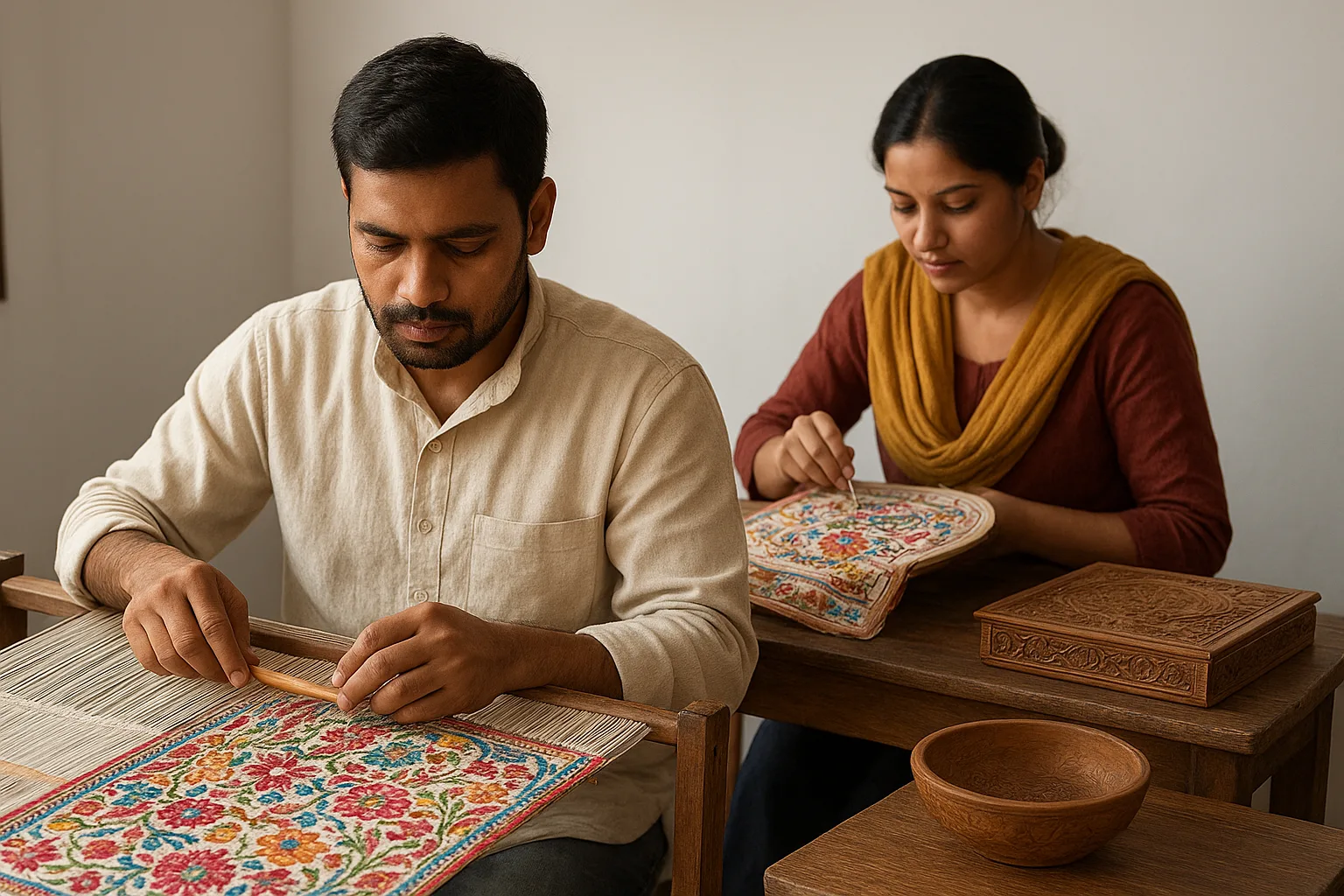
The first rays of sunlight slip through the narrow alleys of Chamba town, painting golden lines across the rough-hewn stone and timber facades. A faint, rhythmic clack drifts from an open courtyard: the sound of a loom, worked by practiced hands. Here, in the shadow of the Himalayas, tradition is not just a memory. It is alive in the warp and weft, the carving of wood, the hammer on metal. The town stirs with a measured purpose—each artisan, whether weaver, metalworker, or painter, is a bearer of a story centuries in the making.
A Valley Shaped by Time and Trade
Chamba’s story begins long before the arrival of the modern state—its roots embedded in the early hill settlements that flourished along the Ravi river. Archaeological remnants and early chronicles agree: by the 6th century CE, this region was already a crossroads of trade, faith, and craftsmanship. The old routes that threaded through the Pir Panjal and into Ladakh brought not only goods but ideas and skills, knitting Chamba into a wider Himalayan tapestry.
The Rajput dynasties that later established their courts here, most notably the Singh family from the 10th century onward, recognized the value of this cultural crossroads. Under their patronage, Chamba’s workshops blossomed. The region’s gazetteers recall how local rulers invited master artisans from Kashmir and the Kangra valley, whose skills in metalwork, textiles, and miniature painting would leave a lasting mark. Yet, alongside these documented histories, oral traditions persist—stories of divine guidance, mythic origins, and legendary craftsmen whose works were gifts from the gods themselves.
Threads of the Past: Chamba Rumal and Pahari Weaving
Perhaps no craft is more emblematic of Chamba’s identity than the Chamba Rumal—an embroidered square of muslin or silk, its delicate stitches telling stories of epic love, war, and devotion. In the cool half-light of a family home, generations of women gather, their needles moving in silent conversation with the past. Though the Rumal’s origins are layered in both fact and folklore, by the late medieval period these pieces were prized as diplomatic gifts, tokens of marriage, and ceremonial offerings. The motifs—Krishna with his flute, hunting scenes, or stylized flora—reflect both Mughal influences and an enduring local aesthetic.
Textile arts in Chamba are not limited to embroidery. Woolen pattu shawls, woven on narrow looms, remain an essential part of the hill wardrobe. Weaving families, many tracing their lineage to early Rajput or Gaddi communities, keep alive patterns that have shifted only subtly over centuries. Regional gazetteers and colonial observers alike marveled at the quality and durability of Chamba’s textiles, but it is the personal histories—the whispered advice of a grandmother, the memory of a festival long past—that give each piece its soul.
Carved in Wood and Stone: Temples and Everyday Life
Step beyond the marketplace, and the air fills with the scent of resin and fresh wood shavings. In small workshops, woodcarvers coax intricate forms from Himalayan cedar and walnut, a tradition that reaches back to the earliest shrines of the region. The temples of Chamba—such as the Laxmi Narayan complex, with its centuries-old wooden roofs and stone reliefs—stand as silent witnesses to these skills. The blend of oral tradition and archaeological evidence suggests that the techniques of carving, passed from master to apprentice, have changed little since the heyday of the Chamba kings.
Woodwork extends beyond the sacred. Everyday items—storage chests, window frames, ritual masks—bear motifs that echo the ancient belief systems of the hills, where animism and later Shaivite and Vaishnavite traditions intertwined. It is not uncommon to find a kitchen shelf carved with the same care as a temple lintel, proof that in Chamba, art and daily life have never been separate worlds.
Metalwork and the Alchemy of Craft
In the heart of old Chamba, the clang of a blacksmith’s hammer rings out, as it has for centuries. The region’s metallurgists, once serving the courts and temple patrons, now fashion ritual lamps, bells, and utensils for a new generation. Oral histories recall the days when Chamba’s metalwork—especially its repoussé copper and brass—was renowned along Himalayan trade circuits. The chhatris (canopies) atop temple spires, the intricate locks and door knockers, and the ceremonial vessels preserved in local shrines all bear witness to a tradition both utilitarian and sublime.
Historical inference suggests that while the influx of Kashmiri craftsmen in medieval times introduced new motifs and techniques, the core methods remained rooted in local practice. The continuity of form—seen in both the sacred and the mundane—speaks to an enduring aesthetic sensibility, shaped by geography, belief, and necessity.
Painted Stories: The Pahari Miniature Legacy
Few traditions conjure the elegance and introspection of Chamba’s past as powerfully as its miniature paintings. Emerging in the 17th and 18th centuries, these delicate works on paper and wood were shaped by the confluence of Mughal, Rajput, and local styles. Courtly chronicles, preserved in family archives and regional gazetteers, describe how Chamba’s rulers became patrons of a refined artistic school—one that captured not only royal portraits but the subtle moods of seasons, festivals, and mythic tales.
Today, a few families continue the practice, mixing pigments from local minerals and plant extracts, painting with brushes made of squirrel hair. The subjects—Radha and Krishna beneath a flowering tree, a monsoon storm over the Ravi—bridge the worlds of devotion and daily life. Each painting is both artifact and living memory, a testament to the ways in which tradition adapts, rather than disappears.
Crafts in the Age of Change
As Chamba has entered the modern era, its crafts have faced both challenge and renewal. The arrival of new materials, markets, and technologies has threatened old ways, but has also brought new opportunities. Cooperative societies, government initiatives, and private patrons now play roles once reserved for royal courts. Yet, the heart of Chamba’s craft tradition remains unchanged: it is the slow transmission of skill, the pride in a perfect line, the belief that each object is part of a larger story.
For visitors wandering through Chamba’s bazaars, the appeal of these crafts is immediate. But for those who pause, who listen to the stories of the weaver or metalworker, the experience deepens. Each artifact is a bridge—linking the earliest settlements of the Ravi valley, the dynasties of legend and record, and the vibrant communities of today.
Continuity and Renewal: The Spirit of Chamba’s Crafts
The ancient roots of Chamba’s artistry continue to shape its modern identity, threading together myth, memory, and material skill. The crafts of Chamba are not relics; they are voices—at once ancient and immediate—echoing through every loom, chisel, and brush stroke. As the series continues, we will turn to the evolving landscape of education in Chamba, and how the preservation of tradition is being balanced with the demands of the contemporary world.
Previous: Protecting Chamba’s Temple Heritage
Next: Urbanisation and Cultural Identity