
Series: History of Sirmaur, Himachal Pradesh, India
Phase 5: Modern Era — Part 27 of 30
This article appears within a continuing historical series that follows the western Himalayas into the modern era. With the end of princely rule and the integration into independent India, long-standing social and political patterns were reconfigured. This phase examines how development, state formation, and memory interact with inherited landscapes, shaping contemporary life while carrying forward echoes of the past.
Monsoon Shadows Over the Giri Valley
It is early July in Sirmaur. The Giri River, swollen by the monsoon, carves through the valleys with an ancient patience. Above, low clouds cling to deodar forests, and the scent of wet earth rises from terraced fields. For centuries, these hills—perched on the southeastern edge of Himachal Pradesh—have depended on the rhythms of rain and river. Yet beneath the lush surface, the district’s environment bears the burdens of history, tradition, and accelerating change.
Ancient Roots: Settlements and the Sacred Landscape
Long before there was an officially recognized Sirmaur, the region was home to scattered communities whose lives were entwined with the land. Oral traditions recall the migrations of pastoralists and the founding of tiny hamlets on riverbanks and hilltops. The earliest inhabitants, likely predating written records, settled near perennial water sources—Giri, Tons, and Yamuna—cultivating millet and barley, and worshipping local deities associated with forests, springs, and rocks.
Historical inference, drawn from archaeological finds and early regional chronicles, suggests that trade routes once wove through these valleys, linking Sirmaur to the plains and Himalayan heartlands. The environment was not merely a backdrop but a living presence: forests provided shelter and fuel, rivers offered sustenance, and the shifting monsoon defined the agricultural calendar.
Nature and Belief: The Intertwined Worldview
As belief systems evolved, so too did the ways in which people interacted with the environment. The cult of Shirgul Maharaj, still venerated in Sirmaur, brings together elements of animism, folk Hinduism, and reverence for the mountains themselves. Sacred groves were protected as abodes of deities, and festivals marked the cycles of sowing and harvest—deepening the bond between community and landscape.
Emergence of Hill States and Changing Land Use
By the early medieval period, the emergence of the Sirmaur principality—documented in regional gazetteers and the accounts of travelers—brought new pressures to bear on the land. The ruling dynasties, seeking to consolidate their power, encouraged settled agriculture and the establishment of fortified towns like Nahan. Irrigation channels, some of which trace their origins to these centuries, transformed valley bottoms into productive fields.
This era also saw the introduction of new crops and forest management practices. While these changes increased food security and wealth, they also began to alter the ecological balance. Forests were cleared to make way for cultivation; new settlements pressed against the edges of wilderness. Yet, even as the landscape was reshaped, its fragility was never far from mind—a lesson enforced by periodic droughts, floods, and landslides recorded in local chronicles.
Colonial Encounters and the Modernizing Gaze
The British colonial period brought a more systematic scrutiny of Sirmaur’s environment. The district’s forests, prized for timber and resin, became subject to scientific management and extraction. Gazetteers from the late nineteenth century describe vast deodar and chir pine stands, and the first official efforts to map and regulate watercourses. Roads and railways opened up new markets, but also increased the pressure on land and resources.
Population growth, encouraged by new administrative stability, further intensified land use. Tea gardens, orchards, and new forms of irrigation brought prosperity for some, but also deepened social inequalities and environmental vulnerabilities. Soil erosion, once a cyclical hazard, became a persistent threat as traditional terrace maintenance declined in favor of short-term gains.
Twentieth Century: Development and Disruption
Independence in 1947 ushered Sirmaur into the modern era. New policies aimed at rural development—electrification, road-building, and green revolution agriculture—transformed the district’s economy and ecology alike. Dams and hydroelectric projects reshaped rivers; forests were cleared for roads and settlements. The district’s population doubled in the latter half of the century, straining water sources and fragmenting wildlife corridors.
Oral traditions and local memory recall these decades as a time of both opportunity and loss. Old varieties of crops vanished, and with them, the knowledge of how to farm sustainably on steep slopes. Springs that once flowed year-round began to dry up, and recurring landslides became a seasonal worry. The promise of progress came tangled with the unexpected costs of environmental neglect.
Current Crises: Climate, Water, and Forests
Today, Sirmaur stands at a crossroads. The effects of climate change—erratic monsoons, hotter summers, and unpredictable winters—are felt in every village. Farmers speak of “lost rains” and shrinking rivers. The Giri, so central to the district’s past, now struggles to sustain both people and crops through the dry season.
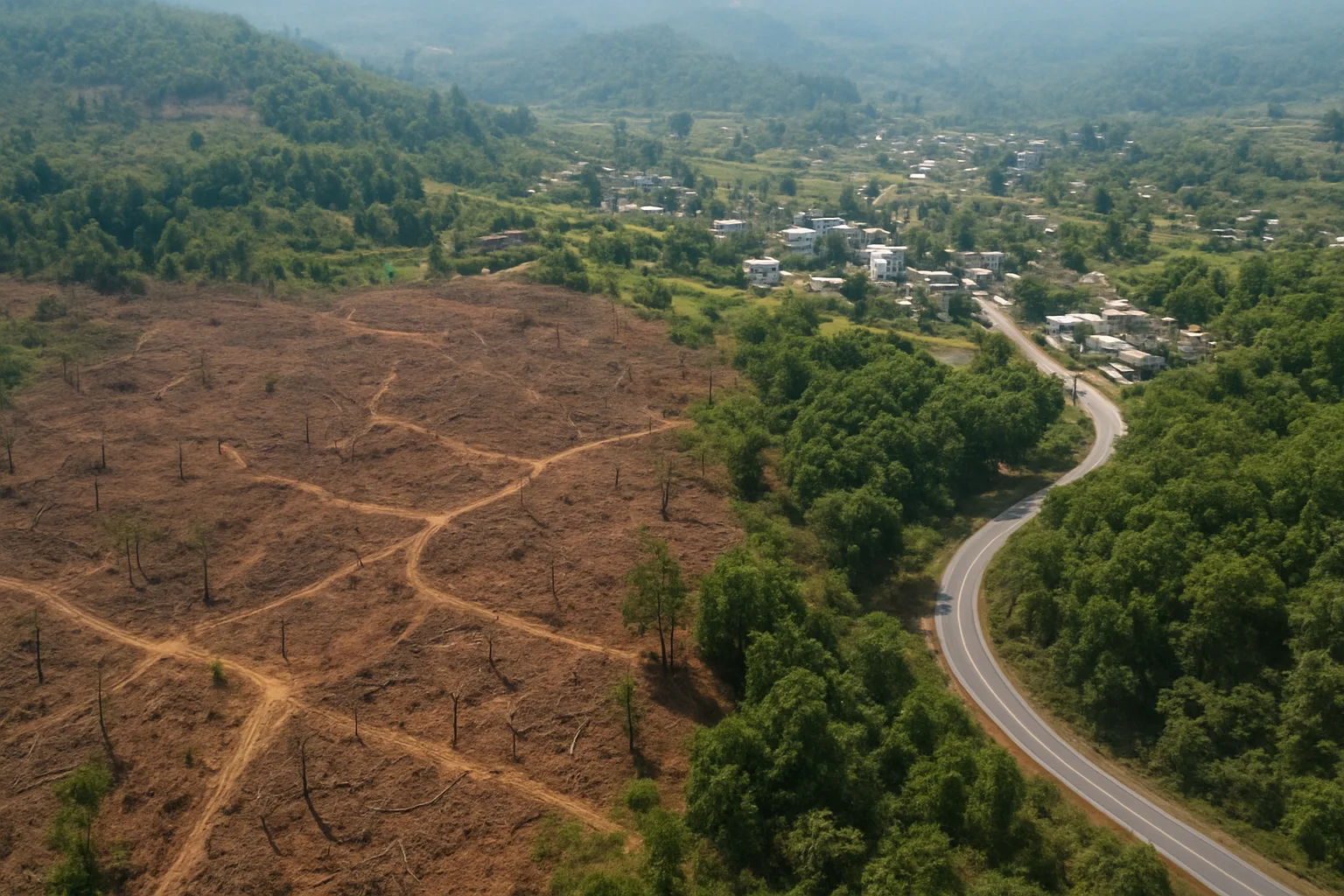
Deforestation remains a critical issue. Despite reforestation efforts, illegal logging and encroachment continue to degrade vital catchments. Urban expansion, especially around Nahan and Paonta Sahib, places further strain on water and waste systems. With each year, the delicate balance between human need and environmental capacity grows more precarious.
Yet, amid these challenges, there are new movements for conservation and sustainable development. Local communities, drawing on both tradition and innovation, are experimenting with rainwater harvesting, organic farming, and community forestry. The echoes of ancient reverence for the land persist in grassroots efforts to protect sacred groves and springs.
The Living Legacy of Sirmaur’s Environment
From the myths of river goddesses to modern water management schemes, Sirmaur’s relationship with its environment has always been complex, dynamic, and deeply felt. The district’s history is written not only in chronicles and gazetteers, but in the terraced fields, forested ridges, and stories of survival handed down through generations.
As Sirmaur faces the daunting realities of the twenty-first century, its ancient roots—shaped by reverence, adaptation, and resilience—offer both warning and inspiration. The next part of our journey will explore how Sirmaur’s people, culture, and identity continue to evolve in response to the environmental challenges that define this remarkable district.
Previous: Tourism and Heritage Sites of Sirmaur
Next: Preserving Folk Traditions in a Changing Society