
Series: History of Mandi, Himachal Pradesh, India
Phase 5: Post-Independence & Modern Mandi — Part 27 of 30
This article appears within a continuing historical series that follows the western Himalayas into the modern era. With the end of princely rule and the integration into independent India, long-standing social and political patterns were reconfigured. This phase examines how development, state formation, and memory interact with inherited landscapes, shaping contemporary life while carrying forward echoes of the past.
Before the Bazaar: Mandi’s Earliest Exchanges
Mist rises from the Beas river as dawn breaks over the valley. In the shadow of the Shivaliks, long before the clang of present-day shop shutters, a different kind of marketplace came alive. Imagine a scene centuries ago: families from hill hamlets gather near the water’s edge, their baskets laden with forest produce, pulses, salt, and wool. Here, in the cradle of what would become Mandi, trade was not yet measured in coins but in trust, necessity, and alliance.
While the earliest chapters of Mandi’s story are woven from oral traditions and folklore—some speak of a settlement called Bhiuli on this riverbank—there is no myth in the evidence of ancient exchange. The region’s valleys and crossing points lay at the intersection of trans-Himalayan trade: salt from Tibet, grains from the Punjab plains, and the rare herbs of the higher slopes. Early communities, from the long-settled Gaddis and Gujjars to itinerant traders, made this region a natural hub long before a town was named.
The Rise of a Hill Town: Political Foundations and Marketplaces
Historical chronicles—such as the Mandi Gazetteer and accounts preserved in Rajput and Pahari traditions—point to the late 15th and early 16th centuries as a turning point. When Raja Ajbar Sen founded the modern town of Mandi around 1527 CE, he chose this location with clear intent. The new capital not only offered defensive advantages but access to riverine trade and established caravan routes.
This was the era of emerging hill states, each with its own ruler, customs, and economic lifeblood. Mandi’s kings encouraged traders from Kangra, Kullu, and even further afield to settle. They granted privileges, regulated weights and measures, and levied taxes on goods crossing the kingdom’s borders. The town’s bazaars began to take shape—first as open-air assemblies, then as defined lanes lined with wooden shops.
Myth and Memory: The Sacred Economy
A distinctive feature of Mandi’s market culture has always been its blend of commerce and devotion. Oral traditions recount how the local gods and goddesses, whose processions still wind through the town’s lanes, were honored with offerings from market earnings. Many believe the city’s name derives from ‘mandi’—a Sanskrit term for market—though this likely reflects later usage rather than original etymology.
Festivals such as Shivratri, which still transform the town into a sea of color and barter, are rooted in this connection between the sacred and the commercial. Ancient temple trusts, too, managed grain stores and sometimes acted as lenders or patrons of local trade. The lines between merchant, devotee, and subject blurred—an enduring feature of Mandi’s social fabric.
Caravans and Connections: Mandi on the Highways of the Hills
By the 18th and 19th centuries, as documented in British and Indian records, Mandi’s markets had become renowned across the western Himalayas. The town’s location on the old salt and wool routes ensured a constant influx of goods and people. Traders from Ladakh, Tibet, and the Punjab mingled with local artisans, bringing not only goods but new ideas and crafts.
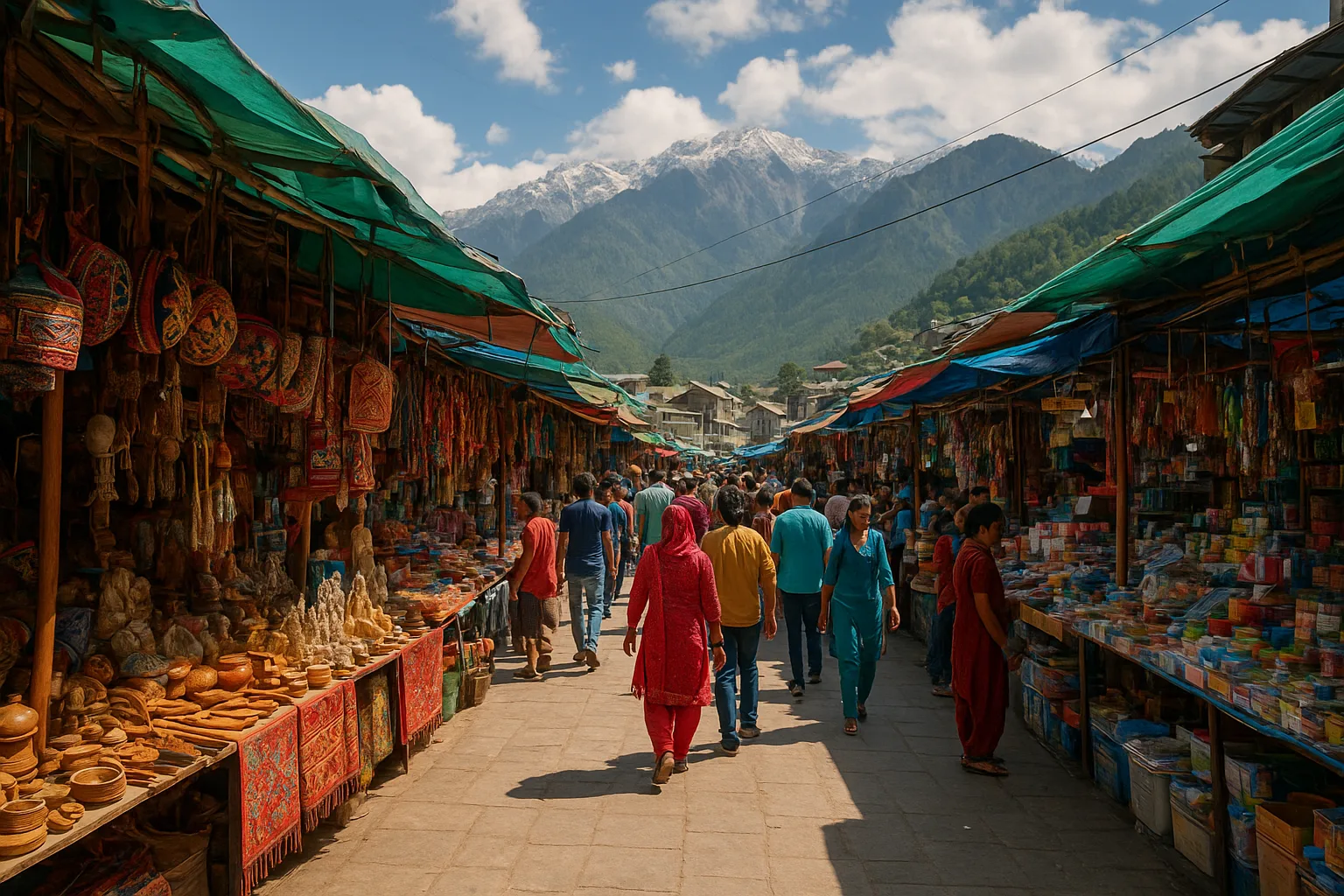
British gazetteers describe the Mandi bazaar as a dense warren of lanes: cloth merchants, spice sellers, and silversmiths jostling for space. The weekly haat, or open market, drew villagers from the surrounding hills to buy, sell, and exchange news. Over time, the town developed distinct market areas—Seri Bazaar, for example, became known for its textiles and handicrafts, while the lower bazaar specialized in food grains and livestock.
Colonial Encounters and the Age of Regulation
The arrival of the British in the mid-19th century brought new regulations and a heightened sense of order to Mandi’s markets. Colonial administrators imposed standardized taxes, introduced new coinage, and sought to document the region’s economic life with unprecedented detail. Market spaces were mapped, shopkeepers registered, and trade fairs regulated.
Yet, while colonial oversight changed the formalities of trade, the underlying rhythms of Mandi’s markets persevered. The annual Mandi Fair became a showcase for both local produce and British goods, from Manchester cloth to new agricultural implements. The town’s status as a central market for the surrounding hill states was only reinforced, even as political boundaries shifted and the world beyond the hills drew closer.
From Independence to the Present: Commerce in a Changing World
After India’s independence in 1947, Mandi underwent dramatic transformation. The once princely state was integrated into the newly formed Himachal Pradesh, and its markets adapted to changing times. The traditional bazaar expanded along new roads; modern shops and transport depots appeared alongside ancient shrines and wooden arcades.
Today, Mandi’s markets are a dynamic blend of old and new. Street vendors hawk seasonal produce just meters from sleek electronics showrooms. Women from distant villages still arrive at dawn, baskets balanced on their heads, to sell wild greens and dairy. The city’s wholesale mandi—now a term for regulated agricultural markets across India—serves farmers from across the district, linking the past’s barter economy to the logistics of the present.
Enduring Legacies: The Spirit of Mandi’s Markets
As the dusk settles and shopkeepers light their lanterns, the echo of centuries past lingers in Mandi’s bustling lanes. The city’s markets are not relics but living spaces: places where the inherited skills of traders and artisans, the rituals of festival commerce, and the pulse of daily life continue to shape identity.
These deep roots—anchored in geography, memory, and the enduring necessity of exchange—give Mandi’s commerce its resilience and character. In the next part of our series, we’ll turn to the transformation of Mandi’s civic life and institutions after independence, exploring how governance and public spaces evolved in tandem with the city’s economic heart.
Previous: Traditional Occupations and Crafts of Mandi
Next: Oral Histories and Folk Traditions of the Mandi Region