
Series: History of Mandi, Himachal Pradesh, India
Phase 5: Post-Independence & Modern Mandi — Part 26 of 30
This article appears within a continuing historical series that follows the western Himalayas into the modern era. With the end of princely rule and the integration into independent India, long-standing social and political patterns were reconfigured. This phase examines how development, state formation, and memory interact with inherited landscapes, shaping contemporary life while carrying forward echoes of the past.
In the Shadow of the Siwalik Hills
As dawn breaks over the Beas River, a faint mist weaves through the stone-paved lanes of old Mandi. The air is heavy with the scent of wet earth and wood smoke. In the heart of the town, shopfronts stir to life—cloth merchants arranging bolts of hand-woven fabric, metalworkers stoking their forges, and women in vibrant shawls gathering at the weekly market. These scenes are not only snapshots of daily life but echoes of centuries-old traditions, shaped by the land, its people, and the shifting tides of history.
Mandi’s story is deeply entwined with the Siwalik foothills, a region that has served as both crossroads and sanctuary for generations. The earliest chronicles—oral legends, folk songs, and the observations of wandering sadhus—hint at a place where trade, faith, and craftsmanship flourished side by side. Even today, the rhythms of traditional occupations pulse beneath the surface of modern routines.
Ancient Foundations: Communities and Early Settlements
The origins of Mandi’s occupational tapestry lie in its earliest settlements. Archaeological finds in the wider region, coupled with local folklore, suggest that the valleys along the Beas and its tributaries attracted diverse groups: agrarian clans, semi-nomadic shepherds, and skilled artisans. According to the regional gazetteers, these early inhabitants maintained a delicate balance with the land—practicing terrace farming, rearing livestock, and weaving reeds into mats and baskets.
Oral traditions speak of the Dhamis and the Gaddis, hill communities whose livelihoods revolved around herding sheep and goats through high pastures, spinning wool by hand, and bartering their wares with neighboring valleys. The sturdy woolen blankets—pattu and chaddar—became both practical necessities and objects of pride, their patterns handed down through generations.
Myth, Belief, and the Craftsman’s Role
Local mythology, woven into the fabric of daily life, elevated certain occupations to near-sacred status. In the tales recited by village elders, the blacksmith (lohār) was not merely a maker of tools but a figure imbued with mystical power—capable of forging both ploughshares and protective amulets. Potters and weavers, too, were celebrated in folk songs, their skills linked to seasonal rituals and temple offerings.
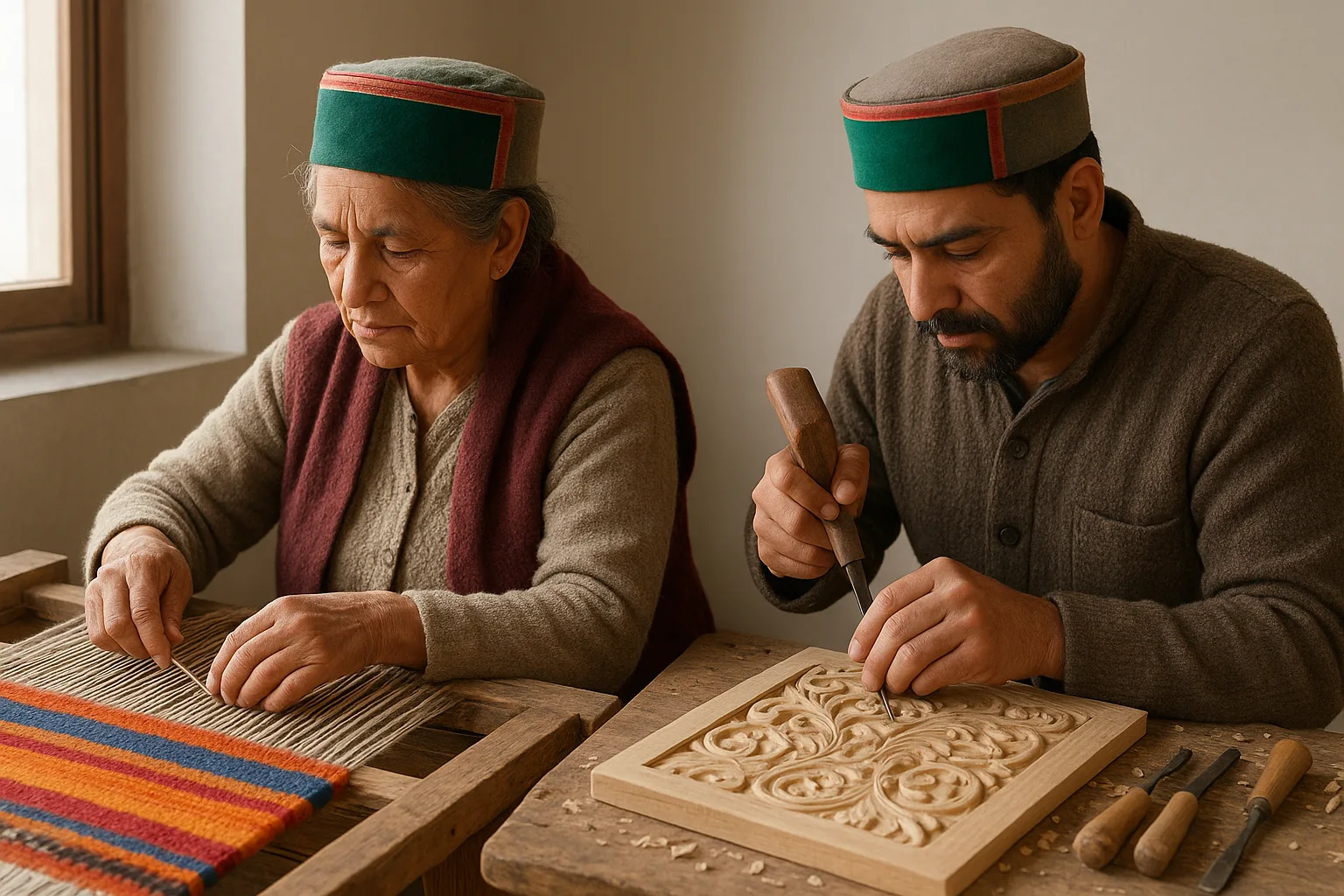
These beliefs found tangible expression in Mandi’s temples and shrines. Stone carvers chiseled intricate motifs into temple walls; coppersmiths hammered devotional vessels for pujas; and woodworkers fashioned ornate doors and beams. The region’s early rulers, seeking divine favor and legitimacy, commissioned grand religious works, blending artistry with spiritual purpose and ensuring that skilled craftspeople occupied a respected place in society.
Emergence of Hill States and the Bazaar Economy
With the rise of the Mandi princely state in the 16th century, as documented in the Ain-i-Akbari and later in colonial-era gazetteers, the economic landscape of the region shifted. The establishment of fortified capitals, such as Bhiuli and later Mandi town itself, created a nucleus for trade and craft. The rulers actively encouraged skilled migrants—metalworkers from the Kangra plains, weavers from Kullu, and traders from Tibet and Ladakh—to settle and contribute to the burgeoning economy.
The old bazaar, still the beating heart of Mandi, became an arena where diverse crafts found their audience. Silversmiths fashioned jewelry distinctive for its filigree work, while dyers and tailors supplied the vibrant garments seen at local fairs. The annual Shivratri Mela, referenced in both court chronicles and British gazetteers, drew artisans and merchants from across the hills, transforming the town into a whirl of commerce and celebration.
Trade Routes, Guilds, and the Flow of Influence
Mandi’s position along the ancient trade routes between the plains of Punjab and the Himalayan highlands profoundly shaped its occupational structure. Caravans carrying salt, wool, and grain paused at the town’s caravanserais, and with them came new techniques, materials, and aesthetic influences. The arrival of Tibetan artisans introduced distinct metalworking designs, while traders from the south brought indigo and spices.
Historical records from the late Mughal and early British periods note the formation of occupational guilds—informal associations of masons, carpenters, and textile workers that regulated quality, prices, and apprenticeship. These guilds not only protected their members’ interests but also fostered the transmission of skills, ensuring that complex crafts such as inlay work, wood carving, and brocade weaving flourished across generations.
Crafts of Identity: Weaving, Metalwork, and Beyond
Among the most enduring symbols of Mandi’s artisan legacy are its textiles. The Chamba rumal, although originating nearby, found enthusiastic patrons in Mandi’s courts, where local women incorporated its embroidery styles into their own domestic crafts. Weavers on primitive looms produced shawls famed for their geometric motifs and vibrant dyes, while the dhurries (floor coverings) of Mandi became sought-after trade items in regional markets.
Metalworking, too, attained remarkable sophistication. From the ceremonial katar daggers worn by nobles to the intricately worked silver ornaments, Mandi’s smiths balanced aesthetics with utility. The town’s coppersmiths, often working in family ateliers, produced ritual vessels and household goods that remain in use today. Pottery, basketry, and stone masonry each developed their own local idioms, reflecting a gradual synthesis of indigenous and imported styles.
Twentieth Century Transformations and Enduring Legacies
Colonial administration and the advent of modern education brought both opportunities and challenges to Mandi’s occupational traditions. The Gazetteer of the Kangra District (which included Mandi until the late 19th century) noted the slow encroachment of factory-produced goods, yet also observed the resilience of local craft guilds and the continued importance of seasonal fairs.
By the mid-20th century, many traditional occupations faced decline as new technologies arrived, but vestiges of the old order persisted. In the bustling markets of Mandi today, one still finds the descendants of those early artisans—silversmiths hunched over workbenches, weavers spinning at handlooms, families tending sheep in the nearby hills. The echoes of ancient trade routes resound in the city’s cosmopolitan spirit and its enduring respect for craftsmanship.
Continuity and Change: Mandi’s Living Heritage
Modern Mandi is a city in conversation with its past. The traditional occupations and crafts that once defined its economy now serve as emblems of identity, sources of pride, and increasingly, of revival. As local schools and cultural organizations work to preserve and promote these skills, the old stories—of shepherds, weavers, and smiths—find new life in the aspirations of a younger generation.
Mandi’s story is far from static. The roots of its occupational heritage continue to shape its social fabric, sustaining connections between past and present. In the next part of this series, we will trace how Mandi’s traditions have adapted to the challenges and opportunities of post-independence India, and how the legacy of its craftspeople lives on in unexpected ways.
Previous: IIT Mandi: A New Chapter in the Region’s History
Next: Markets of Mandi: From Ancient Trade to Modern Commerce