
Series: History of Mandi, Himachal Pradesh, India
Phase 5: Post-Independence & Modern Mandi — Part 25 of 30
This article appears within a continuing historical series that follows the western Himalayas into the modern era. With the end of princely rule and the integration into independent India, long-standing social and political patterns were reconfigured. This phase examines how development, state formation, and memory interact with inherited landscapes, shaping contemporary life while carrying forward echoes of the past.
The Valley Awakes: Dawn Above the Beas
On a crisp autumn morning in 2009, the first students of the Indian Institute of Technology Mandi arrived on the banks of the Uhl River—a tributary of the mighty Beas, long the lifeblood of this ancient land. The mist still lingered between the pine-clad hills, and the air carried the faint scent of cedar and wet stone. For generations, Mandi had been a crossroads: a princely state famed for its fairs, temples, and market days, nestled amid the Himalayan foothills. Now, a new energy pulsed through its valleys—the promise of world-class scientific inquiry, and the arrival of one of India’s most ambitious educational endeavors.
Historical Roots: The Echo of Empires
To understand what IIT Mandi means for the region, one must look back through centuries of layered history. Mandi’s story is ancient, woven with threads of oral tradition and documented kingdom-building. Early chronicles of the region—recorded in gazetteers, local ballads, and the administrative ledgers of colonial officers—describe a land shaped by the confluence of riverine trade, hill polities, and shifting spiritual allegiances.
For centuries before British rule, Mandi was both a market town and the seat of a small but fiercely independent state. Its rulers, from the Sen dynasty onward, carved out autonomy amid the rivalries of neighboring hill kingdoms like Suket and Kullu. Old pathways, some dating back to the early medieval period, connected these valleys to greater commercial routes running from Punjab to Tibet. Trade, faith, and politics all converged here, imprinting the landscape with layers of meaning that persist even as the world changes around them.
From Market Town to Modernity
The colonial period brought new pressures and new opportunities. British administrators, seeking to harness the resources and strategic location of Mandi, documented its customs and economy in painstaking detail. The famous Mandi fairs—Mahashivaratri foremost among them—drew merchants, pilgrims, and performers from across north India. By the early twentieth century, the town had become a regional hub, marked by arched bridges, bustling bazaars, and the enduring hum of local dialects.
Yet even as Mandi’s traditions deepened, the seeds of transformation were being sown. Education took root, first in the form of mission schools and government colleges, then through the aspirations of local families who sent sons and daughters to distant universities. By the time of Independence in 1947, Mandi had acquired a reputation for learning and administrative acumen, even as it retained its distinct hill identity.
The Birth of IIT Mandi: Vision and Challenge
The idea of establishing an Indian Institute of Technology in the heart of Himachal Pradesh was audacious. For decades, the IITs had been symbols of modern India—incubators of scientific talent and engines of economic growth. Yet most were located in plains or metropolitan centers, far from the high valleys of the western Himalayas. In 2009, when the government announced the creation of IIT Mandi, it signaled a deliberate shift: a move to bring world-class research and technical education to regions beyond the urban mainstream.
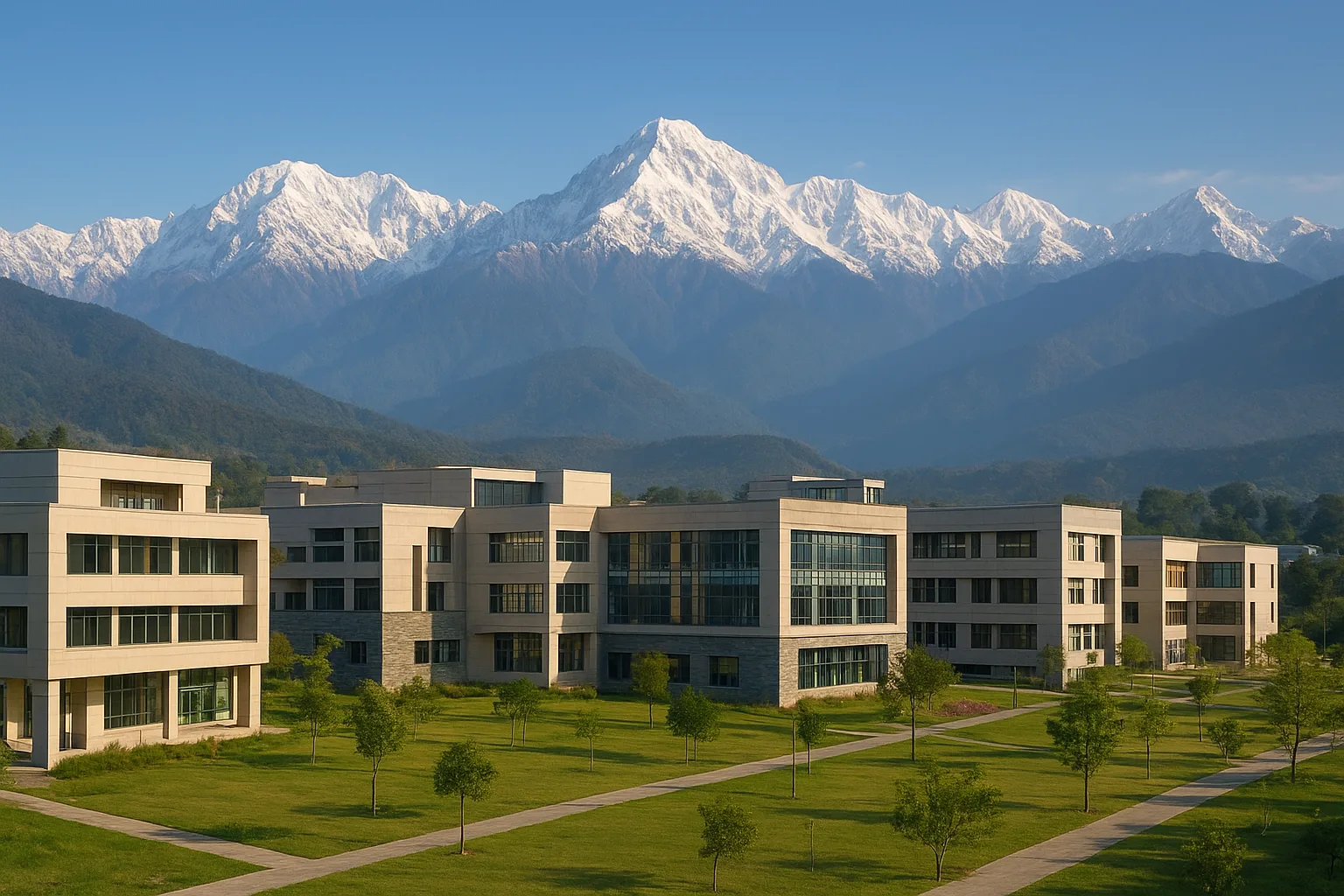
The initial years were marked by both excitement and uncertainty. The temporary campus operated out of Vallabh Government College in the heart of Mandi town, even as bulldozers and surveyors began carving a permanent home from the hillsides of Kamand, some 14 kilometers away. The landscape was both breathtaking and unforgiving—dense forest, erratic weather, and the ever-present challenge of landslides. Faculty and students alike faced logistical hurdles, but also discovered a sense of pioneering purpose, echoing the hardships of earlier settlers and traders who had tamed these valleys.
Transformation: Community, Campus, and the Wider World
By 2012, the Kamand campus took shape: glass and steel rising alongside traditional slate-roofed homes, laboratories equipped for 21st-century inquiry nestled among terraced fields. The arrival of IIT Mandi brought profound changes not only for the students and faculty, but for the surrounding villages and the town itself. Local residents found new opportunities as staff, vendors, and partners. Educational aspiration, always present in Mandi’s DNA, was now matched by access to cutting-edge research and global networks.
Yet the transformation was not without its tensions. Questions arose about the preservation of natural resources, the integration of newcomers, and the cultural shifts that inevitably accompany such rapid growth. The institution’s leadership sought dialogue with panchayats and community elders, balancing the drive for innovation with respect for local traditions. The soundscape of the valley changed: from the tolling of temple bells and the babble of the Beas, to the hum of computers and the cadence of international accents.
Continuity and Change: The Spirit of Mandi
Through all these changes, certain continuities endured. The rivers still shaped daily life, as they had in the days of the Sen kings. The rhythms of festivals and the quiet devotion at ancient shrines remained, even as young engineers plotted the future of artificial intelligence and renewable energy. Oral traditions—tales of local deities, legends of lost kingdoms—continued to be told, now in the shadow of satellite dishes and fiber-optic cables.
For many, IIT Mandi stands as both a break and a bridge: a leap into the unknown, grounded in the deep historical memory of a region long defined by its openness to new ideas. The presence of a global institution amid the hills is not wholly alien, but rather the latest expression of Mandi’s role as a meeting place—where old and new, sacred and scientific, local and global, continually shape one another.
Looking Ahead: The Next Chapter
As the sun sets behind Kamand’s ridges, students gather beside the river, their conversations echoing with ambition and uncertainty, much like the merchants and mystics who once traded stories in the bazaars of Mandi town. The journey of IIT Mandi is still unfolding, its outcomes not yet fully known. But its very existence is testament to the region’s capacity for reinvention—a thread running from ancient settlement to princely state, from colonial market to modern center of learning.
In the next part of our series, we’ll explore how the arrival of new industries and technologies is further transforming the economic and social landscape of Mandi, and what this means for the generations who call these hills home.
Previous: Education and Social Reform in Post-Independence Mandi
Next: Traditional Occupations and Crafts of Mandi