
Series: History of Shimla, Himachal Pradesh, India
Phase 5: Modern Era — Part 27 of 30
This article appears within a continuing historical series that follows the western Himalayas into the modern era. With the end of princely rule and the integration into independent India, long-standing social and political patterns were reconfigured. This phase examines how development, state formation, and memory interact with inherited landscapes, shaping contemporary life while carrying forward echoes of the past.
Beneath the Pines: Shimla on the Brink of Change
At dawn, a pale mist clings to the ridges above Shimla’s Mall Road. The silhouettes of deodar and pine, once the unquestioned sovereigns of these slopes, stand thinned and uncertain. Beneath their canopy, the city stirs—shopkeepers raising shutters, children threading through alleys to school, municipal workers sweeping up yesterday’s dust. But beneath this daily rhythm lies a deeper story, one that binds the region’s ancient roots to the pressing environmental questions of the present era.
From Sacred Forests to Settled Landscapes
Long before the arrival of colonial surveyors, Shimla’s hills were regarded with a mixture of reverence and caution by the communities that traversed or dwelled within them. Oral traditions among the Pahari peoples speak of spirits inhabiting groves and springs, and of a landscape whose contours shaped ritual, livelihood, and settlement. Early settlement patterns, as recorded in regional chronicles and gazetteers, reveal a mosaic of small hamlets and seasonal encampments, their whereabouts guided by water sources and forest clearings.
Historical inference suggests that the region’s ecological stability was maintained through customary rights and local stewardship. The forests of Shimla, dominated by Himalayan cedar and oak, were regarded as communal assets—sources of fuel, fodder, and timber, but also as abodes of deities and sites of annual festivals. The rhythms of agriculture and transhumance were attuned to the mountain climate, with communities adapting to the constraints and boons of altitude, rainfall, and soil.
Hill States and Colonial Interventions
By the early modern period, Shimla’s hills fell under the influence of local chieftains and hill states, such as Keonthal, Bushehr, and the minor thakurates. These polities, often referenced in the records of travelers and later gazetteers, exercised authority over land and forest, issuing rights and levies, and sometimes contesting boundaries. Trade routes—threading west to Bilaspur and east towards Tibet—brought goods and ideas, but also pressures on local resources as populations grew and commerce intensified.
The arrival of the British in the early nineteenth century marked a profound environmental shift. Drawn by the salubrious climate, colonial officials transformed Shimla from a seasonal hamlet into a summer capital. The city’s expansion brought new roads, bungalows, and gardens—but at the cost of extensive deforestation and the reconfiguration of water systems. Gazetteers from the era describe the engineering feats needed to supply water to the growing settlement, and the resulting strain on springs and catchments that had once sustained only small populations.
Urban Growth and the Seeds of Environmental Stress
As Shimla’s political significance grew, so too did its population and footprint. The late nineteenth and early twentieth centuries saw the proliferation of civic infrastructure—railways, reservoirs, and terraced housing—each demanding its share of the hillside. The region’s steep terrain, once a buffer against overdevelopment, became a challenge to be engineered around. Municipal records from the period detail landslides, water shortages, and the gradual replacement of indigenous flora with ornamental species preferred by colonial planners.
This era also witnessed the introduction of new administrative norms for land and forest management. While British forestry policies sought to regulate timber extraction, they often privileged commercial over subsistence needs, disrupting the delicate balance maintained by local custom. Over time, the cumulative impact of these changes began to manifest in soil erosion, reduced groundwater recharge, and the loss of biodiversity.
Modern Shimla: Between Heritage and Hazard
By the time of Indian independence in 1947, Shimla had become a symbol of modernity and aspiration in the Himalayas. Its population continued to swell, fueled by migration and the growth of tourism. Yet, the legacy of earlier interventions—combined with new pressures—set the stage for the environmental challenges now confronting the city.
Today, water scarcity is a recurring crisis. The city’s ancient springs and catchments, once sufficient for scattered hamlets, struggle to meet the needs of over 200,000 residents and a seasonal influx of visitors. Municipal water schemes draw from sources further afield, but leaks, contamination, and over-extraction remain perennial concerns. Historical records indicate that many of the city’s earliest water infrastructure projects were not designed to support such sustained demand, and retrofitting has proved challenging given the terrain.
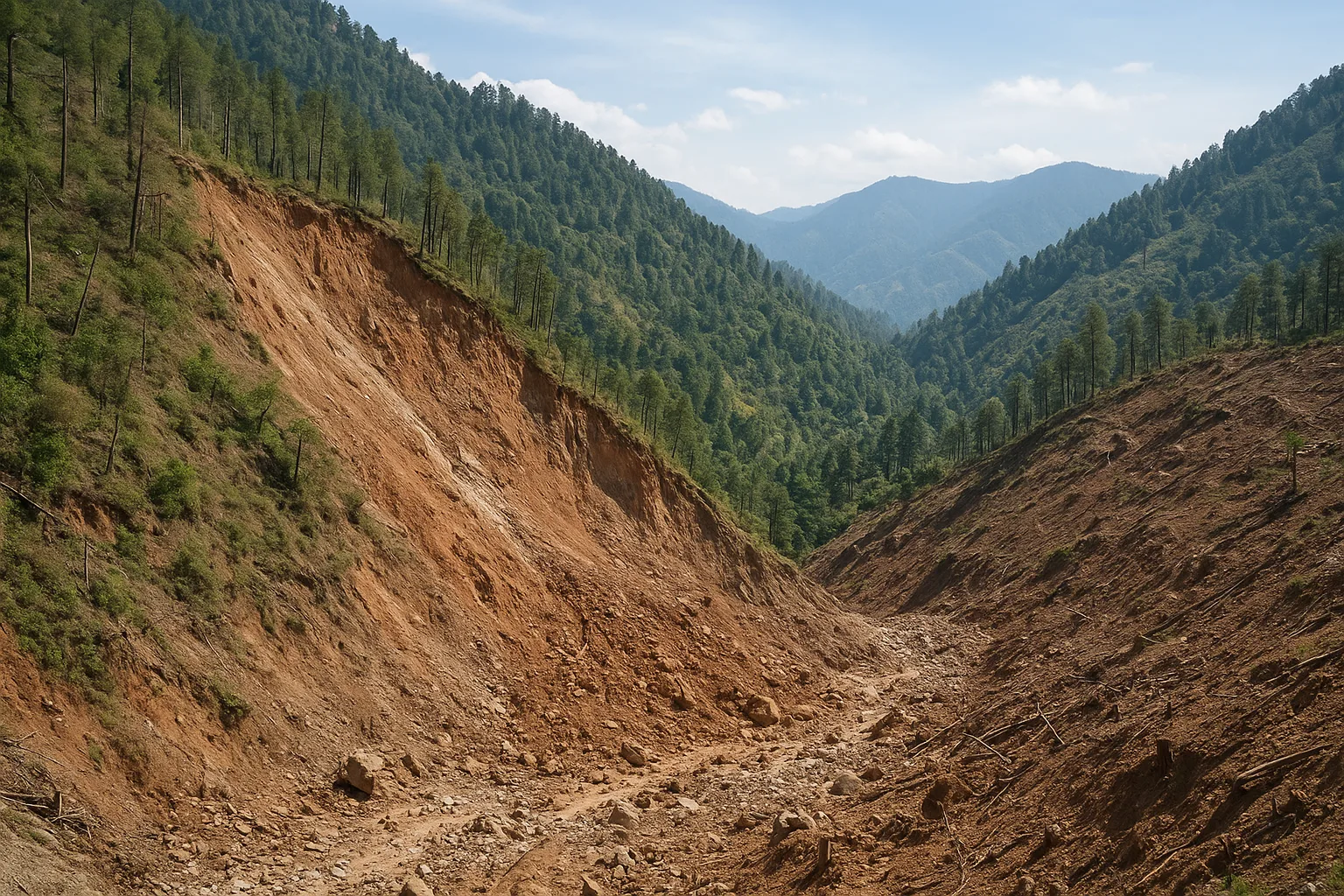
Deforestation and construction on unstable slopes have increased the risk of landslides, particularly during the monsoon months. The memory of devastating events—such as the landslides of 1972 and 2017—remains vivid in local consciousness. Urban sprawl into forested areas has further fragmented habitats, threatening both biodiversity and the cultural landscapes that once defined Shimla’s identity.
Community Responses and Contestations
The people of Shimla have long negotiated the demands of growth and the imperatives of environmental stewardship. Activist groups, drawing on both scientific studies and traditional knowledge, have advocated for stricter regulation of construction, protection of remaining forests, and the restoration of water sources. Oral traditions—recounted in neighborhood associations and local festivals—continue to assert the sacred character of springs, groves, and hilltops, reminding residents of their enduring relationship with the land.
At the same time, the pressures of urban life—housing, employment, and connectivity—complicate the search for solutions. Policymakers and planners must balance heritage conservation with the realities of a growing city, and the lessons of the past with the demands of the present. Regional gazetteers and municipal archives serve as a reminder that many of today’s challenges have deep historical roots, but also that adaptation has always been part of Shimla’s story.
Reflections: Continuity, Change, and the Path Ahead
Shimla’s environmental challenges cannot be understood in isolation from its history. The interplay of belief and custom, colonial intervention, and post-independence transformation has shaped both the region’s landscape and its vulnerabilities. The ancient springs, the sacred groves, the engineered reservoirs—all bear witness to a continuum of human engagement with the environment, marked by adaptation and contestation.
As Shimla looks to the future, the memories of its past—preserved in oral tradition, archival record, and the living landscape—offer both caution and inspiration. The next part of this series will examine how contemporary efforts in environmental conservation, civic engagement, and policy reform are drawing on these historical legacies to envision a more sustainable path for Shimla and its people.
Previous: Preserving Colonial Heritage in a Growing City
Next: Life of Residents in Contemporary Shimla