
Series: History of Chamba, Himachal Pradesh, India
Phase 5: Modern Era — Part 24 of 30
This article appears within a continuing historical series that follows the western Himalayas into the modern era. With the end of princely rule and the integration into independent India, long-standing social and political patterns were reconfigured. This phase examines how development, state formation, and memory interact with inherited landscapes, shaping contemporary life while carrying forward echoes of the past.
Morning Light Over Chamba: A Living Heritage
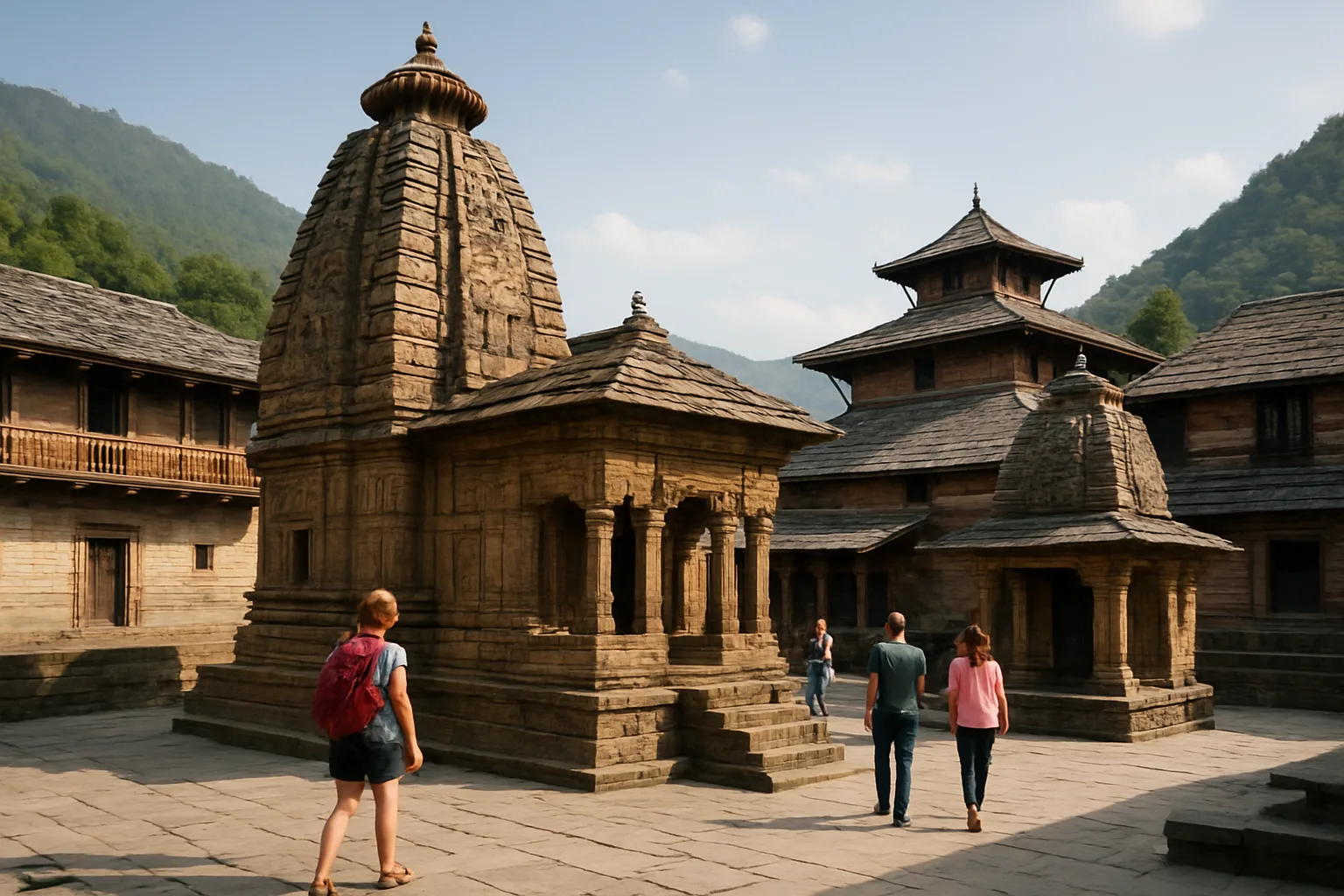
It is dawn in Chamba. The snow-fed Ravi River murmurs below the town’s terraced roofs. From the ancient Lakshmi Narayan temple complex, the clang of a bell drifts into the mist, mingling with the faint chatter of early vendors setting up their market stalls. On the main bazaar, a handful of travelers—rucksacks and cameras in hand—step gingerly over centuries-old flagstones. For them, Chamba is a destination. For those who call it home, it is a place where history is not just remembered but lived, every single day.
Chamba’s identity as a crossroads—between Himalayan passes, between old empires and new states, between memory and modernity—has always shaped its story. As the 21st century brings a steady influx of visitors, the town stands at a fragile threshold, striving to welcome the world without losing the essence that makes it unique.
From Ancient Crossroads to Hill State
Long before Chamba became a name on tourist maps, its valley was a cradle of human movement and settlement. Oral traditions, preserved in the songs and stories of local bards, speak of wandering sages and ancient tribes—mythic tales that place Chamba among the earliest inhabited regions of the western Himalaya. These stories, colored by the hues of faith and imagination, are woven into the fabric of daily life but are distinct from the careful record-keeping of later centuries.
By the early medieval period, as chronicled in regional gazetteers and the courtly narratives of the Rajput hill states, Chamba emerged as a principality of growing importance. The founding of the town itself is generally traced to Raja Sahil Varman in the 10th century CE, who shifted his capital here from Bharmour, seeking both strategic advantage and spiritual blessing. The Lakshmi Narayan temples—still the sacred heart of Chamba—were built soon after, anchoring the town’s identity for generations to come.
Over time, the valley drew a tapestry of communities: shepherds and tillers, artisans and traders, each carving out their place in the intricate mosaic of Pahari society. Trade routes snaked over high passes, linking Chamba to Kashmir, Tibet, and the bustling plains below. These exchanges left their mark not just in commerce, but in language, dress, and ritual—setting the roots for a distinctive regional culture.
Belief, Craft, and Everyday Life
If the bones of Chamba are its stone temples and fortifications, its soul lies in the living traditions that have survived the centuries. The town’s festivals—Minjar, Suhi Mata, and others—are not museum pieces but vibrant expressions of community, faith, and the lingering power of oral tradition. Their origins, often entwined with local mythology, are recounted in stories passed from grandmother to grandchild, echoing the rhythms of a time before written chronicles.
Chamba’s famed crafts—especially its miniature paintings and exquisite embroidered rumals—are another inheritance. Historical records, such as British gazetteers and earlier administrative documents, confirm the town’s reputation as a center of artistry, patronized by its rulers and sought after by distant courts. Even as industrial production has transformed the economic landscape, these crafts remain a vital part of Chamba’s identity, their motifs and techniques preserved by a dwindling but passionate community of artisans.
The Coming of the Modern Era: Roads, Visitors, and Change
The late 19th and early 20th centuries marked a shift. As British administrators extended roads into the hills and new forms of communication shrank the perceived distance between Chamba and the outside world, the region’s insularity began to erode. Early gazetteers and travelers’ accounts describe a “hidden kingdom” opening its gates, its rulers eager to showcase their culture but wary of outside influence.
Tourism, in its earliest form, meant royal visitors and British officers seeking respite from the plains. But after independence, and especially in the latter decades of the 20th century, Chamba’s dramatic landscapes and rich cultural traditions drew increasing numbers of Indian and foreign travelers. Guest houses and hotels replaced old dharamshalas, and the rhythms of the market began to shift with the tourist seasons.
Tourism’s Double-Edged Sword
For many residents, tourism brought new opportunities: livelihoods tied to hospitality, handicrafts, and guiding. Yet the influx of outsiders also posed new challenges. With each season, the pressures on Chamba’s fragile heritage grew more intense—ancient temples strained by foot traffic, traditional festivals diluted for spectacle, and the younger generation lured away by the promise of modern jobs elsewhere.
Local leaders and cultural organizations soon recognized the paradox: the very traditions that attracted visitors were at risk of being eroded by their presence. Efforts to preserve Chamba’s heritage gained urgency. Some initiatives focused on documentation and restoration—repairing temple roofs, archiving old manuscripts, reviving endangered dances. Others sought to foster a deeper understanding between visitors and hosts, encouraging responsible tourism practices and heritage walks that prioritize education over entertainment.
These efforts are not without tension. There are debates—sometimes heated—about which aspects of culture should be preserved, and who gets to decide. The interplay between authenticity and adaptation, between economic necessity and cultural pride, remains unresolved. Yet the conversation itself is a testament to Chamba’s resilience—a willingness to grapple openly with the complexities of change.
Guardians of Memory: Community and Continuity
Central to Chamba’s cultural preservation are its people. Elders recount the town’s history not as distant legend but as lived experience; artisans teach their skills to apprentices, keeping centuries-old techniques alive; priests and temple caretakers maintain rituals whose origins predate even the oldest stone carvings.
Women, often the custodians of both oral tradition and craft, play a pivotal role. Their songs and stories, their embroidery and cooking, are repositories of collective memory—an unbroken chain linking the present to the past. Schools and local NGOs have begun to document these traditions, sometimes enlisting the help of visiting scholars, but always with an eye toward keeping the knowledge rooted in its community of origin.
Festivals remain a focal point. While some elements are inevitably adapted for visitors, the core rituals—offerings, processions, communal meals—are fiercely protected. In these moments, Chamba’s many layers of history converge: the ancient and the modern, the sacred and the everyday, the local and the global.
Present Challenges, Enduring Spirit
Today, Chamba is caught in the crosscurrents of aspiration and anxiety. Its landscape is dotted with new guesthouses and mobile towers, even as old slate roofs and wooden balconies cling stubbornly to the hillsides. Young people are as likely to work in tourism as in farming or craft, and the pull of larger cities is ever-present.
Yet the sense of place endures. Walk through Chamba’s old quarter at dusk and you will hear the same temple bells that greeted the town’s founders, smell the same woodsmoke curling from kitchen fires, and catch the strains of folk melodies that have survived invasions, earthquakes, and political upheaval. The challenge for Chamba is not simply to preserve its past, but to ensure that its heritage remains a living, breathing part of its future.
As our series continues, we will turn next to the individuals and organizations—both local and from afar—who are shaping Chamba’s path forward, blending innovation with tradition as they chart a new course for this mountain town.
Previous: Education and Social Change in Chamba
Next: Challenges of Development in Chamba