
Series: History of Chamba, Himachal Pradesh, India
Phase 5: Modern Era — Part 25 of 30
This article appears within a continuing historical series that follows the western Himalayas into the modern era. With the end of princely rule and the integration into independent India, long-standing social and political patterns were reconfigured. This phase examines how development, state formation, and memory interact with inherited landscapes, shaping contemporary life while carrying forward echoes of the past.
The Dawn over Ravi Valley: An Unyielding Land
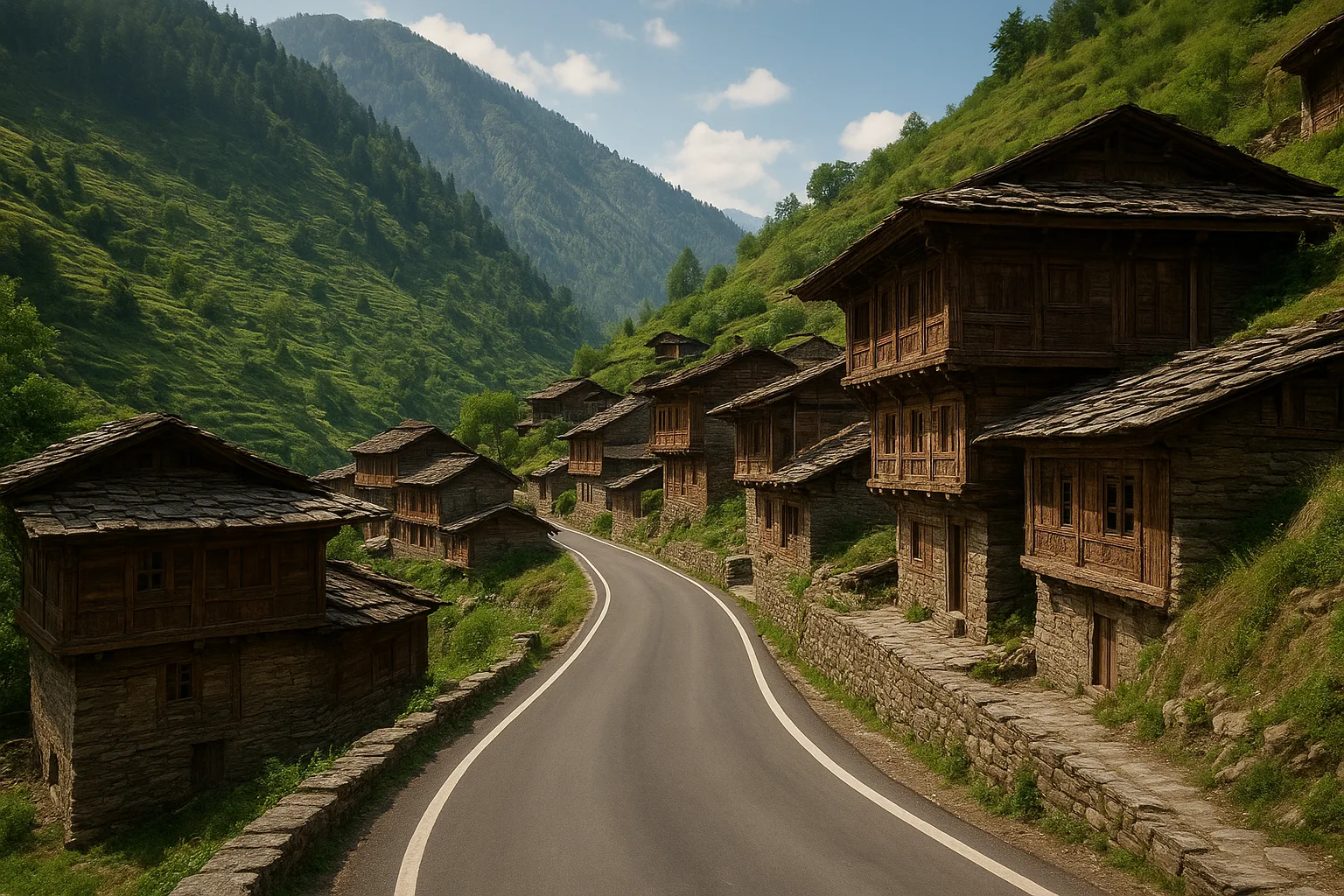
The sun rises late in the valleys of Chamba. On a crisp morning in the early twentieth century, its first rays catch the peaks of the Dhauladhar, filtering down to the narrow terraces where farmers coax life from the earth. The air is tinged with woodsmoke, the echo of a temple bell drifts from a hillside hamlet, and the Ravi River, ancient conveyor of stories and trade, marks the pulse of this Himalayan enclave. Even now, the land feels remote—its beauty matched only by the challenges it poses to change.
Centuries before, Chamba had already acquired a reputation for being both a cultural haven and a region difficult to govern or connect. The earliest chronicles—echoed in the annals of the Rajput courts and the regional gazetteers—describe a principality carved from myth and memory, where survival and tradition were shaped as much by the mountains as by the rulers.
Myth, Memory, and the Foundations of Settlement
Oral traditions in Chamba speak of the sage Charpat Nath and the founding king Sahil Varman, their exploits recounted in fireside tales and temple murals. While these stories are embroidered with legend, they reflect real anxieties of place and belonging. Historical inference, drawn from copper plate inscriptions and early records, suggests that Chamba’s settlement patterns—clustered villages on defensible ridges, terraced fields hewn from steep slopes—were a direct response to the land’s demands and the need for safety in a turbulent era.
The earliest documented history places Chamba within the wider network of hill states that emerged in the shadow of larger empires. Its rulers carefully negotiated autonomy, sometimes paying tribute to more powerful neighbors, at other times asserting independence. The region’s geography both protected and isolated it, fostering a sense of distinct identity but also complicating efforts to unify, expand, or modernize.
Trade Routes and the Challenge of Connectivity
Long before the British era, Chamba’s valleys served as arteries for Himalayan trade. Caravans laden with wool, salt, and precious stones wound their way from Ladakh and Kashmir to the plains, stopping at vibrant markets in Bharmour and Chamba town. These ancient routes, traced in local memory and early travelogues, were lifelines but also fraught with risk: landslides, banditry, and the ever-present threat of political unrest.
Yet, the same routes that brought prosperity also exposed Chamba’s vulnerability. When passes closed in winter or rival chieftains blocked the way, isolation returned with a vengeance. It is little wonder that development—measured in roads, schools, or reliable administration—proved uneven and slow. The very mountains that made Chamba a sanctuary also hemmed in its ambitions.
Hill States, Power, and the Weight of Tradition
By the late medieval period, Chamba had matured into a sophisticated hill state, with its own courtly culture, patronage of the arts, and a complex hierarchy of local clans and religious institutions. The rajas maintained order through a careful balance of force and ritual, often invoking divine sanction to legitimize their rule. The courts became renowned for miniature painting and temple architecture, yet the rhythms of rural life remained largely unchanged.
Local governance was rooted in panchayats and village assemblies, their customs handed down through generations. These structures offered stability, but also resisted outside interference. When new ideas—be they administrative reforms under the British or educational missions—arrived in the 19th century, they encountered deep-rooted skepticism. The voice of the elders, the authority of the temple, and the memory of past famines all shaped the community’s willingness to embrace or reject change.
British Rule and the Slow March of Modernization
The arrival of the British in the Punjab hills in the mid-19th century brought new forces to bear on Chamba’s development. Roads and telegraphs were pushed into the valley, often at great expense and with little local consultation. Gazetteers from this era describe the formidable task of bridging rivers and tunneling through mountains, the cost measured not just in rupees but in lives lost to landslides and disease.
The colonial administration introduced new models of revenue collection, legal codes, and education, but the impact was uneven at best. Many of Chamba’s villages remained as isolated as ever; traditional elites adapted, but the poor often found themselves caught between old obligations and new burdens. The British, for their part, admired Chamba’s order and beauty but lamented its resistance to rapid change. In their reports, the phrase ‘difficult country’ appears again and again.
Post-Independence Aspirations and Enduring Obstacles
When India gained independence in 1947, the princely state of Chamba was merged into Himachal Pradesh—a moment filled with both hope and anxiety. The new Indian state promised roads, electricity, and schools, and for the first time, the possibility of genuine integration with the rest of the nation. Yet the challenges that had always shaped Chamba did not vanish overnight. The terrain still dictated the pace of infrastructure; monsoons washed away progress as quickly as it came. In many villages, the rhythms of life remained tied to ancient cycles of planting and pilgrimage.
Efforts at development often ran aground on old dilemmas: how to preserve unique traditions while opening to the outside, how to balance ecological fragility with the lure of tourism, how to ensure that the benefits of growth reached remote hamlets as well as the district center. The voices of elders still carried weight, even as younger generations looked to jobs in distant cities.
The Present Landscape: Continuity and New Challenges
Today, Chamba stands at a crossroads. The district’s historic palaces and temples draw travelers from across India, and its art and music have found new audiences. Yet the roads that twist through its valleys still bear the scars of landslides. Schools and clinics have multiplied, but disparities remain stark between urban and rural, rich and poor.
Efforts to promote sustainable tourism, revive handicrafts, and improve connectivity are ongoing, but so too are debates about identity and change. The memory of ancient migrations, the weight of oral tradition, and the enduring presence of sacred geography shape every conversation about progress. In Chamba, development is never a simple story of overcoming the past—it is a careful negotiation with it.
Roots That Shape the Future
The challenges of development in Chamba are not merely obstacles to be overcome—they are part of a story that stretches back a thousand years. The land, the legends, and the lived experience of its people have always set the terms of engagement with the outside world. As the district seeks its place in modern India, those ancient patterns continue to inform choices large and small.
In the next part of our journey through Chamba’s history, we will see how its communities responded to the economic and social transformations of recent decades, exploring the new forms of resilience and adaptation that are emerging in the shadow of the hills.
Previous: Tourism and Cultural Preservation in Chamba
Next: Protecting Chamba’s Temple Heritage