
Series: History of Sirmaur, Himachal Pradesh, India
Phase 5: Modern Era — Part 24 of 30
This article appears within a continuing historical series that follows the western Himalayas into the modern era. With the end of princely rule and the integration into independent India, long-standing social and political patterns were reconfigured. This phase examines how development, state formation, and memory interact with inherited landscapes, shaping contemporary life while carrying forward echoes of the past.
At Sunrise Among the Fields of Sirmaur
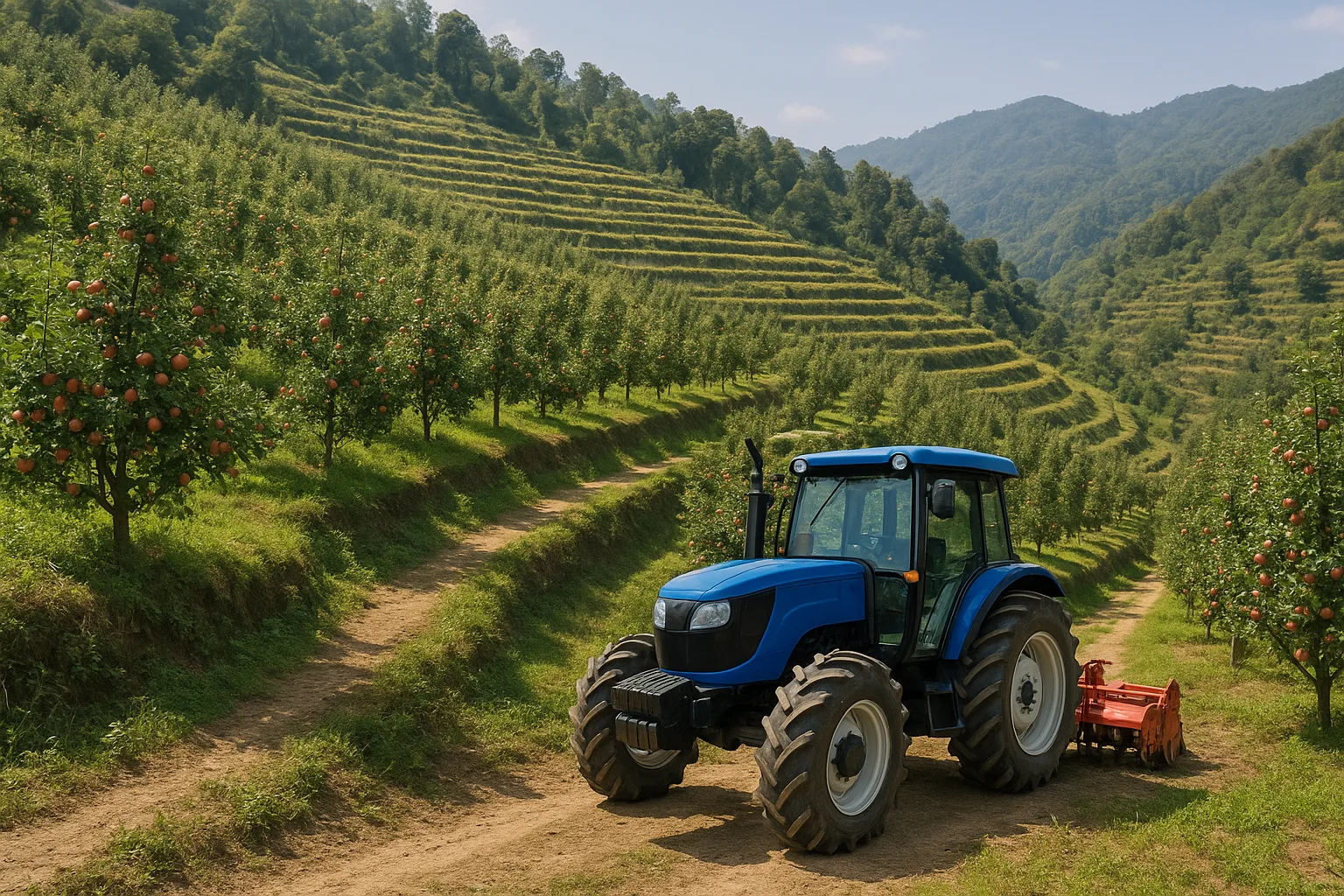
The sun rises slowly over the terraced slopes of Sirmaur, casting a golden glow on fields quilted with wheat and barley, orchards bustling with the promise of apples, and villages coming to life with the gentle clang of cowbells. Even in the hush of early morning, the pulse of the rural economy can be felt: a rhythm that has endured for centuries, shaped by geography, tradition, and the relentless ingenuity of its people.
Ancient Roots and the Landscape’s Memory
Long before the arrival of modern surveyors and planners, Sirmaur’s landscape was already etched with the patterns of human subsistence. Oral traditions among the region’s oldest communities recall a time when the forest and river valleys provided both sanctuary and sustenance. The Giri and Yamuna rivers, ever-present lifelines, guided the earliest settlements to fertile alluvial plains and forest clearings, their courses shaping not just where people lived, but what they grew and how they traded.
By the late first millennium CE, as inferred from regional chronicles and gazetteers, Sirmaur had become a crossroads of hill and plain. Early communities—predominantly agrarian clans—settled in clusters, using slash-and-burn techniques before gradually adopting more sustainable terracing. These practices, passed down through generations, remain visible in the stepped fields that still cling to the hillsides today.
The Hill States and Patterns of Authority
Sirmaur’s political history, well-documented in both British-era gazetteers and local chronicles, shaped the rural economy in profound ways. The rise of the Sirmaur princely state in the medieval period brought a new layer of organization to land and labor. Rajas and their administrators imposed land revenue systems, granted jagirs, and encouraged the introduction of cash crops suited to the region’s microclimates.
Oral traditions and bardic tales recount how village councils (panchayats) balanced the authority of distant rulers with the needs of local cultivators. The social fabric—woven from Rajput landholders, Brahmin priests, and the labor of tenant and artisan castes—created a complex hierarchy, but also a resilient sense of community stewardship over fields, forests, and water sources.
Traditional Crops and the Flavors of the Land
The agricultural year in Sirmaur followed the rhythms of the monsoon and the demands of its rugged terrain. Wheat, barley, and millet were the staples—grains that required careful management of water and soil, and which formed the backbone of village diets. Legumes, pulses, and leafy greens complemented these grains, ensuring a measure of dietary resilience even in years of poor rainfall.
Distinctive to Sirmaur was the cultivation of spice and medicinal plants, knowledge of which passed through generations by word of mouth. Local lore speaks of the region’s wild honey, turmeric, and ginger—commodities that found their way via mule caravans to neighboring hill states and, occasionally, to the great plains below.
The Horticultural Turn: Apples, Citrus, and New Ambitions
The 20th century, as recorded in government reports and villagers’ recollections, brought seismic changes. With the encouragement of agricultural extension services and the arrival of new seed varieties, Sirmaur’s cultivators began to experiment with horticulture. Apple orchards—once the preserve of higher-altitude Kinnaur and Shimla—crept into Sirmaur’s valleys, their blossoms heralding a new era of rural prosperity.
Citrus fruits—particularly the famed Sirmauri malta (orange) and kinnow—soon followed. Where wheat and barley had once dominated, neat rows of saplings transformed the landscape and the aspirations of local farmers. The shift from subsistence to market-oriented agriculture required new skills and new forms of cooperation, as village cooperatives and self-help groups emerged to help negotiate prices, transport, and storage.
Rural Economy in the Age of Uncertainty
Today, Sirmaur’s rural economy is a tapestry of persistence and adaptation. Traditional crops still anchor village diets, but the cash economy—driven by fruit, vegetables, and even floriculture—offers new opportunities and risks. Roads and cold storage facilities have connected remote hamlets to urban markets, but also exposed local producers to the volatility of global prices and unpredictable weather patterns.
Women, often the custodians of terrace fields and kitchen gardens, have emerged as agents of change, leading cooperative ventures and championing organic methods. Meanwhile, the younger generation straddles old and new, drawn to both the steady rhythms of the land and the restless promise of migration or higher education.
Continuity and Change: Sirmaur’s Living Heritage
The echoes of Sirmaur’s agrarian past are everywhere—in the irrigation channels first laid by ancestors, the communal festivals marking sowing and harvest, and the stories exchanged across generations. While the contours of the rural economy shift with each season and each generation, the underlying ethic of stewardship endures.
As we prepare to turn the page to the next chapter—exploring the impact of education, health, and social reform in Sirmaur—one truth stands clear: the land remains both witness and participant in the region’s unfolding story. The fields and orchards of Sirmaur, shaped by centuries of resilience and adaptation, continue to nourish not just livelihoods but the very identity of its people.
Previous: Industrial Growth and Economic Change in Sirmaur
Next: Urban Growth in Nahan and Surrounding Towns