
Series: History of Chamba, Himachal Pradesh, India
Phase 5: Modern Era — Part 23 of 30
This article appears within a continuing historical series that follows the western Himalayas into the modern era. With the end of princely rule and the integration into independent India, long-standing social and political patterns were reconfigured. This phase examines how development, state formation, and memory interact with inherited landscapes, shaping contemporary life while carrying forward echoes of the past.
The Dawn in the Valleys: Chamba’s Early Learning Traditions
The morning air in the Ravi valley often carries a quiet vigor—a sense of continuity, as if the mountains themselves remember every passing generation. In the early centuries, long before the clang of school bells or the rustle of exercise books, children in Chamba learned under the open sky. Knowledge flowed from elders to youth, not just as stories, but as living practices: how to read the clouds for rain, how to recite ancestral lineages, how to invoke the gods of harvest and hearth.
These were the centuries when myth, memory, and everyday skill formed the fabric of education. Oral traditions dominated, each village holding its own stories, sometimes echoing the Mahabharata or local epics. The region, as gazetteers note, was a palimpsest of belief systems—Shaivism, Vaishnavism, and local animistic customs—each shaping what was taught and valued. Children learned by apprenticeship, by song, by ritual, and by watching the elders. There were no schools as we know them, but there was no shortage of learning.
Script, Stone, and the Rise of Statehood
Chamba’s documented political history begins in the mid-10th century, with Raja Sahil Varman’s founding of the town that still bears his name. As the new capital took root, so did new forms of record-keeping and learning. Stone inscriptions and copper-plate grants, some preserved in the Chamba museum, reveal how literacy became entwined with administration and faith.
Temples like the Lakshmi Narayan complex became not only spiritual centers but also informal academies. Brahmins, scribes, and artisans gathered here, exchanging ideas and skills alongside rituals. The state’s patronage of Sanskrit learning—evident from inscriptions and early chronicles—transformed education from private oral tradition to more formalized, if still exclusive, study. Yet, access remained limited, largely to the priestly and ruling classes. For most, knowledge continued to flow through oral tradition, shaped by seasonal rhythms and community needs.
Trade Routes and the Crossroads of Culture
The high passes and river valleys that cut through Chamba were not barriers, but bridges. The region’s proximity to Ladakh, Kashmir, and Kangra exposed it to the currents of trade and religious exchange. Along these trade routes, Buddhist monks, merchants, and wandering ascetics brought manuscripts and new ideas. The Chamba valley, as noted in colonial gazetteers, became a site of mingling—where the Pahari language absorbed words from Sanskrit, Tibetan, and Punjabi, and where new schools of thought occasionally challenged old certainties.
Local communities—Gaddis, Gujjars, Rajputs, and Brahmins—each maintained their own customs of education. Among the Gaddis, pastoral knowledge and oral ballads were prized; among the Rajputs and Brahmins, courtly etiquette and scriptural learning. These systems coexisted, sometimes clashing, more often blending in the slow churn of Himalayan life.
The Colonial Encounter: Schools, Reform, and Resistance
The 19th century brought seismic change. British administrators, charting the mountains for revenue and governance, saw education as both a tool and a challenge. Missionaries and colonial officers advocated for modern schooling, establishing the first government-aided vernacular schools in the late 1800s. For the first time, girls and lower-caste children sometimes found pathways—albeit narrow ones—into formal education.
Yet, change was neither linear nor uncontested. Many elites viewed these schools with suspicion, fearing the erosion of local values and hierarchies. According to the 1911 Chamba State Gazetteer, reformers and traditionalists debated fiercely: Should children learn English or Sanskrit? Should girls be taught at all? The answers varied from village to village, family to family.
The Twentieth Century: New Aspirations, Enduring Challenges
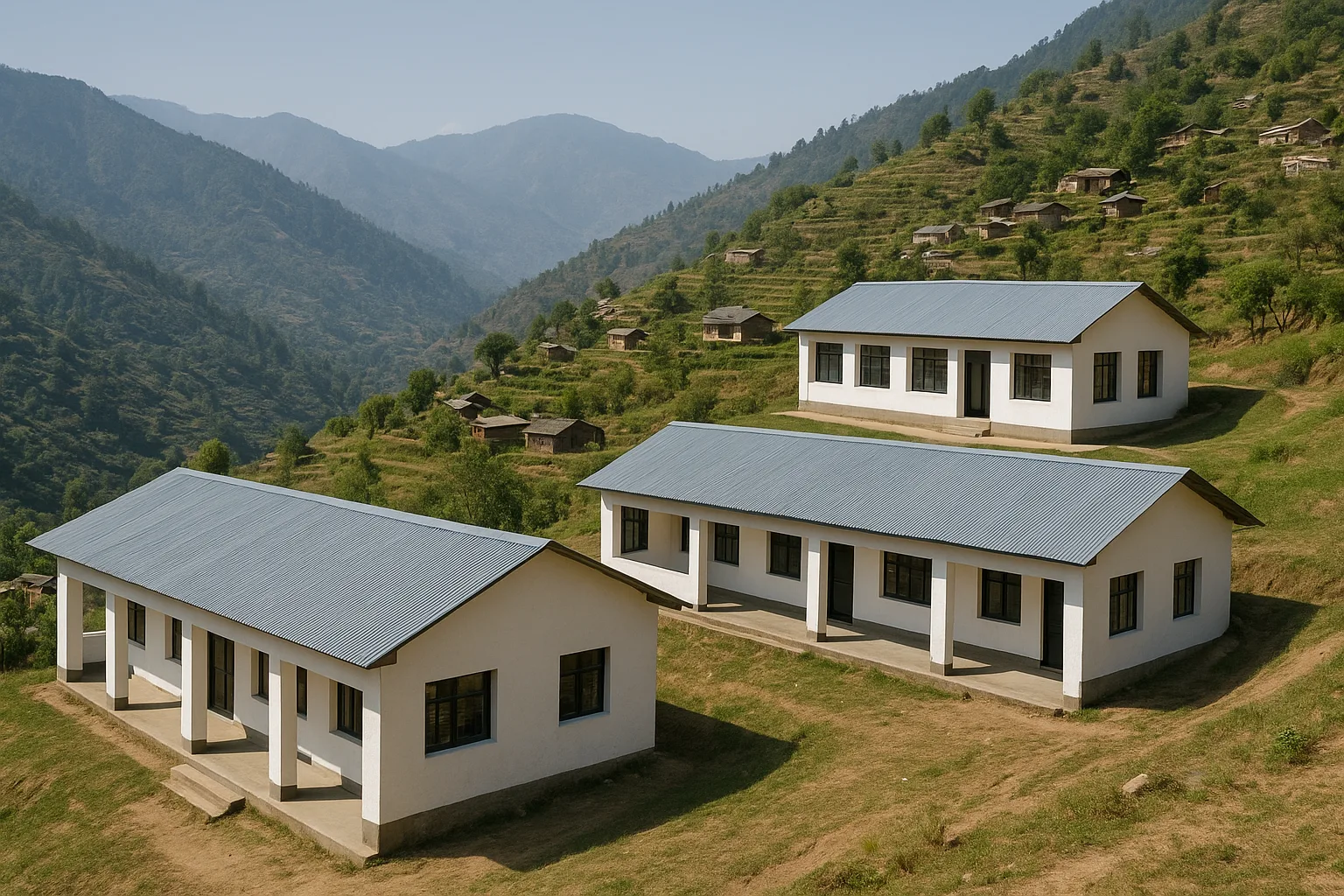
With Indian independence, education in Chamba entered a period of profound transformation. The state became part of the Indian Union; the old princely order faded. New schools—primary, secondary, and eventually colleges—emerged in Chamba town and remote villages alike. For the first time, education was cast as a right, not merely a privilege.
Still, the pace of change was uneven. Geography remained both a challenge and a shield. Hill villages, separated by rivers and ridges, often lagged behind. Yet, stories abound of young people walking miles to attend class, of teachers braving landslides and snow, of parents sacrificing for a future they could not fully imagine. Education became a crucible for both hope and disappointment: a means to government jobs, but also a painful marker of inequality for those left behind.
Communities at the Crossroads: Continuity and Adaptation
Today’s Chamba is a mosaic of the ancient and the modern. In the shadow of old temples, students prepare for national board exams. Women’s literacy, once unthinkable, has grown—though not evenly. Local NGOs, often led by teachers or retired officials, champion adult education and vocational training. The echoes of oral tradition survive in folk songs and festivals, even as smartphones and internet cafes reshape how the young learn and connect.
The Gaddis and Gujjars now send daughters to school, though pastoral migration still disrupts the academic calendar. Caste and gender barriers have not vanished, but they have softened. In many homes, grandmothers recall a world where knowledge was sung, not written; their grandchildren dream of universities in Shimla or Chandigarh.
Legacy and Living Memory
Chamba’s journey through education is neither a story of simple progress nor of static tradition. It is a tale of adaptation: how communities, facing the crosswinds of history, have negotiated what to preserve and what to change. The stones of ancient temples, the ink of colonial records, the voices of village elders—all bear witness to a region where learning has always been both a survival skill and a mark of identity.
These ancient roots continue to shape Chamba today. The questions once posed—who should learn, what should be taught, whose knowledge matters—still echo in classrooms and community halls. As we move forward in this series, the next part will examine how Chamba’s artists and artisans have drawn from this deep well of tradition, crafting a vibrant cultural heritage that endures even as the world changes around them.
Previous: Post-Independence Governance in Chamba
Next: Tourism and Cultural Preservation in Chamba