
Series: History of Mandi, Himachal Pradesh, India
Phase 5: Post-Independence & Modern Mandi — Part 23 of 30
This article appears within a continuing historical series that follows the western Himalayas into the modern era. With the end of princely rule and the integration into independent India, long-standing social and political patterns were reconfigured. This phase examines how development, state formation, and memory interact with inherited landscapes, shaping contemporary life while carrying forward echoes of the past.
The First Light on a Changing Valley
As dawn crept across the Beas valley, the ancient town of Mandi stirred to a familiar rhythm: the distant clang of temple bells, the low murmur of the river, and, in the distance, the rumble of an engine breaking the mountain silence. In that moment—a winter morning in the early decades after India’s independence—the town stood at a threshold. It was a place shaped for centuries by footpaths, mule tracks, and the slow commerce of hillmen, but now confronted by the promise and pressure of roads, buses, and the transformation that would follow.
Mandi, long a crossroads in the heart of Himachal Pradesh, was no stranger to movement. Yet, as the 20th century unfolded, the nature of that movement changed. The arrival of modern transport—first trickling in with colonial ambition, then surging forward in the years after 1947—would alter not just how people traveled, but how they lived, traded, and imagined their place in the wider world.
Ancient Trails: The Roots of Connectivity
Long before tar or tarmac, the Mandi region was etched with paths known only to shepherds, traders, and pilgrims. Oral traditions, preserved in the recollections of village elders and the rhythmic chants of local bards, recall how early communities navigated dense forests and steep gorges. These trails, winding from the valley floor up to high passes, were arteries of necessity—routes for salt, wool, grain, and stories.
The earliest historical references situate Mandi at the confluence of vital Himalayan trade. Chroniclers writing for the Suket and Kullu chiefs described caravans moving between Tibet, Ladakh, and the Punjab plains, their progress marked by toll posts and rest stops. The region’s belief systems—rooted in Shaivism and local deities—imbued certain routes with sacred significance, reinforcing the intertwining of commerce, faith, and geography.
While centuries of oral tradition embellish these journeys with tales of miracle and misfortune, documentary records from the Mughal period and early British gazetteers confirm the strategic importance of Mandi’s river crossings and hill passes. The town itself emerged as a hub where north–south and east–west routes intersected, its bazaar a testament to both economic ambition and cultural exchange.
Colonial Roads: The Arrival of the Wheel
The British, with their appetite for order and administration, brought new priorities. By the mid-19th century, the colonial state sought to open up the hills—not just to facilitate governance, but to extract resources and secure the northern frontier. The earliest metalled roads reached Mandi through the labours of thousands of local workers, often conscripted under the begar system. Oral accounts linger of men sent to break stones and lay gravel, their efforts woven into the fabric of family memory.
The Simla Gazetteer of 1888 details the construction of the ‘Great Hindustan-Tibet Road,’ which, though bypassing Mandi directly, catalyzed the development of branch roads linking the town to nearby states. The extension of the road from Punjab to Mandi in the early 1900s marked a watershed: bullock carts and the occasional motor vehicle began to appear in the bazaar, and new goods—kerosene, glass, and printed cloth—filtered into local markets. The very pace of life began to shift.
Independence and the Promise of Progress
When the British Raj receded in 1947, the urgency to connect India’s remote regions took on new meaning. Mandi, now part of the nascent Himachal Pradesh, lay at the heart of a state-building project that prioritized infrastructure as the backbone of modernity. The first post-independence plans championed by local leaders and Delhi technocrats alike envisioned a network of roads that would integrate the hills with the plains—dissolving isolation and kindling economic hope.
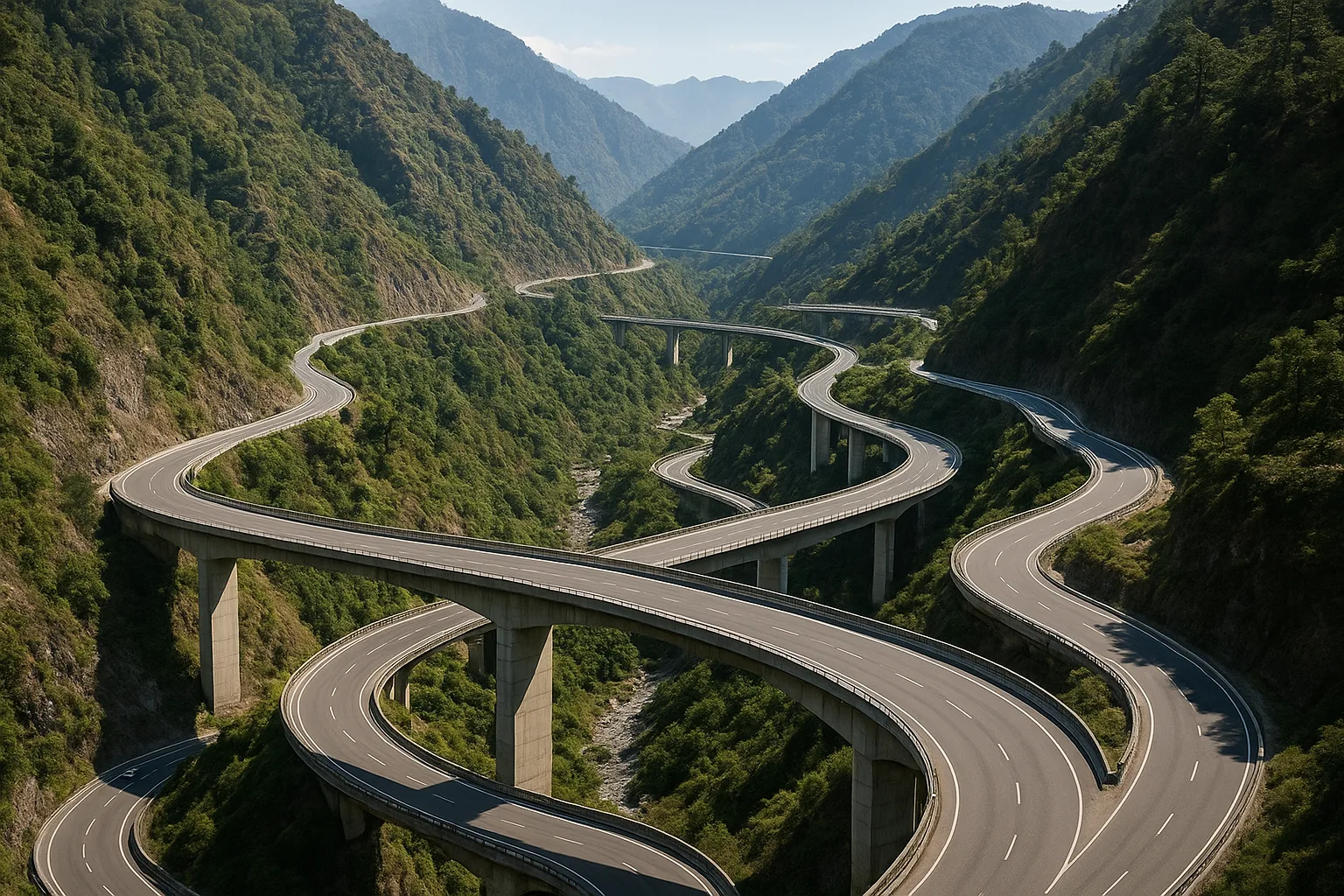
By the 1960s, the construction of the Chandigarh–Manali highway transformed both the landscape and the imagination of Mandi’s residents. Schoolchildren marveled at the sight of buses rolling into town; shopkeepers adjusted to new rhythms of supply and demand. Oral histories from this era speak of awe and anxiety: the excitement of new opportunities tempered by fear of cultural dilution and environmental change.
Documented debates in the Himachal Pradesh Legislative Assembly from the 1950s and 1960s reveal the complexity of this transition. While the state sought to promote tourism and trade, it also confronted the challenges of landslides, deforestation, and the displacement of communities. Yet, for most, the promise of connectivity proved irresistible. Mandi’s youth, once bound to ancestral fields, now dreamed of careers in distant cities, and the bazaar blossomed with goods from every corner of the republic.
Transport as a Social Transformer
The arrival of reliable bus services, and later, a surge in private vehicles, did more than move people and goods. It redrew the contours of social life. Village festivals once timed to the lunar calendar now coordinated with bus schedules. Marriages, education, and even religious pilgrimages became easier to arrange and attend. Women, who traditionally faced greater restrictions on travel, found themselves with new opportunities—though not without resistance from conservative quarters.
Emerging oral histories from the late 20th century capture the bittersweet nature of this change. Elders recall the intimacy of old footpaths, the sense of community built on shared hardship. Yet, for the rising generation, the road symbolized liberation: access to learning, health care, and horizons unimagined by their grandparents.
Notably, the growth of transport also facilitated migration—both seasonal and permanent. Young men and women began to seek livelihoods in Chandigarh, Delhi, and beyond, sending remittances home and altering the economic calculus of rural families. Mandi’s identity, once shaped by its insularity, was now porous, adaptive, and outward-looking.
Modern Highways and the Challenge of Sustainability
By the turn of the 21st century, Mandi was no longer defined by its remoteness. National highways thundered through the valley, and the town’s bus stand buzzed with arrivals and departures at every hour. The Pandoh Dam, constructed in the 1970s, not only reshaped the region’s hydrology but made possible new roads and bridges, further integrating the landscape.
This progress, however, came at a cost. Landslides, traffic congestion, and pollution became persistent challenges. Regional newspapers chronicled the mounting strain on infrastructure—particularly during monsoon season, when roads often vanished beneath mud and debris. Environmentalists and local activists began to question the sustainability of unchecked development, recalling in their campaigns the wisdom embedded in older, slower ways of moving through the hills.
Yet, even amid these tensions, the town continued to adapt. Local entrepreneurs pioneered eco-friendly transport initiatives; government schemes encouraged the use of electric vehicles and invested in hill-friendly engineering solutions. The conversation in Mandi, as in much of Himachal, shifted towards balance—honoring the connective power of roads while safeguarding the fragile ecology on which the region depends.
Memory, Identity, and the Road Ahead
Today, as one walks through the streets of Mandi—past the bustling bus depot, along riverfront lanes where old and new jostle for space—the legacy of roads and transport is everywhere. The town’s story is one of transformation, but not erasure. Memories of ancient trails linger in family stories and village festivals; the pulse of modern highways coexists with the quiet persistence of footpaths threading the hills.
The modernisation of Mandi, born of roads and the promise of movement, has left indelible marks on its culture, economy, and environment. Its people, ever adaptable, continue to negotiate the meaning of progress—balancing the lure of the open road with the roots that hold them fast to their land.
In the next part of our series, we will journey deeper into Mandi’s evolving identity, exploring how migration, education, and changing aspirations have reshaped the social fabric of this remarkable Himalayan town.
Previous: Mandi After Independence: Political and Social Change
Next: Education and Social Reform in Post-Independence Mandi