
Series: History of Mandi, Himachal Pradesh, India
Phase 5: Post-Independence & Modern Mandi — Part 22 of 30
This article appears within a continuing historical series that follows the western Himalayas into the modern era. With the end of princely rule and the integration into independent India, long-standing social and political patterns were reconfigured. This phase examines how development, state formation, and memory interact with inherited landscapes, shaping contemporary life while carrying forward echoes of the past.
The Morning of a New Era: Mandi, August 1947
The town of Mandi, cradled by the Beas River and ringed by pine-shrouded hills, awoke on August 15, 1947, to the clamor of temple bells and cautious hope. The princely state, once ruled by a lineage of Rajas and shaped by centuries-old customs, found itself at the edge of a new epoch—the birth of independent India. For the people of Mandi, freedom meant possibility and uncertainty in equal measure. The landscape was unchanged, but the world beyond had shifted irreversibly.
From Princely Rule to Democratic Aspirations
Mandi’s political identity had long been defined by its Rajput rulers, whose authority was both spiritual and administrative. The last reigning Raja, Joginder Sen Bahadur, had guided the state through the turbulent 1930s and the Second World War, balancing autonomy with British overlordship. The ink was barely dry on the Indian Independence Act when Mandi—and its smaller neighbor, Suket—faced the reality of accession to the Indian Union. Oral traditions recall the somber yet celebratory processions as the Raja ceremonially handed over his powers, a moment marked by both nostalgia and anticipation.
Unlike the violence that scarred the plains during Partition, Mandi’s transition was largely peaceful. Still, the sense of loss was palpable among courtiers and landed families whose privileges would soon be swept away. What replaced princely authority was a new experiment: the formation of Himachal Pradesh as a Chief Commissioner’s province in April 1948, with Mandi now part of a larger administrative mosaic.
Integration and State Formation: A New Political Map
The months after independence were a blur of reorganization. Drawing on accounts from the Himachal Pradesh State Gazetteer and recollections from families whose ancestors served in local administration, we see Mandi’s role as both participant and symbol. The historic palaces—once reserved for royal audiences—became government offices. The central chowk, where traders and villagers once gathered under the gaze of the Raja’s soldiers, now hosted political rallies and debates about land reforms, citizenship, and representation.
Mandi district, with its strategic location along old trade routes connecting Kullu, Kangra, and the plains, quickly became a hub for the new state’s political life. The town’s leaders—some from old aristocratic families, others from rising urban middle classes—debated the shape of modern governance. The first elections to the Himachal Pradesh Legislative Assembly in 1952 brought new faces and new voices, setting the tone for a gradual but profound democratization.
Social Change and the Rewriting of Old Orders
Political independence accelerated social transformation. The abolition of jagirdari and the redistribution of land upended Mandi’s centuries-old hierarchies. For Dalit and tribal communities, long marginalized in the shadow of feudal customs, the promise of equality was no longer a distant dream but a constitutional right. Oral histories from villages around Sunder Nagar and Jogindernagar recall the first panchayat meetings—often held under ancient deodar trees—where laborers and women spoke their minds, some for the first time in living memory.
Belief systems, too, evolved. While ancient temples and seasonal fairs (melas) remained at the heart of communal life, education and new civic organizations encouraged debate about caste, gender, and the meaning of progress. The founding of schools and colleges in the 1950s and 1960s, often spearheaded by local philanthropists and reform-minded teachers, brought an influx of new ideas. For Mandi’s youth, the world was suddenly larger than the boundaries of their ancestral valleys.
Economic Reorientation: From Markets to Modernity
Mandi’s centuries-old role as a node in Himalayan trade routes faced both challenge and opportunity after independence. The construction of new roads—first under the Public Works Department, later as part of ambitious Five-Year Plans—linked the district more closely with the rest of India. The Beas-Sutlej Link Project and the emergence of hydropower transformed not just the physical landscape but the rhythms of daily life. Oral traditions recall the excitement (and anxiety) that accompanied the arrival of engineers, surveyors, and laborers from distant states, introducing new foods, languages, and customs to the bazaars of Mandi.
Markets that once thrived on caravan trade with Tibet and Ladakh now shifted focus toward agricultural produce and forest goods. The town’s grain mandis bustled, reflecting a new integration with national supply chains. The economic transition was far from smooth; many weavers, traders, and artisans struggled to adapt, but the spirit of enterprise gradually found new expression in cooperative societies and small-scale industries.
Community, Identity, and the Ongoing Search for Belonging
In the years following independence, Mandi’s population became more diverse. Migrants from Punjab and the plains, displaced by Partition or drawn by new opportunities, settled in the growing town. They joined the region’s indigenous Gaddis, Gujjars, and long-established Rajput and Brahmin families. This confluence of cultures brought both tension and creative adaptation. Marriages across communities, though rare at first, became more common as the decades passed, and festivals like Shivratri took on even greater importance as symbols of shared identity.
The town’s social fabric, once tightly woven around kinship and caste, became more elastic. Oral tradition preserves memories of conflict—over land, jobs, and local politics—but also of resilience. Neighborhood committees, youth clubs, and women’s groups emerged as new centers of authority and belonging. The dynamism of these decades left an indelible mark on the collective memory of Mandi.
The Legacy of Change: Mandi’s Roots in the Modern Age
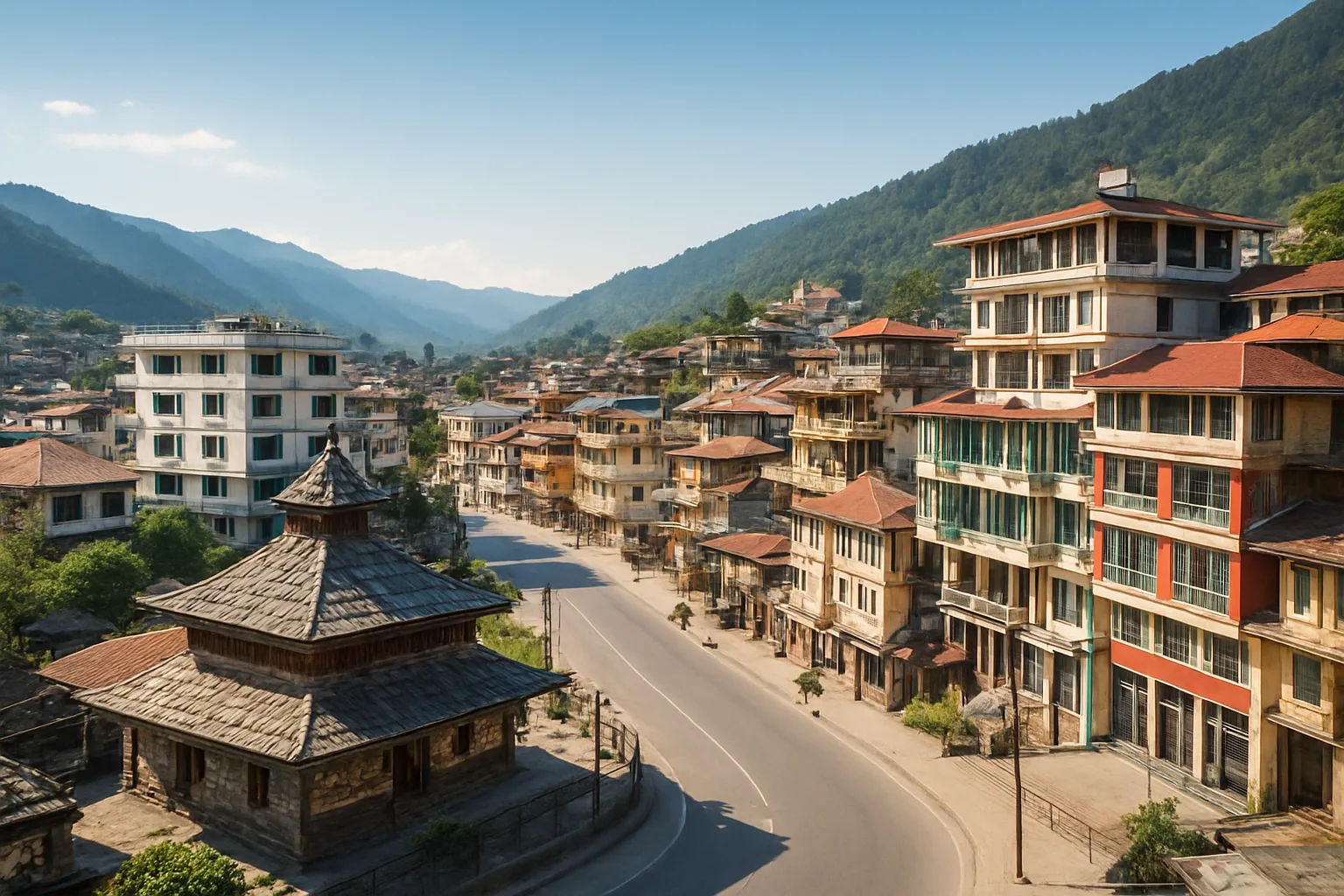
By the late twentieth century, Mandi had become a microcosm of Himachal Pradesh’s evolution—anchored in the past, yet unmistakably modern. Its streets, once the preserve of royal processions, now echoed with the footsteps of students, shopkeepers, and civil servants. The old Rajas’ palace housed district offices; ancient temples stood beside concrete shops and government schools.
The reverberations of post-independence change are still felt today. The values of democracy, education, and social mobility—once radical ideas—are now deeply embedded in local life. Yet, the echo of ancient traditions still shapes the town’s festivals, its dialects, and its enduring sense of place.
As our series continues, we will turn to the next chapter in Mandi’s story: the emergence of new political movements, the challenges of environmental change, and the region’s role in a rapidly globalizing India. The past is never far beneath the surface in Mandi, and its legacy continues to guide the possibilities of tomorrow.
Previous: Integration of Mandi State into Himachal Pradesh
Next: Roads, Transport, and the Modernisation of Mandi