
Series: History of Kullu, Himachal Pradesh, India
Phase 5: Modern Era — Part 22 of 30
This article appears within a continuing historical series that follows the western Himalayas into the modern era. With the end of princely rule and the integration into independent India, long-standing social and political patterns were reconfigured. This phase examines how development, state formation, and memory interact with inherited landscapes, shaping contemporary life while carrying forward echoes of the past.
A Valley Awakes to Strangers
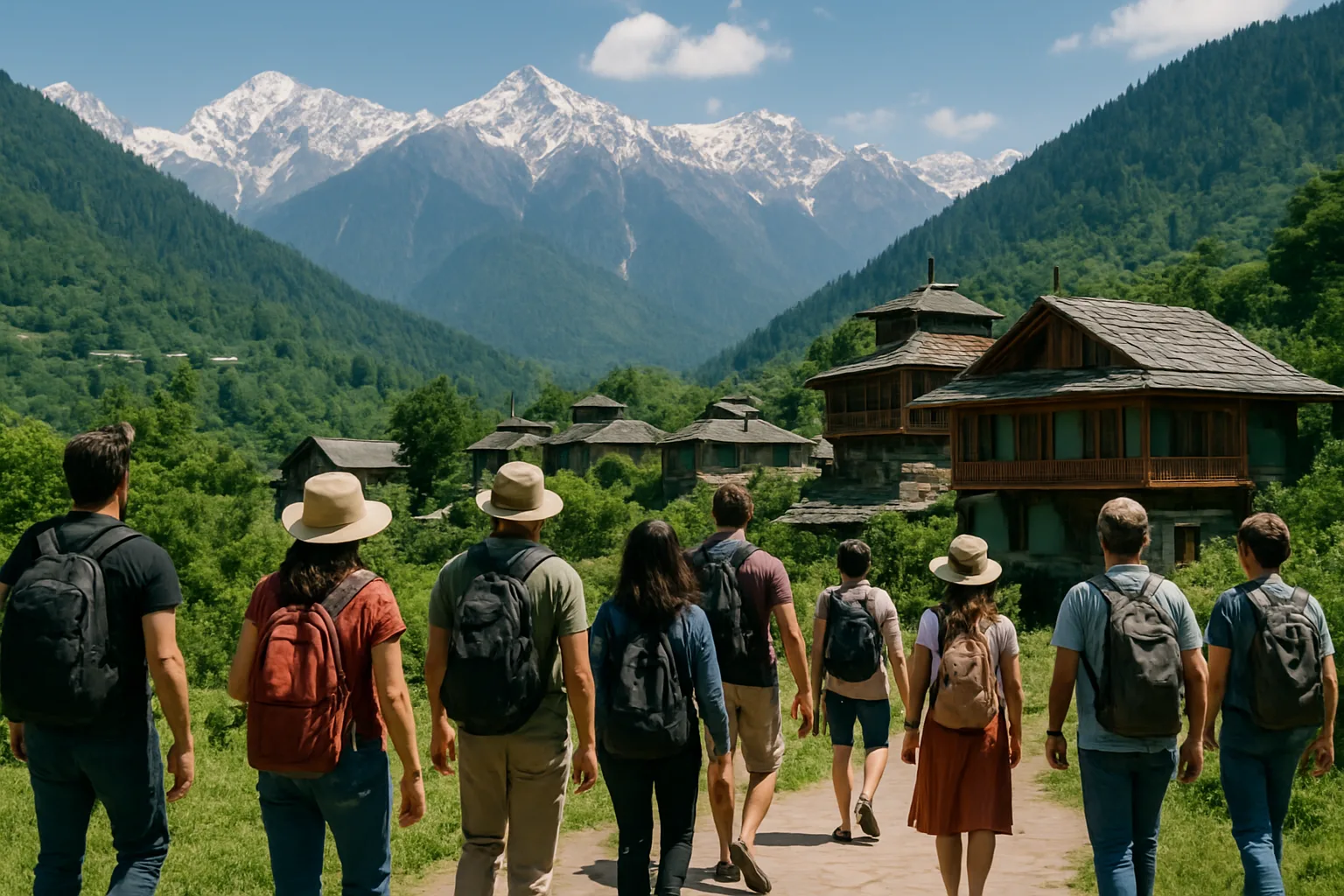
The first blush of dawn over the Kullu Valley in the early 1970s offered the same beauty that had enchanted generations—terraced fields stitched across hillsides, the Beas River winding with patient resolve, snow-capped peaks keeping silent vigil. Yet, for those who had lived their whole lives in these mountains, something unmistakably new was afoot. The ancient rhythms of sowing, weaving, and worship now mingled with the hum of buses, the chatter of unfamiliar tongues, and the clatter of suitcases on cobbled lanes.
For centuries, Kullu remained nestled in relative seclusion. Records like the Imperial Gazetteer and local chronicles describe a land shaped by the confluence of hill kingdoms, trade, and faith. But as the 20th century drew to a close, the Valley’s fortunes would be transformed by a force as potent as any king or conqueror: the arrival of visitors drawn by its natural beauty and storied past.
From Sacred Pathways to Scenic Retreats
To understand the impact of modern tourism, one must first grasp Kullu’s deep-rooted relationship with travelers. In earlier centuries, the valley was both haven and crossroads. Oral traditions tell of wandering sages, traders with yak caravans, and pilgrims making their way to the shrines of the valley. The great fairs—such as the Dussehra festival at Kullu’s Raghunath Temple—drew not only locals but merchants and mendicants from distant lands. These gatherings, described in Rajput-era chronicles and British-era accounts alike, were as much about commerce and diplomacy as devotion.
Yet, outside these bursts of activity, the valley’s steep passes and unpredictable weather kept it largely insulated. Communities—predominantly Kullvi, but also Tibetan and Pahadi—maintained intricate ties with the land and each other, shaped by seasonal cycles and the demands of self-sufficiency. The emergence of motorable roads in the 20th century, however, would soon change the valley’s fate.
Opening the Gates: The Arrival of Modern Tourism
The completion of the Mandi-Kullu road in the 1950s marked a turning point. Suddenly, what had been a taxing journey of days became a matter of hours. Reports from the time note the excitement—and anxiety—among villagers as jeeps and buses began to thread the valley’s narrow arteries. Indian travelers, seeking respite from the plains, were soon joined by a growing stream of international visitors. Many were drawn by the valley’s reputation as a place of peace and spiritual renewal, a mystique amplified by the countercultural currents of the 1960s and 70s.
Hotels and guesthouses sprang up along the river. Apple orchards, once the preserve of a few pioneering families, multiplied as new markets opened. Shops in Kullu town and Manali filled with handicrafts and imported wares, as the region’s long-standing weaving traditions found eager new buyers. The old trade routes—once echoing with the bells of mule caravans—now buzzed with the engines of taxis and the footfalls of trekkers.
Community, Culture, and Change
For the people of Kullu, the tourism boom brought both prosperity and profound questions. Traditional livelihoods—farming, herding, and crafts—adapted to the demands of the new economy. Some families turned ancestral homes into homestays; others found work as guides, porters, or artisans. The Dussehra festival, already famous, became a grander spectacle, its ancient rituals performed for wider audiences.
Yet beneath the surface, tensions simmered. Elders worried that the influx of outsiders would erode time-honored customs. Oral traditions and local belief systems—centered on the worship of deities like Raghunathji and Hadimba Devi—faced dilution as new influences arrived. The soundscapes of the valley, once dominated by temple bells and folk songs, now mingled with the strains of film music and the bustle of commerce.
Still, Kullu’s communities proved resilient. Many temples and village councils set guidelines to preserve sacred spaces and regulate development. Folklore, clan histories, and seasonal festivals continued to anchor identity, even as the meaning of ‘home’ expanded to encompass a world of travelers and guests.
Environmental Reckonings
The transformation was not without cost. By the 1990s, reports of environmental strain grew more frequent. The Beas, lifeblood of the valley, suffered from pollution and overuse. Forests—once managed under ancient customs and colonial-era policies—came under new pressure as land was cleared for roads, hotels, and orchards. Landslides, once seasonal hazards, became more frequent with unchecked construction.
Documented accounts from local conservationists and government reports chronicled these changes in stark detail. The delicate balance that had sustained Kullu’s communities for centuries was being tested as never before. Yet, alongside these challenges, new forms of stewardship emerged. Local groups began advocating for responsible tourism, reforestation, and the revival of traditional water management practices.
Modernity and Memory: Negotiating Identity
By the dawn of the 21st century, Kullu stood at a crossroads. The valley’s landscapes and lifestyles now featured in travel magazines and films, its markets brimming with the spoils of a globalizing world. Young people—once destined to inherit fields and flocks—found new aspirations in hospitality, technology, and the arts. Yet, the ancient roots of the valley remained visible: in the rhythms of the fairs, the language of the elders, and the enduring presence of the deotas who preside over village affairs.
As visitors continued to pour in—seeking everything from adventure sports to spiritual solace—the people of Kullu faced the task of reconciling the promises of progress with the imperatives of tradition. Historical memory, carefully preserved in oral histories and family lineages, offered both guidance and challenge in this new age.
Legacies That Shape Today’s Valley
The story of Kullu’s tourism boom is not a simple tale of loss or gain. It is a complex, living negotiation between heritage and change, local identity and global connection. The valley’s transformation is etched into its landscapes, its festivals, and the everyday negotiations of its people—reminders that history, here, is not confined to the past, but is daily made and remade.
As this series continues, we will follow Kullu’s journey deeper into the 21st century, examining the ongoing challenges and innovations that define its place in the wider world. The roots of tradition, and the questions of identity and stewardship, will remain at the heart of the valley’s unfolding story.
Previous: Kullu After Independence: Administrative Changes
Next: Manali’s Rise from Village to Global Tourist Hub