
Series: History of Kullu, Himachal Pradesh, India
Phase 5: Modern Era — Part 21 of 30
This article appears within a continuing historical series that follows the western Himalayas into the modern era. With the end of princely rule and the integration into independent India, long-standing social and political patterns were reconfigured. This phase examines how development, state formation, and memory interact with inherited landscapes, shaping contemporary life while carrying forward echoes of the past.
Midnight in the Valley: Kullu in 1947
Night settled quietly over the Beas River as India awoke to independence in August 1947. In the valleys of Kullu, the pine-scented air was thick with anticipation and uncertainty. While the country celebrated, Kullu’s people gathered in village squares, listening to scratchy radios or passing news from one hamlet to another. For centuries, their world had been shaped by kings, colonial administrators, and the rhythms of the mountains. Now, the very notion of authority was shifting, and few could predict what the dawn would bring.
Kullu’s historical memory runs deep. Oral traditions recall a time when the valley was ruled by Rajput chieftains and local dynasties, their exploits woven into the landscape through temples and stories. British gazetteers of the late nineteenth century describe Kullu as a princely state, part of the wider Punjab Hill States, governed indirectly through colonial structures but retaining a distinctive identity. Independence marked a dramatic rupture from these earlier frameworks, propelling Kullu into the uncharted territory of democratic India.
From Princely State to District: The First Steps
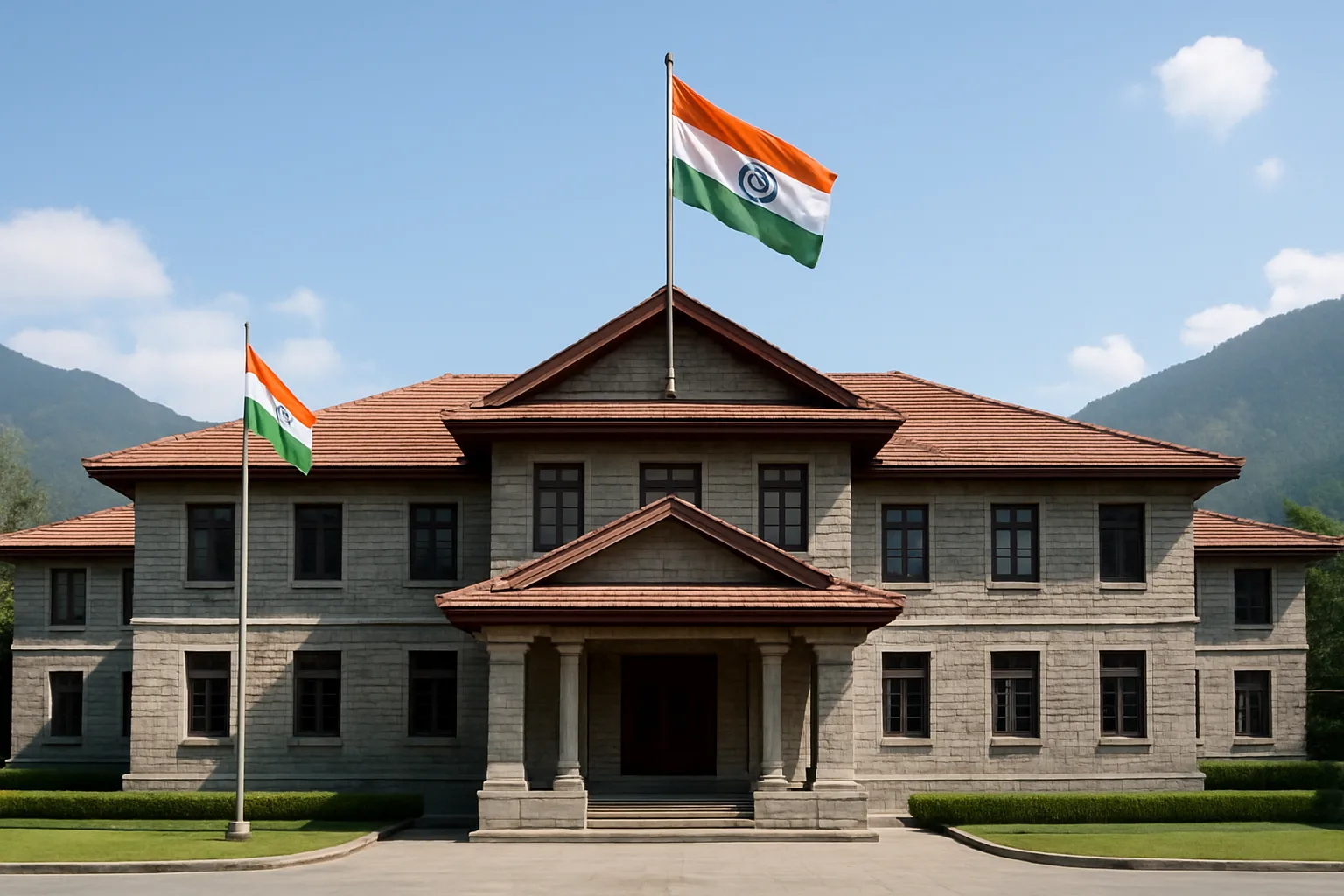
In the immediate aftermath of independence, Kullu was still governed as part of the larger Punjab Province, a legacy of colonial administration. The Raja of Kullu, like many hill rulers, found his authority rapidly diminishing. The Indian government’s integration policy led to the swift abolition of princely privileges, and by 1948, Kullu’s traditional rulers had ceded their remaining power. The valley was absorbed into the Chief Commissioner’s Province of Himachal Pradesh, which itself was a patchwork of former princely and British-administered territories.
For local residents, this administrative overhaul was bewildering. The familiar faces of local landlords and hereditary officials gave way to new government functionaries. Old forms of tax collection, land rights, and justice began to be replaced by standardized codes. The first Himachal Pradesh (Administration) Order of 1948 brought Kullu under direct government rule, erasing the centuries-old boundaries that had once defined the kingdom.
The Reshaping of Governance: 1950s and 1960s
The 1950s ushered in a period of intense change. As India’s Constitution came into force in 1950, Himachal Pradesh was granted the status of a Part C state, governed by a Chief Commissioner appointed by Delhi. In Kullu, local administrative units—tehsils and villages—were reorganized, and the first modern district headquarters took shape in the town of Sultanpur, on the riverside slopes below the old Kullu Fort.
The arrival of new officers brought unfamiliar customs and priorities. For the first time, local communities were drawn into electoral politics, with gram sabhas (village councils) and block development offices replacing the informal assemblies of elders. Land reforms began to dismantle the remnants of jagirdari and zamindari (landlord) systems, aiming to empower tenant farmers and clarify land tenure. Government schools, health centers, and police posts appeared in remote valleys, their presence both welcomed and met with skepticism by those accustomed to self-rule and oral adjudication.
Community, Identity, and Emerging Institutions
Despite these top-down changes, Kullu’s social fabric remained resilient. The valley’s diverse communities—Pahari Rajputs, Brahmins, artisans, and scheduled tribes—each adapted to the new order in their own ways. The syncretic traditions of the valley, blending Hindu devotion with ancient animist rituals, continued to shape local politics and celebrations. Dussehra, the great autumn festival, grew in prominence as a showcase of both heritage and new civic pride.
Institutions such as the Kullu District Court and the District Collectorate became symbols of the Indian state’s reach, but local deities and councils retained moral influence. Oral traditions persisted alongside written law; disputes over land or water were as likely to be resolved at the temple steps as in government offices. The emergence of local newspapers and radio stations brought news from the outside world, but also gave voice to Kullu’s unique concerns, from apple farming to hydroelectric projects.
Infrastructure, Mobility, and Development
Perhaps the most visible transformations were wrought by new roads and communications. The construction of the Mandi–Kullu national highway in the 1950s—following the ancient trade routes described in colonial chronicles—connected the valley more closely to the plains. Post-independence development programs brought electrification and irrigation, but also challenges: population growth, environmental pressures, and the first stirrings of urbanization in Kullu town and Manali.
Trade, long the lifeblood of the valley, shifted from wool and salt caravans to apples, timber, and, eventually, tourism. The old passes—Rohtang, Jalori, Hamta—remained crucial, but now buses and trucks replaced mule trains. The state’s Five-Year Plans prioritized education and health, but many villagers still relied on traditional healers and teachers to interpret these new realities.
The Quest for Statehood and Kullu’s Place in Himachal
In the 1960s and early 1970s, the struggle for full statehood in Himachal Pradesh gathered momentum. Kullu’s leaders, many of whom emerged from local panchayats and grassroots organizations, played a vital part in this movement. When Himachal Pradesh finally achieved full statehood in 1971, Kullu’s status as a district was formalized, and its voice in the state assembly secured. The transition from princely autonomy to democratic representation was complete, though not always smooth.
Yet even as new administrative boundaries were drawn, old loyalties and regional identities persisted. Gazetteers and local histories from this era reflect a tension between the drive for modernization and a desire to preserve Kullu’s distinctiveness. The valley’s festivals, dialects, and customary laws remained sources of pride, even as Delhi’s influence grew ever stronger.
Echoes of the Past in the Modern Valley
Today, Kullu’s administrative landscape bears little resemblance to its ancient or colonial past. Yet, beneath the surface, the valley’s history endures—in the pride of its people, the structure of its villages, and the enduring power of its oral traditions. The journey from princely state to democratic district was neither linear nor painless, but it has left Kullu uniquely poised between continuity and change.
As we move forward in this series, the next chapter will explore how these political and administrative changes set the stage for Kullu’s transformation in the late twentieth century, including the rise of tourism and new social movements that continue to reshape the valley’s destiny.
Previous: Kullu and the Indian Freedom Movement
Next: Tourism Boom and Its Impact on Kullu Valley