
Series: History of Sirmaur, Himachal Pradesh, India
Phase 5: Modern Era — Part 23 of 30
This article appears within a continuing historical series that follows the western Himalayas into the modern era. With the end of princely rule and the integration into independent India, long-standing social and political patterns were reconfigured. This phase examines how development, state formation, and memory interact with inherited landscapes, shaping contemporary life while carrying forward echoes of the past.
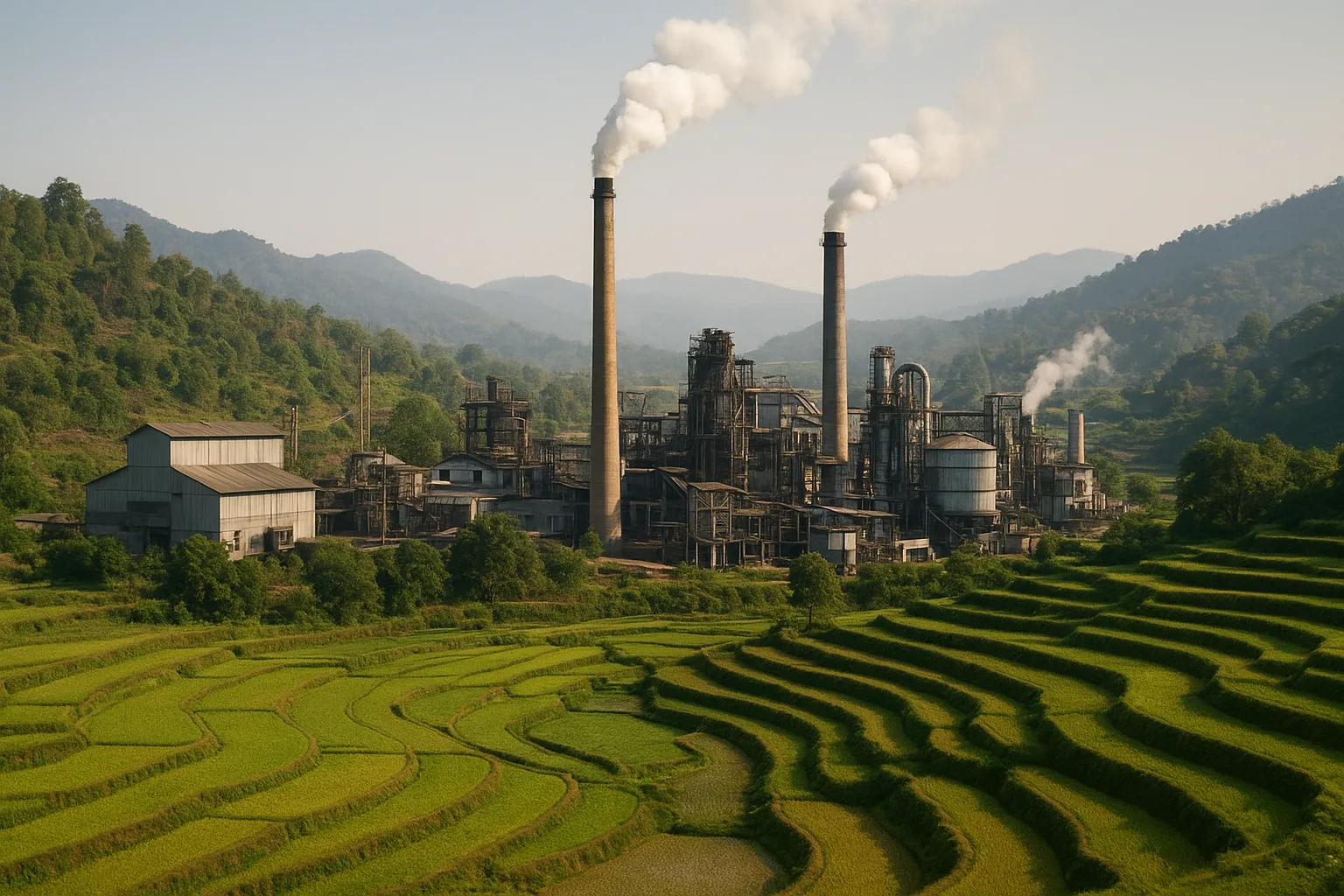
Smoke Rises over the Valley: Sirmaur in Transition
The first rays of dawn break over the rolling Shivalik foothills, casting a pale light on the winding Giri river below. In the shadow of ancient forts and village shrines, a new sound drifts across the fields: the distant hum of machines, a rhythm unlike the age-old creak of wooden ploughs. It is the late twentieth century, and Sirmaur—once a quiet landscape of forest and terrace farms—stands at the threshold of profound change.
This is not the first transformation the region has witnessed. Sirmaur’s valleys have long been shaped by the movement of peoples and ideas, the rise of hill states, and the steady pulse of trade routes that carried salt, grain, and stories between the plains and the mountains. Yet, as the twentieth century gives way to the twenty-first, a distinctly modern engine begins to drive the region: industry.
From Agrarian Roots to Emerging Market Towns
For centuries, the people of Sirmaur relied on the rhythms of the land. Oral traditions passed down in village gatherings recall a time when dense forests hemmed in small farming settlements and herders drove their flocks across high pastures. Early British gazetteers describe a patchwork of self-sufficient villages, each with its own customs, dialects, and festivals tied to the agricultural calendar. The Gorkha occupation in the early nineteenth century, followed by British intervention, brought the first stirrings of commercial agriculture, especially tea and horticulture. Still, for the majority, life’s tempo remained tied to the monsoon and the harvest.
Throughout the colonial period, Sirmaur’s towns—Nahan, Paonta Sahib, Rajgarh—grew slowly. Market days drew villagers from the hills, exchanging grain, wool, and forest products for salt and cloth brought in by traders from the plains. The princely state maintained its own administration, balancing tradition with new roads and schools, but industrial activity was limited to small-scale crafts: weaving, pottery, and the famed Nahan foundry, which produced coins and tools for local use.
New Roads, New Horizons: Infrastructure as Catalyst
Change accelerated after Indian independence. The integration of Sirmaur into Himachal Pradesh in 1948 placed the region squarely within the new republic’s development plans. Roads, once little more than mule tracks connecting hill hamlets, began to wind in wider curves, climbing up from the Sirmauri Doon to Nahan and beyond. The arrival of all-weather roads in the 1950s and 1960s had a subtle but decisive impact: market access improved, and the first trucks began to replace pack animals on trade routes that had been in use for generations.
Government efforts targeted not just connectivity but also agricultural modernization. Irrigation projects, cooperative societies, and the introduction of cash crops—especially fruits—offered villagers new income streams. Yet, the hillsides remained largely rural, dotted with temples and step-fields, as the memory of older ways lingered in the rhythm of daily life. It was only in the late twentieth century that a more radical transformation arrived: the establishment of industrial estates.
The Industrial Estates of Paonta Sahib and Kala Amb
Paonta Sahib, long revered as a Sikh pilgrimage town and trading post on the Yamuna’s banks, emerged in the 1980s as Sirmaur’s industrial heart. The Himachal Pradesh government, seeking to relieve pressure on the plains and spur economic growth, designated areas around Paonta Sahib and later Kala Amb for the development of industrial estates. Factories soon dotted the landscape, producing pharmaceuticals, cement, paper, and textiles. The region’s relative proximity to Uttarakhand and Haryana, along with a cooler climate and tax incentives, drew outside investors and a steady stream of migrant workers.
For local communities, the arrival of industry was a jolt. Oral traditions, recorded in Sirmauri and Hindi by local chroniclers, reflect both hope and anxiety: the promise of jobs and modern amenities, but also concern for land, water, and identity. Stories of fields sold to distant corporations mingle with accounts of young men and women leaving village life for factory floors. The rhythm of the land—once measured by the sowing and reaping of crops—now found itself interrupted by shift changes and the clang of machinery.
Communities in Motion: Migration, Opportunity, and Tension
Industrial growth brought new faces to Sirmaur. In the bustling markets of Paonta Sahib and the fast-growing townships of Kala Amb, Punjabi, Garhwali, and Bihari voices mingled with the local dialect. Many families sent members to work in new factories or service industries, while others remained rooted in agriculture, sometimes taking seasonal jobs in construction or transport.
Documented accounts from the late twentieth and early twenty-first centuries reveal a region in flux. The Himachal Pradesh District Gazetteer notes rising literacy rates, improved health outcomes, and a more diverse economy. Yet, these gains were not evenly distributed. Landless laborers and traditional artisans sometimes found themselves displaced, while farmers debated the long-term effects of industrial runoff on fields and water sources. The balance between opportunity and tradition became a defining tension of modern Sirmaur.
Environment and Identity: The Costs of Progress
With industry came environmental challenges. The Sirmaur hills, famed for their fruit orchards and medicinal forests, faced threats from deforestation, air pollution, and pressure on water resources. In the villages near Kala Amb, residents voiced worries about waste from paper and chemical plants. The Yamuna, lifeblood of the Paonta valley, occasionally ran cloudy with industrial effluents—drawing concern from local activists and religious leaders alike.
At the same time, a new sense of regional identity began to emerge. Schools, newspapers, and cultural associations promoted Sirmauri language and heritage, even as the economy diversified. The annual Renuka fair, honoring the goddess Renuka, took on new significance as a gathering place for both rural and urban families. The push and pull between tradition and modernity shaped public debate, as the people of Sirmaur weighed the costs and benefits of their region’s transformation.
Looking Ahead: The Roots of Change Endure
Today, Sirmaur is a region where ancient shrines and modern factories share the same landscape. The echoes of oral tradition—stories of kings, saints, and traders—persist alongside the steady advance of industry and commerce. The region’s journey from self-sufficient villages to market towns, and now to industrial centers, is etched into the fields, roads, and riverbanks of the district.
Yet, the deeper roots remain. The bonds of community, the rhythms of festivals, and the reverence for land and water continue to shape everyday life. As Sirmaur navigates the uncertainties of the twenty-first century, its history of adaptation and resilience offers both guidance and warning. In the next part of this series, we will explore how Sirmaur’s people are reckoning with environmental challenges and the quest for sustainable development—a story where the lessons of the past are more relevant than ever.
Previous: Administrative Reorganisation of Sirmaur District
Next: Agriculture, Horticulture, and Rural Economy Today