
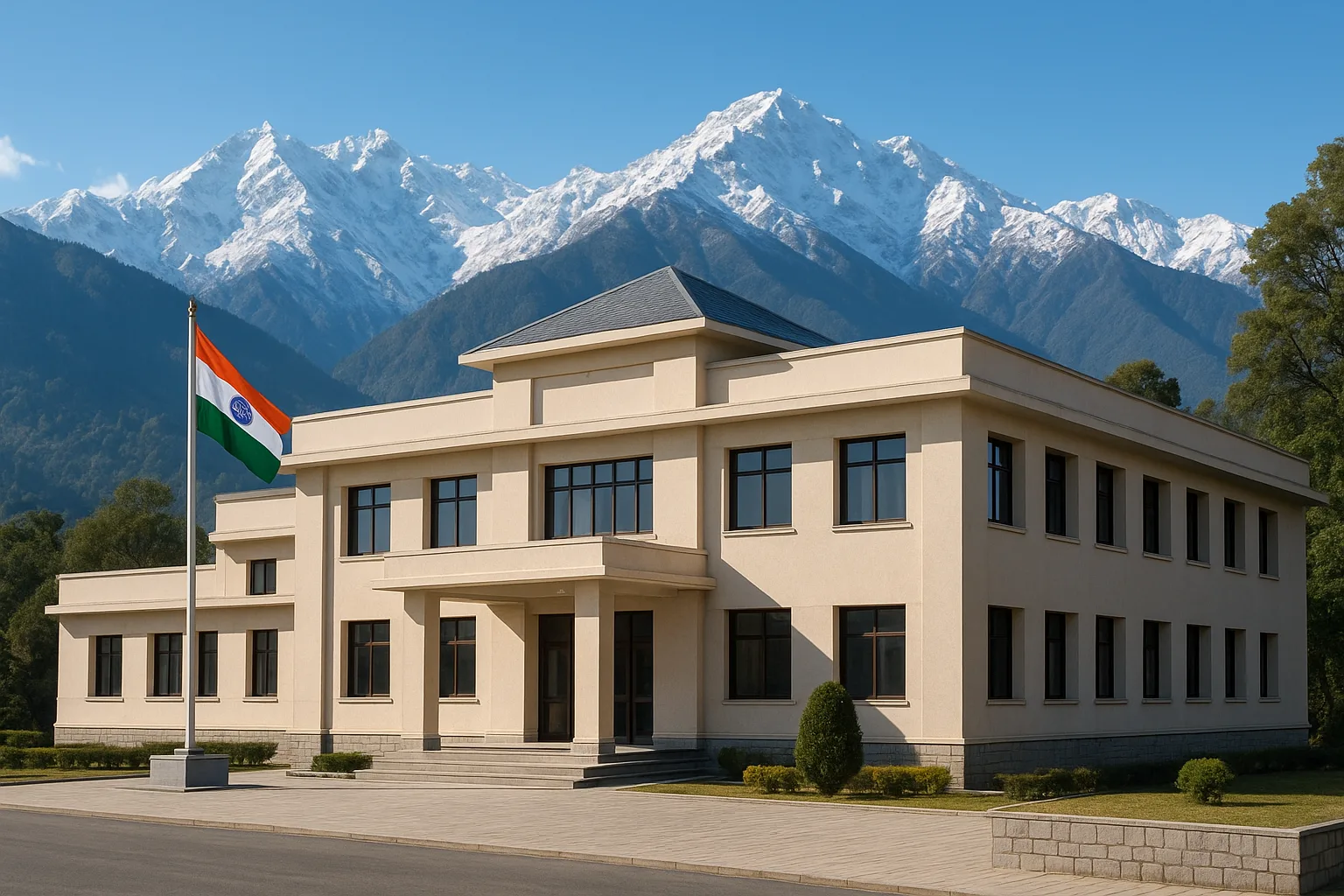
Series: History of Chamba, Himachal Pradesh, India
Phase 5: Modern Era — Part 22 of 30
This article appears within a continuing historical series that follows the western Himalayas into the modern era. With the end of princely rule and the integration into independent India, long-standing social and political patterns were reconfigured. This phase examines how development, state formation, and memory interact with inherited landscapes, shaping contemporary life while carrying forward echoes of the past.
August 1947: Dawn in the Valley
Morning broke over the Ravi River as it always had, but that August day was different. From village squares to the stepped alleys of Chamba town, a hush of anticipation swept through the valley. The British Raj had ended. India was independent. In the ancient capital of Chamba, with its timeworn palaces and temple spires, a question hovered: what would this new freedom mean for a land ruled by its own rajas for nearly a millennium?
Chamba Before Independence: The Legacy of the Princely State
Chamba’s history stretches back over a thousand years, marked by dynasties whose lineage was as much legend as documented fact. The Dogras, Rajputs, and other lineages shaped its political and cultural landscape, blending oral traditions and mythic ancestry with the administrative order recorded in British-era gazetteers. By the late nineteenth century, Chamba stood as a princely state, semi-autonomous but bounded by treaties with the British Crown. The Raja was both sovereign and subject: local custom and ritual intertwined with colonial bureaucracy and modern education.
Its society was a mosaic of Pahari-speaking clans, Gaddis and Gujjars tending livestock along old trade routes, and a tapestry of belief—Hindu, Buddhist, and animist practices entwined in the rhythms of hill life. The town itself, encircled by pine forests and overlooked by the Himalayas, was both a market and a pilgrimage center, sustained by its famed temples and the annual Minjar fair.
The Independence Transition: Negotiations and Uncertainties
When the British prepared to leave, Chamba—like hundreds of other princely states—faced a pivotal decision. Would it join the new Dominion of India, or attempt to retain its separate status? The Raja, Sahil Varman, presided over councils fraught with uncertainty. Oral accounts from the time recall villagers debating the meaning of freedom and the risks of change. Historical records show that political leaders from Punjab and Himachal met with Chamba’s rulers, urging accession for the sake of regional unity and security.
On 15 April 1948, after months of negotiation, Chamba acceded to the Indian Union. The Instrument of Accession, a formal document signed under the shadow of both hope and anxiety, ended the Raja’s absolute power. Yet, the process was more than paperwork; it was a seismic shift in identity and authority, echoing in every village hamlet and market stall.
Integration into Himachal Pradesh: Reimagining Regional Identity
With accession, Chamba’s administration was reorganized. The princely era’s durbar gave way to appointed officials from the Indian government. Land reforms, new tax codes, and the promise of universal suffrage arrived in rapid succession. The transition was not always smooth: local leaders, accustomed to hereditary privilege, now found themselves negotiating with unfamiliar bureaucrats from Shimla and Delhi.
Chamba was merged into the newly-formed Himachal Pradesh, itself a patchwork of former hill states. This reorganization brought both opportunities and challenges. For the first time, Chamba’s citizens elected representatives to state and national legislatures. Panchayats—village councils—were revived and empowered to manage local affairs. Yet, the hill terrain remained a barrier: roads and communication lagged, and the sense of being peripheral to state and national politics persisted.
Modernization, Memory, and Resistance
The decades after independence brought new schools, hospitals, and infrastructure projects. The Ravi’s waters, once the lifeblood of traditional agriculture, were harnessed for hydroelectric power. State-sponsored tourism promoted Chamba’s temples and festivals to a wider world. But modernization also stirred anxieties. Some elders lamented the erosion of customary rights and rituals; oral traditions recall debates in the chowk (square) about what would be gained and lost in the march toward progress.
Political participation grew more robust. By the 1970s, Chamba’s electorate had tasted the power of the ballot, and local parties vied for influence. Yet, a quiet resistance persisted—rooted not in overt rebellion, but in the determination to preserve language, dress, and custom. The Chamba rumal embroidery and folk songs became emblems of continuity, even as the valley changed around them.
Governance and Social Change: New Challenges, Enduring Bonds
By the late twentieth century, Chamba’s governance had largely harmonized with the rhythms of Indian federal democracy. Yet, challenges remained. Remote villages struggled with poverty, migration, and limited access to modern amenities. The Gaddi and Gujjar communities, long integral to local culture, navigated new frameworks of rights and recognition. Women, once largely confined to domestic roles, increasingly took part in public life and local councils.
Throughout these changes, belief systems adapted. Temples continued to anchor social life, but new schools and community centers offered alternative spaces for gathering and debate. The memory of the princely era, preserved in stories and festivals, became less a source of nostalgia than a touchstone for negotiating present realities.
From Past to Present: Chamba’s Living Heritage
Today, the echoes of post-independence transformation are heard in every corner of Chamba. The old palace stands sentinel above the town, its walls now hosting cultural events and civic meetings. The Minjar fair draws pilgrims and tourists, blending ancient ritual with modern spectacle. The governance that once seemed imposed from afar has gradually taken on a local character—responsive, if imperfect, to the needs of hill people.
As the series continues, we will follow Chamba’s journey into the twenty-first century: exploring how these modern political roots have shaped its economy, environment, and sense of self in a rapidly changing world.
Previous: Chamba’s Accession to Independent India
Next: Education and Social Change in Chamba