
Series: History of Chamba, Himachal Pradesh, India
Phase 5: Modern Era — Part 21 of 30
This article appears within a continuing historical series that follows the western Himalayas into the modern era. With the end of princely rule and the integration into independent India, long-standing social and political patterns were reconfigured. This phase examines how development, state formation, and memory interact with inherited landscapes, shaping contemporary life while carrying forward echoes of the past.
August 1947: A Kingdom at the Edge of Change
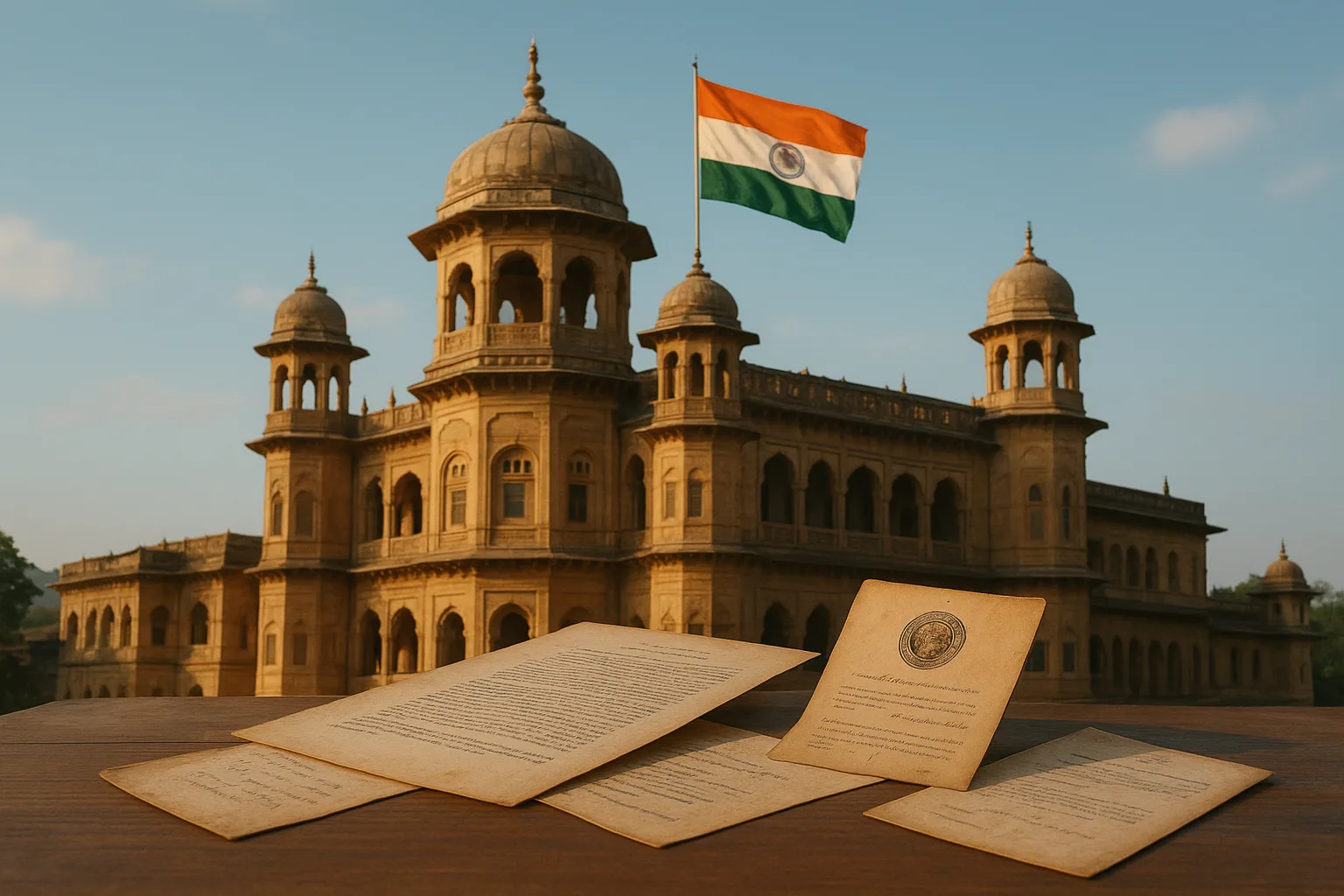
The monsoon mist curled around the ridges of Chamba, softening the silhouette of its ancient palace as the valley woke to a new era. The echoes of drums and prayer bells mingled with the distant sound of the Ravi River, while the people of Chamba—nobles, traders, artisans, and farmers—waited in suspense. India’s independence had arrived with the midnight chimes of August 15, 1947, but for the princely state of Chamba, nestled in the Himalayan foothills, the future was shrouded in uncertainty. The old order had not yet yielded to the new.
From Ancient Roots to Royal Autonomy
Chamba’s history, as traced by the regional gazetteers and echoed in the oral traditions of the region, stretches back over a millennium. Born of a tapestry woven from Rajput migrations, Himalayan tribal cultures, and Buddhist influences drifting in from the north, Chamba grew from a cluster of settlements into a recognized hill state by the early medieval period. Its rulers, claiming descent from the legendary Suryavansha lineage, established their seat in Chamba town by the 10th century, after shifting from the more defensible Bharmour.
Unlike the vivid legends that color local storytelling—tales of goddess Champavati’s blessings, or the miraculous founding of the Lakshmi Narayan Temple—Chamba’s political history is well-documented from the early 19th century onward, thanks to British colonial records and the meticulous chronicles kept by the Dogra and Rajput courts. For over a thousand years, the rulers of Chamba maintained a delicate balance: fiercely independent, yet willing to negotiate their sovereignty with larger powers, from Mughal emperors to the British Raj.
Winds of Freedom: 1946–1947
As the Second World War ended and the Indian independence movement reached its crescendo, the fate of 562 princely states—Chamba among them—became a matter of urgent negotiation. Under the British system of paramountcy, Chamba had enjoyed internal autonomy, with the Raja holding sway over his lands while recognizing the ultimate authority of the British Crown.
In early 1947, the British announced their withdrawal. The Cabinet Mission Plan and subsequent negotiations left the fate of the princely states in limbo. The rulers were invited to choose: join the new Dominion of India, accede to Pakistan, or, in theory, remain independent. For Chamba, perched high above the Punjab plains and sharing little in common with its western neighbor, the question was less about geography than about identity and survival.
The Last Raja’s Dilemma
At the center of this decision stood Raja Lakshman Singh, the last ruling monarch of Chamba. His position was unenviable. To his courtiers and the landed elite, he was the incarnation of centuries-old tradition and divine right. Yet the ground was shifting beneath his feet. The All-India States Peoples’ Conference, supported by the Indian National Congress, was agitating for civil rights and democratic reforms in the princely states. Meanwhile, the people themselves—traders along the old salt routes, temple priests, weavers, and farmers—were alert to the winds of change blowing in from the plains.
Accounts from court diaries and contemporary reports describe tense discussions within the palace. Advisors weighed the risks of independence against the realities of Chamba’s size and isolation. The British political agent in Shimla, the Sadr-i-Riyasat of Jammu & Kashmir, and the representatives of the future Indian government all played their parts in a delicate diplomatic dance.
Accession: The Signing and Its Aftermath
The crucial moment arrived on April 15, 1948. With the advice of his council and under mounting pressure from the Indian government, Raja Lakshman Singh signed the Instrument of Accession, formally joining the Union of India. The ceremony, understated but solemn, marked the end of Chamba’s status as a sovereign state—a status it had maintained for over a thousand years.
For the people of Chamba, the change was at once abrupt and gradual. The state’s administrative machinery was integrated into the new Patiala and East Punjab States Union (PEPSU), and later into Himachal Pradesh. The Raja was retained as a titular head for ceremonial purposes, but substantive power quickly passed to elected officials. Land reforms and the abolition of feudal privileges followed over the next decade, often provoking resistance among the old aristocracy, but ultimately reshaping the region’s social fabric.
Tradition Meets Modernity
Yet, even as the tricolor was hoisted above government buildings and new laws came into force, Chamba’s ancient traditions persisted. The Minjar fair, the processions to the Lakshmi Narayan temples, and the practice of pahari miniature painting continued, sometimes in defiance of official disapproval. The belief systems that had shaped Chamba—Hinduism, Buddhism, local deities, and ancestor worship—remained embedded in daily life.
Oral traditions, retold in village gatherings and family kitchens, began to weave the story of accession into their narrative tapestry. In these tales, the Raja’s decision is painted with shades of both regret and relief. The memory of independence lingers, not as a political reality, but as a cherished part of Chamba’s collective identity.
Chamba in the New India
The decades following accession saw Chamba transformed by roads, schools, and the slow but steady expansion of democracy. The valley’s remoteness, once a shield against invaders, became a challenge in the age of connectivity. New trade routes bypassed the old salt and wool caravan trails, but the town’s craftspeople and traders adapted with quiet resilience.
Today, the legacy of Chamba’s accession is visible—in its architecture, its festivals, and the mixture of pride and nostalgia that colors conversations in its bazaars. The story of how Chamba became part of India is more than a political event; it is a chapter in the ongoing negotiation between tradition and modernity, autonomy and unity.
Reflections and the Road Ahead
Chamba’s journey from a Himalayan kingdom to a district of modern India is marked by both rupture and continuity. The palace stands as a silent witness, its stones imbued with the memory of royal processions and political reckonings. The people of Chamba, inheritors of an ancient legacy, continue to shape their future with the same spirit that saw them through centuries of change.
As our series continues, we will turn to the social and cultural transformations that followed accession: how education, migration, and new forms of governance reshaped daily life in Chamba, and what echoes of the past endure in the rhythms of the present.
Previous: End of Princely Rule in Chamba
Next: Post-Independence Governance in Chamba