
Series: History of Mandi, Himachal Pradesh, India
Phase 3: Temples, Faith & Culture — Part 13 of 30
This article belongs to a historical series examining how expanding empires and regional powers reshaped life in the western Himalayan hills. As external influences pressed into the mountains, local rulers navigated diplomacy, resistance, and accommodation. This phase explores how wider political currents intersected with entrenched hill traditions, altering governance without entirely displacing older structures.
Under the Watchful Peaks: A Sacred Morning at Triloknath
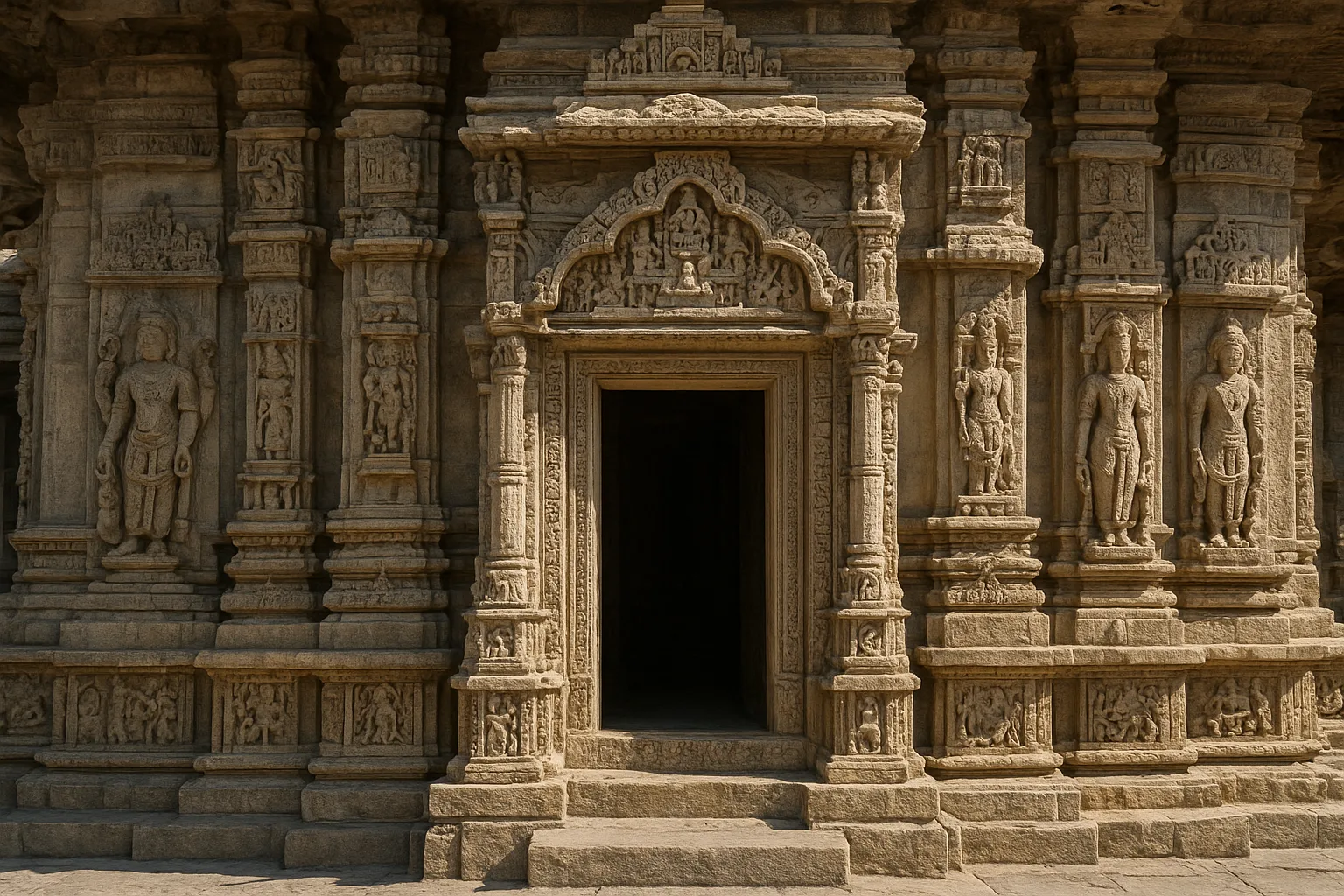
The first rays of sunlight slip through cedar branches, gilding the stone spire of Triloknath Temple with a gentle fire. Mist lingers in the Beas valley below, while the bell’s quiet chime echoes against centuries-old walls. Here, on the northern edge of Mandi town, faith and memory have accumulated like layers of river silt—each era leaving its impression on stone, ritual, and story.
It is early, but already barefoot pilgrims and temple caretakers move through the shadowed corridors. The air is thick with incense and the low murmur of prayers—some ancient, some newly learned. Every surface, from the threshold slabs to the ornately carved sanctum, is a testament to devotion and artistry. Yet beneath these visible wonders lies a deeper tapestry: one woven from legend, political ambition, and the slow migration of peoples through the Himalayan foothills.
Mandi’s Ancient Roots: Geography, Faith, and Settlement
The region now called Mandi has long stood at a crossroads of culture and commerce. By the early centuries of the Common Era, its hills and valleys were already inhabited by a mosaic of communities—chief among them the Kolis, Gaddis, and Rajputs, each with their distinctive traditions and animist beliefs. The Beas River served not only as a lifeline for agriculture but as a corridor for traders and pilgrims moving between the plains and the high passes leading to Tibet and Ladakh.
Recorded history first takes shape in these hills around the 6th–7th centuries CE, when the gradual spread of Hinduism began to overlay local cults and deities. Early hill states emerged, often ruled by warrior chieftains who claimed descent from mythic lineages—Shiva, the presiding deity of Triloknath, among them. Regional gazetteers recount that Mandi’s early rulers were deeply invested in temple-building, seeing it as both an act of piety and a strategy to legitimize their power among diverse, sometimes fractious, subjects.
Myth and Memory: The Origins of Triloknath
Local legend anchors Triloknath’s sanctity in the mythic past. Oral traditions, still recited by temple priests, tell of the site’s selection by divine will: Shiva himself, as Lord of the Three Worlds (Triloknath), is said to have appeared to a devout shepherd in a dream, commanding a shrine to be built where a sacred lingam emerged from the earth. The story blends seamlessly with older animist lore, in which mountain springs and stones were believed to house spirits and ancestral powers.
Such tales, while impossible to date precisely, have shaped the temple’s ritual calendar and its role in the community. Every spring, a festival recalls the original vision, drawing villagers from across the region. Though these narratives cannot be verified through historical records, their persistence testifies to the enduring power of myth in shaping collective memory and identity.
The Early Temple: Stone, Wood, and the Hill Style
Historical inference places the foundation of Triloknath Temple somewhere between the 10th and 12th centuries CE, during a period of temple-building that swept across Himachal’s hills. While direct inscriptions are absent, the architectural features of Triloknath—its tall shikhara (spire), pillared mandapa (hall), and intricate stone carvings—closely resemble those of other confirmed temples from the same era, such as the nearby Panchvaktra and Bhutnath shrines.
The temple’s construction draws from the distinctive “hill style” of North Indian architecture: robust stone walls, steeply pitched slate roofs (to shed the region’s heavy monsoon rains), and woodwork adorned with floral and geometric patterns. This blend of local technique and pan-Indian motifs speaks to Mandi’s position on ancient trade routes, where itinerant craftsmen and ideas mingled freely. The temple’s sanctum, or garbhagriha, houses an unusual white marble lingam—still venerated as the living presence of Shiva.
Triloknath in the Age of the Hill States
By the 13th and 14th centuries, Mandi’s rulers were consolidating their domains, sometimes through alliance, other times through conflict. Chronicles such as the Tarikh-i-Rajgan Mandi describe how the region’s principalities competed for spiritual prestige as well as territory. Triloknath Temple, already a site of popular pilgrimage, benefited from royal patronage: land grants, donations of gold and silver, and periodic renovations to its sanctum and outer walls.
These acts were more than mere charity. By tying their legitimacy to ancient shrines and sponsoring elaborate festivals, Mandi’s kings and queens positioned themselves as protectors of both the faith and the people. The temple thus became a stage for the drama of hill politics—its rituals echoing the shifting fortunes of dynasties and the broader currents of Himalayan history.
Faith and Change: Triloknath under Colonial and Postcolonial Gaze
The 19th century brought new winds to Mandi. With the expansion of Sikh and later British authority, the region’s temples—Triloknath foremost among them—were described in gazetteers and travel accounts as “picturesque relics” of a bygone tradition. Yet, for the townspeople, the temple remained a living center of devotion, adapting to changing times while preserving its essential rhythms of worship and community.
After Indian independence, the custodianship of Triloknath shifted from royal patronage to a combination of hereditary priests and local committees. The temple’s festivals, once markers of royal pageantry, became expressions of popular faith. Restoration efforts sought to preserve the crumbling stone and woodwork, while new pilgrims—from distant corners of India—joined the throngs at Shivratri and other holy days.
Enduring Legacy: Triloknath in the Life of Modern Mandi
Even as Mandi’s skyline grows busier and the rhythms of daily life accelerate, Triloknath Temple stands as a reminder of deeper continuities. Its bells still toll at dawn, calling a new generation to ancient rituals. The myths woven into its stones continue to animate the imaginations of schoolchildren and scholars alike; its architecture remains a touchstone for builders and artists seeking to understand the region’s heritage.
In following the story of Triloknath, we glimpse the broader arc of Mandi itself: a place where faith and history are inseparable, where the past is never merely past but a living presence in everyday life. Next, our journey will turn to another cornerstone of Mandi’s spiritual landscape—the stories and significance of the Bhutnath Temple, whose festival traditions have shaped the town’s identity for centuries.
Previous: Bhootnath Temple: The Spiritual Heart of Mandi
Next: Rewalsar (Tso Pema): A Sacred Crossroads of Three Faiths