
Series: History of Kullu, Himachal Pradesh, India
Phase 2: Medieval Kingdom — Part 9 of 30
This article forms part of a continuing series that follows the gradual emergence of organised power in the western Himalayas. As small communities gave way to clans, chieftainships, and hill states, patterns of rule, alliance, and conflict began to take shape. This phase examines how authority was negotiated through land, ritual, and warfare, laying the groundwork for regional kingdoms that would dominate the medieval landscape.
Before the Dawn: A Morning in Medieval Kullu
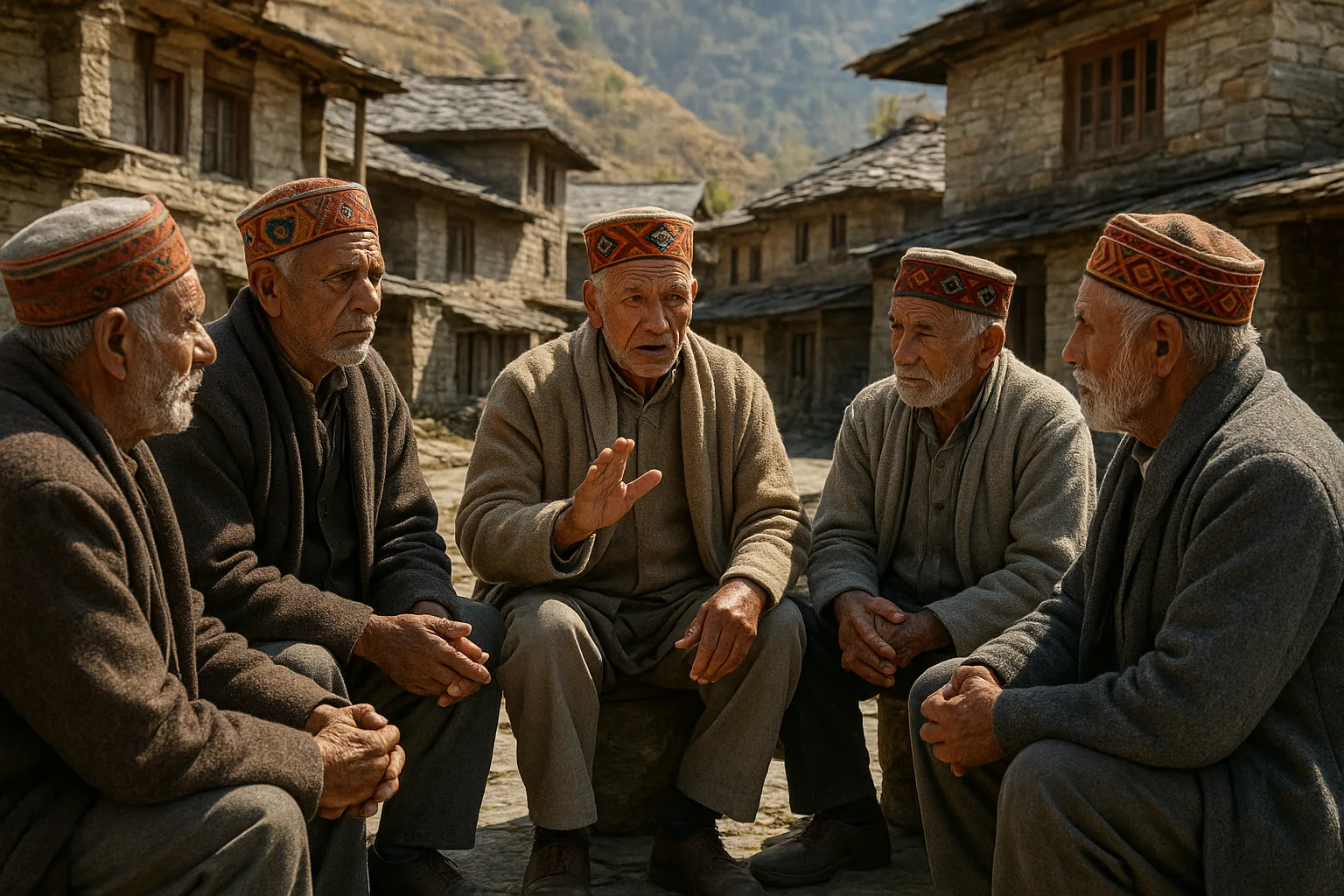
Imagine a crisp dawn in the Kullu Valley, centuries before the world knew the name Himachal Pradesh. The Beas River glimmers below, its banks shrouded in mist. At the heart of a terraced village—houses of stone and wood clustered beneath deodar trees—elders gather at the communal square. Their voices mingle with the distant clang of temple bells, echoing off the ridges. This is not a kingdom ruled from marble palaces, but a world where governance is woven through kinships, ritual, and the relentless demands of mountain life.
Historical Foundations: Kullu in the Early Medieval Era
To ground ourselves in time, the medieval phase of Kullu’s history—roughly the 7th to 15th centuries CE—marks the emergence of organized hill states in the western Himalayas. While ancient legends swirl about the valley’s origins, the earliest documentary references appear in regional chronicles and the copper-plate charters of neighboring kingdoms. By the time the Chinese traveler Xuanzang traversed the subcontinent in the 7th century, the highland communities of the upper Beas basin were already distinct in language, belief, and custom.
Kullu, then, was more a tapestry of semi-autonomous villages than a centralized kingdom. Each settlement was shaped by its geography: perched on hillsides, hemmed by forests, and threaded by mule trails connecting them to the wider world. The rise of the Kullu rajas—a theme we will explore more fully in later posts—grew from these foundations of local autonomy and mutual obligation.
Village Life: Councils, Customs, and Kinship
At the core of village governance stood the panchayat, a council of elders whose authority derived from age, lineage, and reputation. Oral traditions, carefully preserved in the region’s folk songs and seasonal festivals, speak of these councils weighing disputes, allocating irrigation water, and organizing communal labor for festivals or repairs. While mythology often attributes supernatural wisdom to the village headmen, historians recognize the panchayat as a pragmatic response to isolation and scarce resources.
Decision-making was rarely autocratic. Instead, consensus and negotiation prevailed, reinforced by the need for cooperation in irrigation, terrace farming, and protection against wild animals or raiders. In some villages, the council included representatives of distinct clans or occupational groups, reflecting the valley’s social complexity long before the arrival of formal state structures.
Faith and Authority: Temples, Deities, and Social Order
Religion in medieval Kullu was both unifying and administrative. Each village maintained a temple or shrine, often dedicated to a local deity (devta) regarded as the protector of the community. These deities, invoked through elaborate rituals, were believed to guide the panchayat’s decisions and mediate conflicts. The hereditary priests and temple caretakers, known as chelas or pujaris, played a dual role: spiritual intermediaries and custodians of customary law.
In many cases, significant disputes—land boundaries, dowry disagreements, or accusations of witchcraft—were settled in the deity’s name, lending a spiritual weight to the council’s authority. This intertwining of faith and governance finds echoes in the oral histories still recounted in Kullu’s villages, and is recorded in early British gazetteers that marveled at the hold local gods had over the valley’s social order.
Trade Routes, Interactions, and the Emergence of Hill States
Despite the apparent isolation of each village, Kullu’s geography ensured constant interaction. Ancient trade routes—some tracing back to the Silk Road era—snaked through the valley, linking it to Tibet, Ladakh, and the Punjab plains. These routes brought not only salt, wool, and precious stones, but also new ideas and political pressures. As caravans passed and emissaries arrived, the need for coordinated defense and dispute resolution grew.
Gradually, alliances of villages emerged, led by influential families or charismatic chiefs. Oral traditions sometimes cast these figures as legendary founders—semi-mythical rajas or warrior saints—but regional chronicles and inscriptions reveal a more incremental process. The earliest Kullu rajas, likely first among equals, forged their authority by mediating between villages, negotiating with outside powers, and patronizing major temples. This delicate web of obligations, rather than conquest, laid the groundwork for the medieval Kullu state.
Documented Administration: Early Records and the Shape of Power
By the late medieval period, as the Kullu rajas consolidated power, the administrative landscape shifted. Copper-plate grants and tax records—preserved in temple treasuries and referenced in the Gazetteer of the Kangra District—show the emergence of formal offices: village headmen (muqqadams), revenue collectors (patwaris), and royal agents. Yet, even as state structures expanded, the underlying village councils and customary codes endured. In many cases, royal authority was expressed through recognition of local customs, not their replacement.
This hybrid model—central authority layered atop robust village institutions—distinguished Kullu from the more hierarchical plains polities. The raja’s writ was real, but so was the enduring power of the panchayat and the temple. The balance could shift in times of crisis, as during invasions or famines, but the essential autonomy of the village remained a hallmark of Kullu’s medieval society.
Continuities and Living Legacies
Today, traces of this ancient governance endure in Kullu’s landscape and psyche. Village councils still meet beneath the same deodar trees, and the authority of local deities remains tangible, especially during festivals such as Dussehra. The rhythm of communal labor, consensus-building, and the intertwining of faith and public affairs persists, even as modern administration overlays new structures.
These living legacies remind us that the roots of Kullu’s social order are deep, resilient, and uniquely adapted to the valley’s challenges. In the next part of this series, we will follow the rise of Kullu’s royal house and explore how local rulers navigated the pressures of regional ambition and Himalayan isolation.
Previous: Political Relations Between Kullu and Neighbouring Hill States
Next: Agriculture and Economy of Medieval Kullu