
Series: History of Kullu, Himachal Pradesh, India
Phase 2: Medieval Kingdom — Part 8 of 30
This article forms part of a continuing series that follows the gradual emergence of organised power in the western Himalayas. As small communities gave way to clans, chieftainships, and hill states, patterns of rule, alliance, and conflict began to take shape. This phase examines how authority was negotiated through land, ritual, and warfare, laying the groundwork for regional kingdoms that would dominate the medieval landscape.
The Valley at Dawn: Kullu in the Shadow of the Himalayas
In the soft light of an early medieval morning, the Beas River winds its way through the Kullu valley, mist clinging to its banks and pine forests sheltering scattered hamlets. The year is uncertain—local tradition places us somewhere between the 8th and 11th centuries, a time when Kullu was emerging as a distinct political entity amid the mosaic of Himalayan hill states. The valleys and ridges are alive with stories: of gods and kings, of long journeys over high passes, and of the delicate art of survival in a region whose geography defies easy rule.
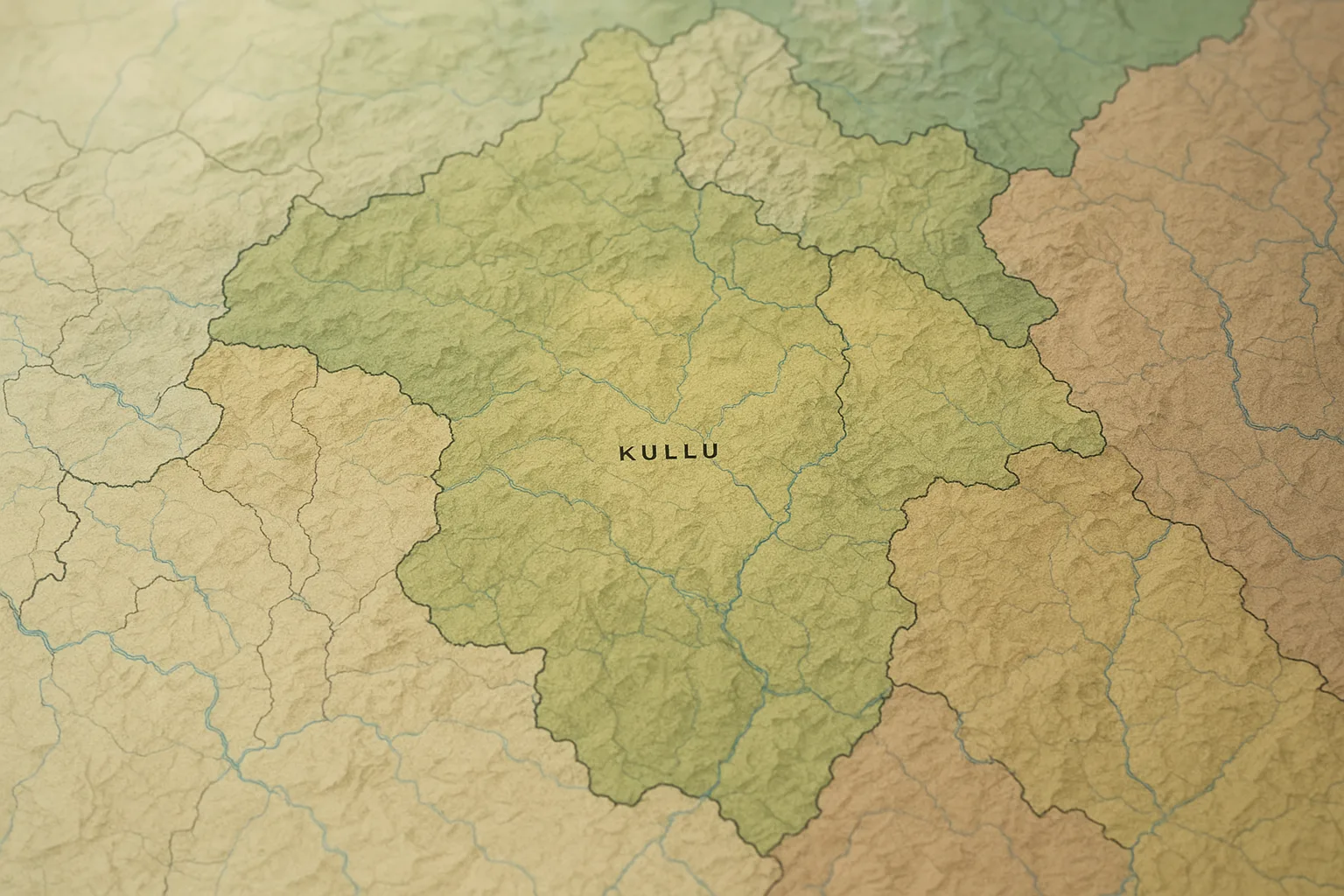
Here, power is both visible and elusive. A stone fort crowns a hilltop, its silhouette a reminder that the peace of the valley is always provisional. To the north, the snowfields of Lahaul; to the south and west, the bustling trade routes of Mandi and Suket; to the east, the wild forests bordering the upper reaches of Spiti and Tibet. Kullu is not isolated—its fortunes have always been shaped by its neighbours, its alliances, and its rivals.
From Myth to Memory: Foundations and Fables
Every valley in Himachal has its own origin story, and Kullu’s is no exception. Oral traditions speak of Vihangamani Pal, the legendary founder who is said to have migrated from the plains and established the first Kullu dynasty, displacing local chiefs and forging new bonds with the land’s tutelary deities. These tales, preserved in ritual and festival, tell us much about how later generations understood their inheritance, but they offer clues rather than certainties.
Historical inference—supported by early chronicles such as the Kullu Gazetteer and Rajatarangini—suggests that Kullu’s earliest rulers emerged as petty chieftains, gradually consolidating power as trade, agriculture, and religious authority intertwined. By the early medieval period, Kullu was recognized as a principality with its own court, its legitimacy reinforced by both mythic descent and practical alliances.
The Tapestry of Hill States: Friends, Foes, and Family
Kullu’s neighbours were never far away—geographically or politically. To the southwest, the states of Mandi and Suket shared not only borders but bloodlines, with royal marriages often cementing uneasy truces. Oral memories recall festive processions winding between valleys, carrying princesses and dowries, while chroniclers note sudden reversals: a wedding one year, a border raid the next.
The Rajput houses of Chamba and Kangra to the west wielded considerable influence, at times seeking to assert overlordship over Kullu through tribute or military expeditions. The Katoch dynasty of Kangra, in particular, is remembered for its attempts to extend control into the upper Beas, though the formidable terrain often undermined their ambitions. In contrast, smaller principalities such as Bashahr and Spiti—less interested in direct conquest—maintained looser networks of exchange and ritual fraternity, sometimes reinforced through shared patronage of Buddhist and Hindu shrines.
Trade and Tribute: Economic Ties That Bind
Far from being a closed valley, Kullu was crisscrossed by caravan routes linking it to Ladakh, Tibet, and the Punjab plains. Salt, wool, resin, and precious stones moved through mountain passes, and with them came the challenge of taxation and protection. Neighboring states often vied for control over key trade arteries, leading to both cooperation and conflict. The annual fairs at places like Larji and Sultanpur were more than marketplaces—they were stages for diplomacy, where rulers negotiated pacts and displayed their wealth.
Belief, Ritual, and the Politics of the Gods
In Kullu, the sacred and the political were inseparable. Each hill state had its own pantheon of deities, whose honor was closely tied to royal legitimacy. The famous Dussehra festival, still celebrated in Kullu today, likely originated as a display of royal authority, with local gods paraded through the capital to affirm their loyalty to the king. When disputes erupted between Kullu and its neighbours, it was not uncommon for priests and oracles to be dispatched as envoys—sometimes to consult, sometimes to threaten supernatural sanction.
This intertwining of belief and governance gave rise to a distinctive style of rule. Kullu’s monarchs were expected not just to defend their territory, but also to maintain cosmic order, negotiating with gods as skillfully as with rival princes. The chronicles recount episodes where a breakdown in these relationships led to famine or disaster, reinforcing the sense that politics in the hills was always a matter of both sword and ceremony.
Medieval Rivalries and Alliances: The Chronicles Speak
By the 13th and 14th centuries, the political landscape of the western Himalayas was marked by shifting alliances and intermittent warfare. Written records from this period become more frequent, if not always more reliable. The Kullu Gazetteer describes episodes of joint defense against outside invaders, as when Kullu and Mandi united to repel a bandit incursion from the south. Yet these moments of unity were often followed by renewed competition, especially over the fertile lower valleys and rights to lucrative trade tolls.
Kullu’s rulers navigated these pressures with a mixture of diplomacy and force. At times, they acknowledged the suzerainty of larger powers—whether the distant kings of Kashmir or the nearer Rajput lords of Kangra—while quietly consolidating their own autonomy. On other occasions, Kullu itself acted as an arbiter, mediating disputes between smaller hill states or offering sanctuary to exiled nobles fleeing dynastic strife elsewhere.
Marriage, Hostages, and the Dance of Power
Royal marriages remained a central tool of statecraft. The annals mention alliances sealed by the exchange of brides, but also darker episodes: sons and daughters held as hostages, or forced into exile when the balance of power shifted. The fate of these individuals was closely watched by all, for their fortunes could signal the rise or fall of whole dynasties.
Echoes Through the Ages: Lasting Legacies
The political architecture established in these centuries shaped the destiny of Kullu for generations. Borders drawn in the medieval era persisted well into the colonial period, while the rivalries and alliances of those days left their mark on local memory and custom. Even today, the festivals, processions, and rituals of Kullu bear traces of ancient diplomatic strategies, and oral histories continue to recount the deeds of rulers whose names are half-remembered but never entirely forgotten.
As the series continues, we move forward to consider how Kullu’s political identity was challenged and transformed with the arrival of new empires and the pressures of early modernity. The next chapter will trace these encounters, exploring how the echoes of medieval alliances and enmities shaped Kullu’s response to Mughal and later Sikh expansions, setting the stage for the dramatic changes of the modern era.
Previous: Local Dynasties and Hill Chiefs of Medieval Kullu
Next: Village Governance and Administration in Medieval Kullu