
Series: History of Kangra, Himachal Pradesh, India
Phase 2: Medieval Power — Part 9 of 30
This article forms part of a continuing series that follows the gradual emergence of organised power in the western Himalayas. As small communities gave way to clans, chieftainships, and hill states, patterns of rule, alliance, and conflict began to take shape. This phase examines how authority was negotiated through land, ritual, and warfare, laying the groundwork for regional kingdoms that would dominate the medieval landscape.
At the Foot of the Dhauladhars
The year is 1030. Mist coils above the dense cedar forests as pilgrims wind their way up the stony paths to the great temple of Jawalamukhi. Morning sunlight flickers through the pine canopy, catching on the gold of temple domes and the crimson of sacred banners. Here, at the foothills of the Dhauladhar range, the clang of bells and the low hum of mantras have echoed for centuries, binding the land to legend and its people to the divine.
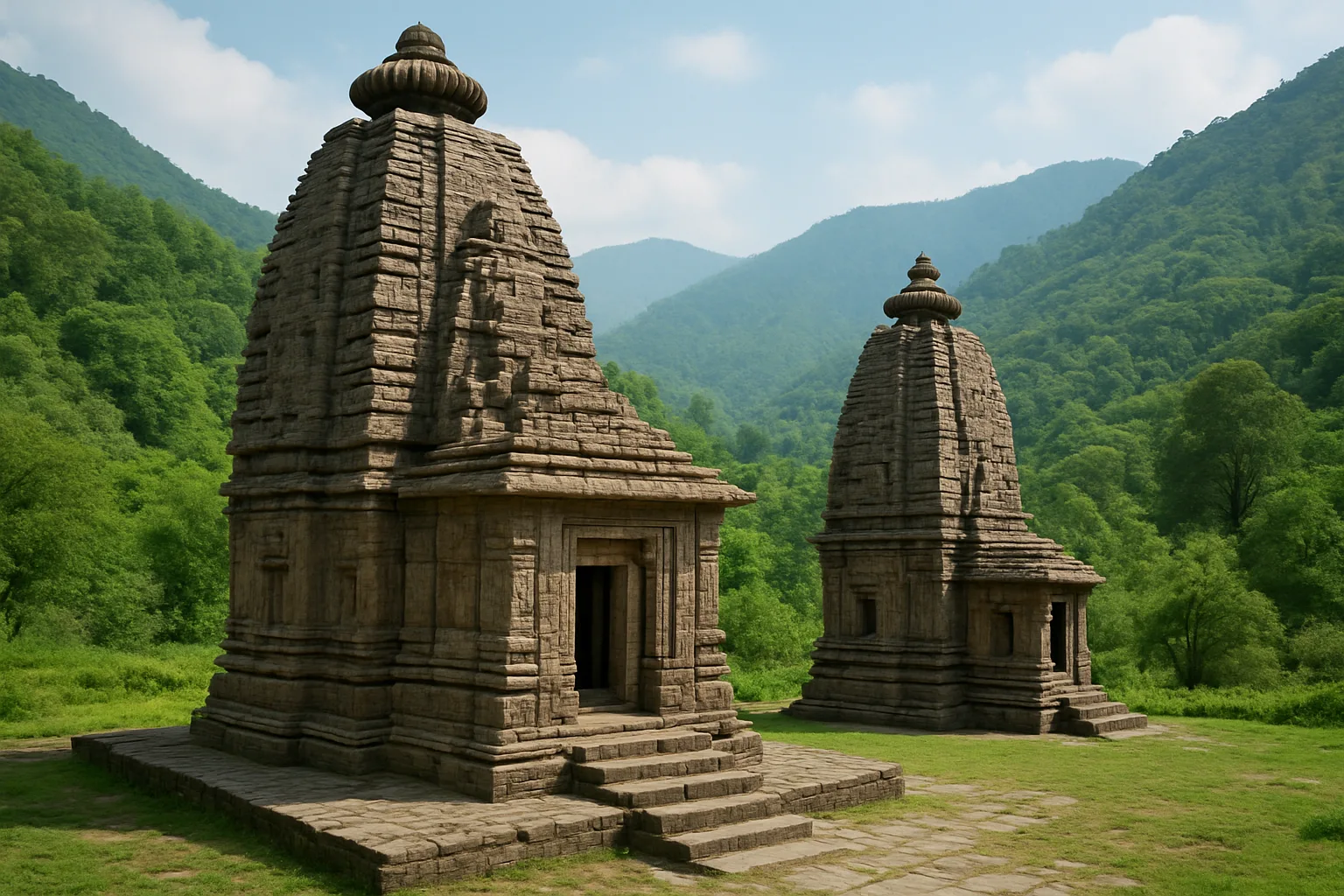
Kangra, known in older texts as Nagarkot or Trigarta, stands at a crossroads of mountain and plain, of myth and history. While the ancient mists rarely part fully, enough evidence survives in stone, copper, and memory to evoke the region’s remarkable temple culture—a tradition that, while rooted in the cosmic imagination of the Himalayan people, profoundly shaped the social and political world of medieval North India.
Between Myth and Memory
Oral traditions in Kangra are as old as the mountains themselves. Local bards still sing of the Pandavas’ exile in these hills, or of goddess Durga’s victory over the demon Mahishasura—legends that cluster around sites like Chamunda Devi, Brajeshwari, and Jawalamukhi. The Kangra Gazetteer (1883) records these stories, noting how villagers traced their lineages to mythic heroes or goddess-chosen ancestors. Yet, beneath the vibrant tapestry of oral myth, a more tangible record can be found.
Archaeological remains and early inscriptions suggest that organized temple worship flourished in Kangra by the 8th century CE, gaining extraordinary prominence under the rule of the Katoch dynasty. These temples were not isolated sanctuaries, but active centers of community, commerce, and kingship—shaping medieval Kangra’s spiritual and political landscape alike.
Stone, Faith, and Power: The Emergence of Sacred Sites
The geography of Kangra dictated the rhythm of its faith. Rivers like the Banganga and Beas, flowing from glacier to plain, became natural arteries for trade, pilgrimage, and cultural exchange. Early settlements clustered along these routes, often around ancient shrines or cave sanctuaries. By the 10th century, stone temples rose above these rivers—testimony to both growing prosperity and the consolidation of local hill states.
The temples themselves—Brajeshwari Devi, Jawalamukhi, and Chamunda among the most renowned—quickly gained regional and even subcontinental fame. Chroniclers like Al-Biruni, who visited North India in the early 11th century, wrote of Kangra’s temples as repositories of gold, silver, and precious gifts. The wealth of these sites hints at their economic as well as spiritual influence. Merchants, pilgrims, and even kings from distant lands came to pay homage, bringing news and goods from across the northern passes and Gangetic plains.
The Katoch Dynasty and the Patronage of the Divine
Documented political history begins to sharpen in the medieval period with the rise of the Katoch dynasty, whose roots, according to tradition, reach back to the Mahabharata but whose power is attested by copperplate grants and fortifications by the 11th century. The Katoch rulers saw themselves as custodians of the land’s divine heritage. They sponsored temple construction, endowed lands to priestly families, and staged grand festivals that drew thousands. The temples in turn became centers of authority, legitimizing the dynasty’s rule and binding the fractious hill clans together under sacred law.
Some of the earliest surviving documents—grants inscribed in local scripts—describe gifts of land, cattle, and revenue to temple trusts. These records, preserved in regional archives, offer glimpses into a complex web of patronage, with local elites vying for prestige through acts of piety. The temples thus stood at the heart of both devotion and diplomacy.
Communities and Belief Systems
Medieval temple culture in Kangra was not monolithic. Alongside the dominant Shakti (goddess) cults, Shaivism (worship of Shiva) and Vaishnavism (worship of Vishnu) flourished. Buddhist influences, too, lingered in the high valleys and along ancient trade routes to Tibet. Local clans—Rajputs, Brahmins, artisans, and merchant castes—each played distinct roles in this sacred economy.
- Brahmins served as priests, scholars, and keepers of ritual knowledge.
- Rajput lineages, often linked to the Katochs, provided military protection and resources.
- Artisans—stone carvers, painters, metalsmiths—crafted temple images, ritual implements, and the famed Kangra paintings that would later earn global acclaim.
- Merchant communities organized pilgrimages and fairs, fostering the region’s prosperity and cosmopolitanism.
Festivals like Navaratri saw the convergence of these groups at temple sites, their roles woven together in a pageant of devotion, trade, and collective identity.
Trade, Pilgrimage, and the Hill States
Kangra’s temples were never isolated outposts. They stood at the confluence of vital trade and pilgrimage routes—linking Kashmir, Punjab, Tibet, and the deeper Himalayas. Caravans carried salt, wool, and precious stones; pilgrims brought stories, songs, and offerings. The temple towns grew into bustling markets, where merchants’ stalls stood shoulder to shoulder with shrines and hermitages.
As the medieval period unfolded, the rise of neighboring hill states—Chamba, Mandi, Kullu—fostered both rivalry and exchange. Alliances were sealed at temple festivals; disputes sometimes played out in the shadow of sacred precincts. The temples themselves became diplomatic neutral ground, hosting not just religious rites but councils of chiefs and emissaries.
Myth, Memory, and the Medieval Imagination
Even as political fortunes shifted, the temple culture of Kangra endured, continually reshaped by oral tradition and lived experience. Songs and legends, passed from generation to generation, kept alive the memory of ancient kings, miraculous healings, and divine apparitions. Some temples—like Jawalamukhi, where a natural gas flame has burned for centuries—became sources of wonder for travelers and chroniclers alike, blurring the lines between geological marvel and religious mystery.
Regional chronicles, such as the Tarikh-i-Kangra and the accounts preserved in local monasteries, offer rare glimpses into this world, blending historical fact with the mythic sensibilities of the age. While separating legend from history can be elusive, the enduring power of these stories speaks to the region’s deep attachment to its sacred landscape.
Echoes in the Modern Day
Walk through Kangra today and the legacy of its medieval temple culture is everywhere—heard in the chant of pilgrims at Brajeshwari, seen in the architecture that still stands despite centuries of upheaval. The rhythms of ancient festivals, the reverence for local deities, and the memory of dynasties past continue to shape everyday life. In the next chapter of this series, we will trace how Kangra’s temples weathered the storms of invasion and change, and how their resilience became a symbol of the region’s enduring identity.
Previous: Wars with Neighbouring Hill States
Next: Trade and Economy in Medieval Kangra